How small structures create stunning colours in nature
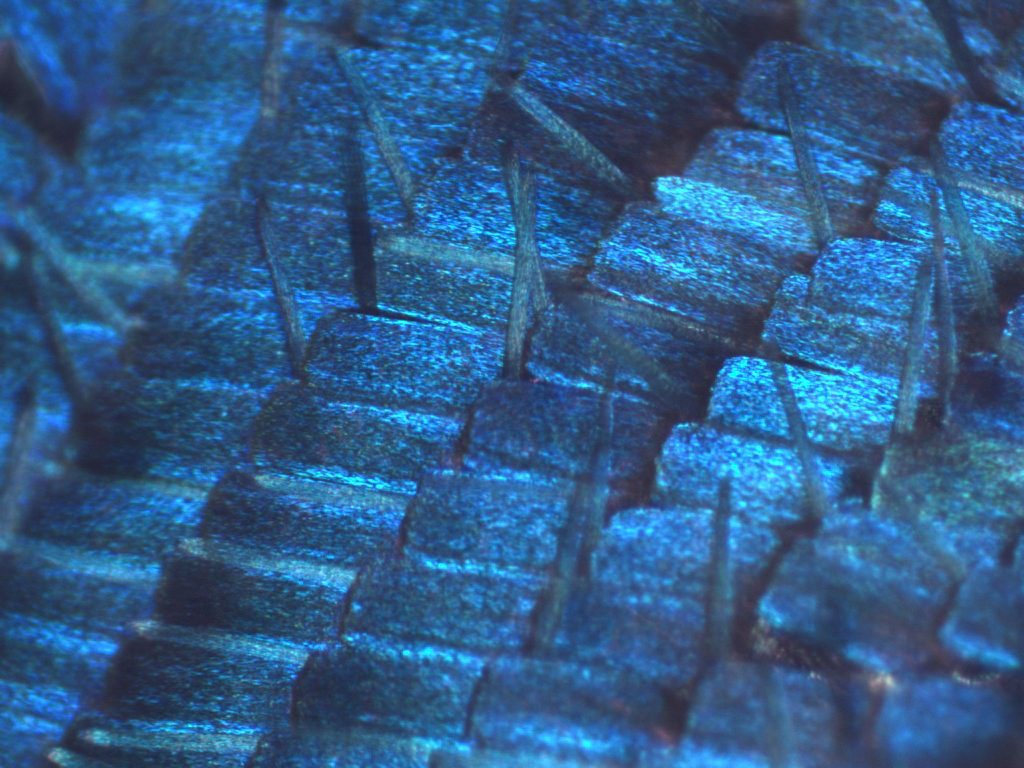
In the 19th century, the piercingly blue morpho butterfly captivated the attention of people worldwide; its blue was so brilliant that one could not take their eyes away from it. Understandably, people wanted to extract the colour from the butterflies for human use, such as dyeing clothes or painting vehicles. But when they crushed the butterfly’s wings to harvest the colour, they found something mind-boggling. They did not get the magnificent blue powder they were hoping for. The resulting powder was dull grey, or brown even!
How could it be that the same wings, when intact, gave such a wonderful hue but lacked lustre (literally) when crushed? There had already been hints of this phenomenon from the earlier work of two scientists. Robert Hooke, while examining bird feathers under the microscope, noted in his 1665 work Micrographia that certain colours seemed to change or disappear when a surface’s structure was disturbed – hinting that colour could arise from form rather than substance. Isaac Newton took this further in his 1704 treatise Opticks, describing how thin films – of air, soap, or mica – could produce colour purely through their interaction with light, with no dye involved. It would take centuries more, and far finer instruments, before scientists could confirm that this was exactly what was happening on the morpho’s wing. The striking blue was due to a neat physical trick called structural colour.
‘Structural colour is a result of light interacting with the organism … made by optical interactions’
Pigments absorb light of certain wavelengths and reflect the other wavelengths, and the reflected light is what we perceive the colour of the object to be. “Structural colour, however, is a result of light interacting with the organism, including its biological materials. These kinds of colours are made by optical interactions,” explains Richard Prum, Professor of Ecology and Evolutionary Biology at Yale University, USA. This interaction changes the nature of the reflected light that we perceive.
If you observe the feathers of a peacock from different angles, the colours seem to change – a property called iridescence. This is caused by nanostructures within the feathers; they interact with light, producing structural colour. The nanostructures do this in two ways. One is by the differential scattering of light – light of smaller wavelengths gets scattered while that of larger wavelengths don’t. “Imagine there’s a crack in the pavement. If you roll a soccer ball or a basketball over that, the ball will just roll right by. But if you take a tiny little marble and you roll it over the crack, it’ll hit it and go blip, right? Its path is disrupted,” Richard elucidates.
The other way is when light interferes with or is reflected by the nanostructures, depending on how they are arranged, how far they are spaced out, and how light passes through them – leading to brilliant, selective reflection of colour. Unlike pigments, structural colours can produce vivid hues, as the light that emerges after interacting with the nanostructures is a very narrow set of wavelengths. In pigments, a whole bunch of wavelengths are reflected, which reduces the sharpness of the colours.
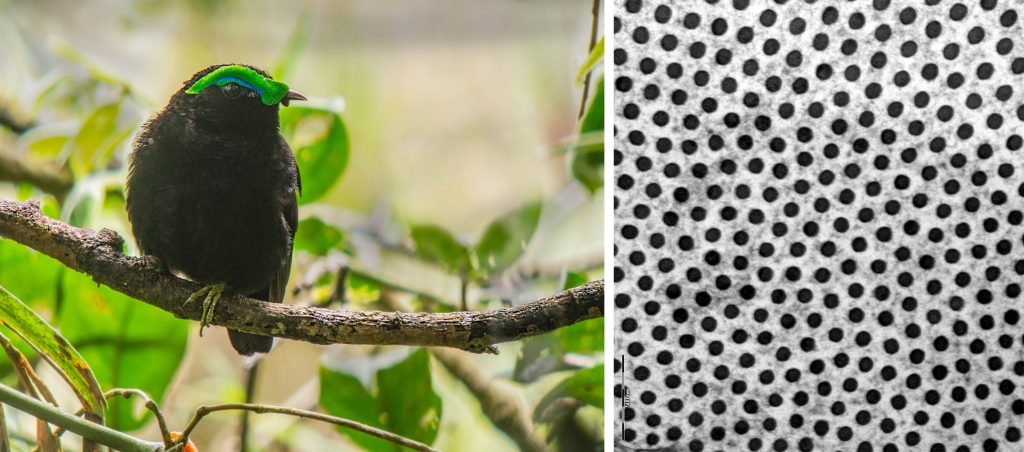
Structural colour can coexist with traditional pigments as well. “The phenomenon works kind of like a filter. They come in different layers – the structure selects some portion of light, and then the pigment further reduces that portion,” explains Vinodkumar Saranathan, Junior Professor Chair at the Research Institute on Insect Biology, University of Tours, France.
Structural colours are widely prevalent in nature. Some cuts of meat display iridescence too, due to the periodic arrangement of the muscular fibres. Groups of bacteria of a certain shape, and when arranged in a certain way, are iridescent. There are also certain types of viruses, called iridoviruses, which cause “optical infections”, meaning they impart a bright blue or purple iridescent colour to the organisms they infect. The colours are due to patterns of packed protein crystals.
Despite the multitude of ways in which structural colour occurs in nature, research on the topic is sparse. Many researchers now focus more on fabricating structural colour for human use rather than understanding its function in nature. We know only little about why certain organisms use structural colour over pigments (and vice versa) and what molecular factors control structural colour. For example, we know that iridescence helps with ecological behaviours like camouflage, but we are not entirely sure how this differs from pigment-based camouflage.
‘Modern techniques are still not quite able to faithfully replicate the nuances of structural colour found in nature’
The main reason is that fabricating structural colours in the lab to understand their natural functions is hard – experiments mandate replicability, and repeatedly fabricating similar structural colours can be tricky and costly. Modern techniques are still not quite able to faithfully replicate the nuances of structural colour found in nature. “You would imagine that there have been a lot of people studying peacock feathers, but there are very few,” says Renee M Borges, Professor at the Centre for Ecological Sciences (CES), IISc. “People have modified the number of eyes in the peacock’s tail feathers artificially, either by painting them out or attaching new feathers, but haven’t actually manipulated the structure.”
Undeterred, some scientists are exploring the causes and consequences of structural colour out in the wild. Though it requires more complex tools, it lets them peek directly at the natural phenomenon instead of struggling with an imperfect replica in the lab. They are now slowly uncovering the myriad mysteries of structural colour in the natural world.
Costs and causes
Evolution and biology are all about cost versus benefit. Plants, for example, need colourful flowers to attract pollinators, but the energetic cost to achieve those colours can be high. There is a substantial body of work on the use of colour in animal and plant signalling. But we know little about the relative costs of colour achieved via pigments versus structural means.
A few studies have shown that there is a considerable difference in the energy that creatures have to invest in producing colour through pigments versus through structural colour, which could be one reason why pigments are more common in nature than structural colour. “Structural colour needs more material in general than colour just due to pigments. So, it could be like an additional resource investment to produce those fine structures, and they need to be finely regulated too,” ventures Humberto Herrera-Ubaldo, postdoctoral researcher in the lab of Beverley Glover at the University of Cambridge, England.
Preliminary studies of birds’ genes have revealed that non-iridescent (non-structural colour) feathers need genes which consume a lot of resources for protein production, like pigmentation, metabolic, and mitochondrial genes. On the other hand, iridescent feather development is associated with structural and cellular organisation genes, which may also require significant cellular resources. Once the structural colour material is produced, the cell then has to expend extra resources to arrange them into the final macrostructures. We don’t have a definitive answer on the energy expenditure differences between the two pathways.
Another interesting question is why structural colour adopts similar forms in insect scales and bird feathers from evolutionarily distant families, despite their mostly independent origins. Saranathan, who works on evolutionary photonics, studies this by comparing the structural colour manifestations across species. “Taking inspiration from D’Arcy Thompson [a 20th-century Scottish biologist], we study how one structure has evolved from another structure by understanding the molecular and physical forces that drive these transformations. For instance, we investigated how and why some leafbirds have evolved a space-age crystal structure called single gyroid in their feathers from ancestors that had random spaghetti-like networks – this is driven by female preferences for pure structural colours,” he says.
His lab has also studied tarantulas and found that iridescence was lost in the species and then was regained. “There’s no pattern to explain why,” he says.
Testosterone exposure in female common parakeets, for example, changed the colour of a structure on their beaks from brown to blue, the latter being the colour in male counterparts
What controls structural colour? Is it a single gene? Researchers say probably not. “I think it’s not really one gene because there are multiple ways to achieve the same structures or processes by altering different pathways,” Humberto comments.
Preliminary molecular biology studies are now giving us hints about what goes on behind these brilliant physical phenomena. In buckeye butterflies, the thickness of laminae, a kind of nanostructure on the wings, is thought to be mediated by the optix patterning gene, which affects their colour.
In another species of butterflies, a gene called cortex controls the colour of the wing scales. Genomic analyses of species of bacteria whose colonies display structural colour indicate that the pterin (an organic compound) pathway is involved in the clustering of bacteria, which in turn is responsible for the colour. Hormones can impact the colour, too. Testosterone exposure in female common parakeets, for example, changed the colour of a structure on their beaks from brown to blue, the latter being the colour in male counterparts.
“A single gene or a factor for structural colour is virtually impossible,” says Renee. “There are no genes for assembling complex structures, as far as we know. There are genes for making the materials, but there’s no instruction guide for how those materials are actually laid down.”
Selecting for colour
If structural colour is costly to produce, why do organisms still use it? “There are two things that influence the colour of an organism – what pigment molecules or nanostructures it can make, and what selection is acting on the colour of the species in the life of the animal: protect it from predators, attract mates, and so on,” Richard remarks.
Just because an organism has structural colour doesn’t mean that it needs structural colour to survive. Certain beetles, which burrow in the soil but can’t really see, still display structural colour. The materials causing their colour are self-cleaning hydrophobic scales that prevent them from getting wet, an example of accidental colouration.
Structural colour is excellent for camouflage and can serve as a social or mating signal
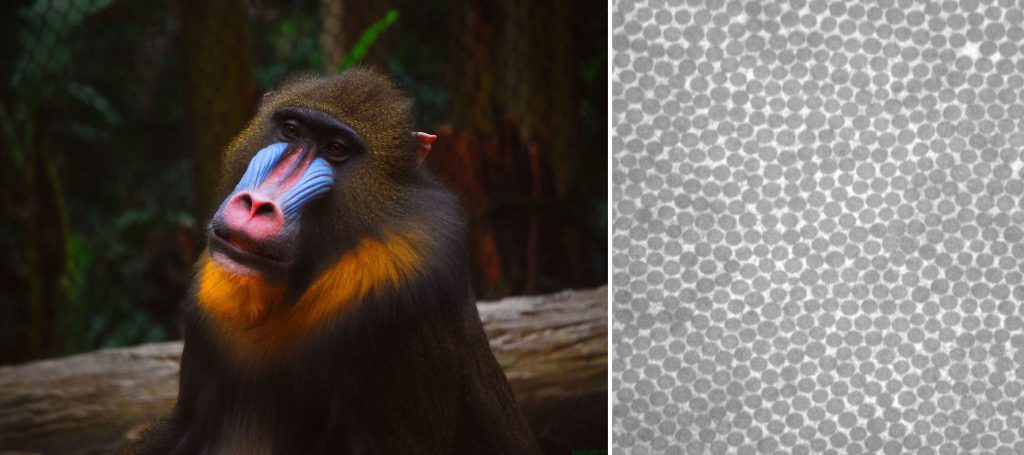
In other cases, colour is due to natural selection – it provides certain fitness benefits to the organisms and helps them survive better. Structural colour is excellent for camouflage and can serve as a social or mating signal. Reef fish make use of it to blend in with colourful corals. Sometimes, only one sex of a species displays structural colours, and it plays a role in how animals choose their mates. For example, the depth of blue structural colour on the testicles of a male vervet monkey indicates its degree of dominance within the troop!
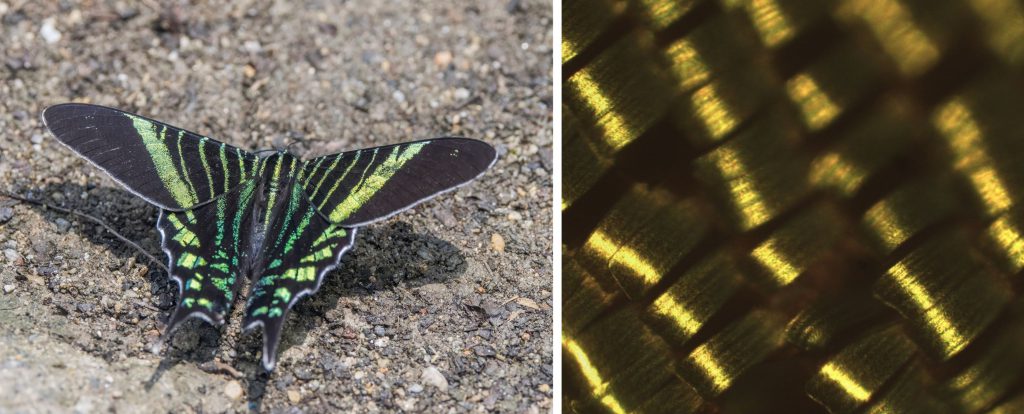
Structural colour can work as a defence mechanism too; rapid changes in colour or brightness, and dangerous-looking colours can scare off predators by indicating toxicity. The surface of an insect can be such that even a small change in angle can dramatically alter the colour, which can scare predators like birds.
It can also act as a sign of health. “If an iridescent bird does not have a really striking colour, it means maybe it’s an old bird, has been damaged, attacked, or it indicates health levels as well,” remarks Humberto.
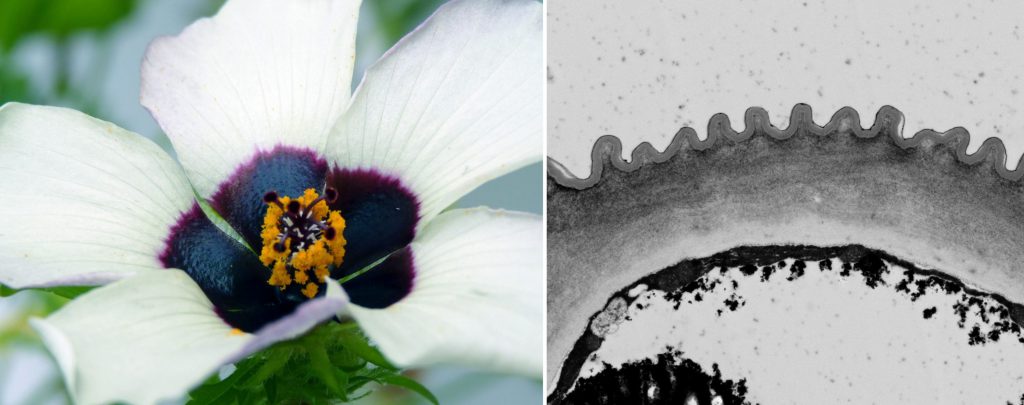
Compared to animals, there are relatively fewer instances of structural colour in plants. “Structural colours in animals are plausible because of the modification of surfaces; for instance, the surfaces of insects are made of chitin and that would allow the kind of easy deposition of layers of materials, which is fundamental for structural colouration. However, plants are made of other materials, and that might be a reason why,” ventures Humberto.
There have been documented cases of structural colours emerging independently in several families of flowers; though we don’t know the exact reason, researchers speculate that structural colour confers some benefits, such as attracting pollinators.
Structural colours are not only for visible light. If the nanostructures are small enough, they can have a similar effect on ultraviolet light, too. Plants make use of this form of structural colour to attract more pollinators. “It’s like one more signal to pollinators to advertise, to come visit the flower,” says Saranathan. In the Colorado blue spruce tree and the succulent plant Britton’s dudleya, the materials that confer structural colour reflect shorter wavelengths of light, which leads to UV protection. In spikemosses as well, such materials enhance the reflection of blue light and absorb more red light – possibly for improved photosynthesis.
Hurdles in studying structures
Research on structural colours has so far focused more on their applications in daily life, such as in clothing, cosmetics like nail polish, printable structural-colour devices (like MorphoChrome), and anti-counterfeiting methods. “I think that one reason why structural colouration is studied more in the realm of physics and has not yet made its way into the biology (functional) kind of studies is because of the difficulty of accurate and consistent measurements,” comments Renee.
Pigments are relatively easier to study – scientists use a spectrophotometer to measure the absorption or reflectance spectrum, which gives us information about the properties of the molecules in the pigments. But with structural colour, the colour depends on the angle of view, making it difficult for labs across the world to measure and characterise colour accurately.
Pigments are also easier to fabricate and experiment with – it is easier to make different hues through formulations of different pigments than tweaking the parameters of structural colour. Generating colour cards or choices, which is what people do with pigments to study insects being attracted to flowers, is very difficult to do with structural colour.
It turns out that most blues in nature – like the brilliant blue of the morpho butterfly – are structural colours
Some of the techniques used in fabricating structural colour may not work when scaled up. Fine instrumental and human errors can lead to irregular colours, which defeats the purpose of replicability. Additionally, it takes a very long time to fabricate the fine variations in appearance that occur naturally; the studies would not be accurate until we can achieve this. Different organisms perceive different kinds of light, hence one has to be mindful to factor this difference into experiments.
Nevertheless, nature has countless hidden mysteries about structural colours that are waiting to be explored. It turns out that most blues in nature – like the brilliant blue of the morpho butterfly – are structural colours. “That is something quite interesting also to examine from an evolutionary perspective, as to why there are a lot of yellows and reds [in pigments] and why blue is mostly structural colour,” remarks Renee.
Scientists are keen on exploring more of these ecological and molecular mysteries. “These are difficult areas, yes. But they are very interesting. We must always be looking for these different things that have not been worked on extensively,” Renee adds.
Chandana Valaboju is a third year BSc (Research) student at IISc and a former science writing intern at the Office of Communications
(Edited by Rohini Subrahmanyam, Abinaya Kalyanasundaram)