The growth of Green Chemistry
A weathered, nearly half-century-old plaque hangs on the wall of Paul Anastas’ office at Yale University – an unusual keepsake for an academic. Its story dates back to the 1970s in Quincy, Massachusetts, where eight-year-old Paul watched his neighbourhood wetlands get taken over by glass-fronted insurance and bank buildings. To soothe his distress, his father suggested taking action: “If you really care about something, care enough to learn about it,” he said. So, Paul did. He wrote an essay on the wetland, which won the Presidential Medal. “Perhaps more than anything else,” he would later admit to The New York Academy of Sciences, “that set me on the direction of wanting to be a scientist and to think about environmental issues.”
Among Paul’s friends at school was John Warner, a young, creative, and free-spirited aspiring musician, with a flair for the dizzyingly extemporaneous genre of jazz. The two later attended the University of Massachusetts, where Paul majored in chemistry while John studied music and played for the ‘Elements’ band. John’s artistic dreams, however, came to a crushing end when the band’s drummer unexpectedly passed away.
John found a tether in elective chemistry and his old pal. The two joined a research group, co-authoring papers before parting ways to pursue doctorates. Paul later ended up at the United States Environmental Protection Agency (EPA). John, meanwhile, became a chemist for the Polaroid Corporation, where he went on to invent a technique for developing photographic images without the toxic heavy metals and acid fixatives used in conventional methods. Called Non-Covalent Derivatisation (NCD), John’s method used weaker molecular interactions, such as hydrogen bonding and van der Waals forces, to bind the dye molecules to the photographic substrate.
But under the Toxic Substances Control Act, new chemical processes required approval from the EPA to be scaled up, and John’s innovation was rejected. The reason? This method was novel, and the NCD employed molecular interactions with no prior regulatory history. “Because it’s different, the EPA made it difficult to regulate,” John later told In These Times. “Isn’t anything that is better for the environment going to be different?”
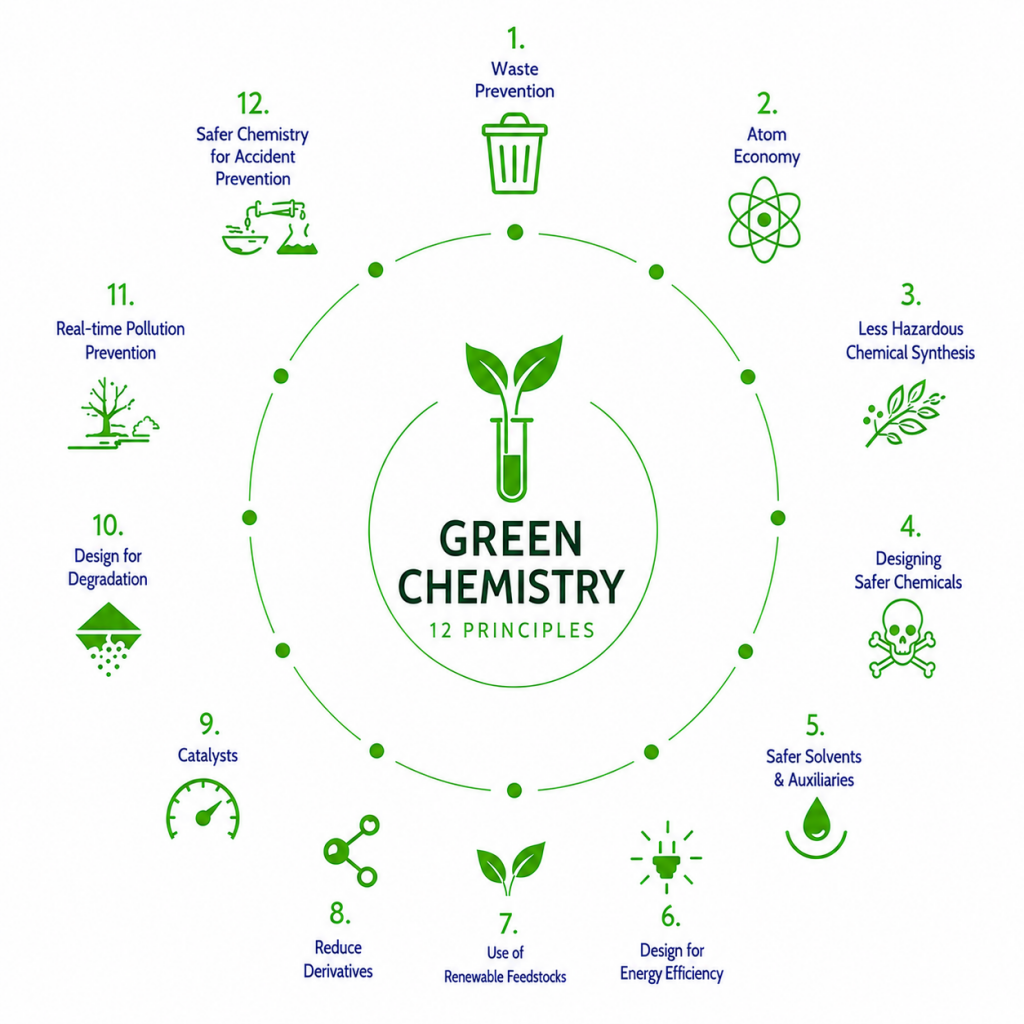
Polaroid sent Warner to give a seminar defending the technology, and it was there that he ran into the branch chief at the EPA’s Office of Pollution Prevention and Toxics – his old friend Paul Anastas. The two old friends realised that they were both working towards more sustainable chemistry practices from different angles. To reconcile the regulatory hurdles, they began working together and introduced Green Chemistry – the design of chemicals and reactions that are benign by intention rather than by regulation. It flipped the focus from managing chemical harm to preventing it in the first place. Their book Green Chemistry: Theory and Practice, published in 1998, laid out twelve principles for making chemistry safer and more sustainable.
At first, chemists were sceptical. The orthodoxy held that the breaking and forming of strong chemical bonds demanded heat, high pressure, and aggressive solvents. In chemical reactions, molecules go up a metaphorical energy hill powered by heat, become unstable, and break and reform into products going down the hill. Conventionally, heat is used to push the reactants up the energy hill. Mild and benign, in the prevailing view, meant slow and ineffective.
That assumption began to crack around 15 years later, when Richard R Schrock, Yves Chauvin, and Robert H Grubbs won the 2005 Nobel Prize in chemistry for olefin metathesis – a reaction, often described as a ‘molecular dance’ where two molecules containing carbon-carbon double bonds approach one another, swap their partners, and part ways. The reaction proceeds under mild conditions, generating little to no hazardous byproducts.
While this convinced chemists that complicated chemical synthesis could be done sustainably, most consequential chemical reactions in industries still stubbornly remain energy-intensive. Green Chemistry faithfuls continued their push, seeking to find areas where they could make a difference.
One such person is Durga Prasad Hari, Assistant Professor at the Department of Organic Chemistry, IISc, who saw an opportunity to manufacture medicines and drugs more efficiently.
The tension within
From ibuprofen to paracetamol, the world is familiar, sometimes overly so, with medications. Interestingly, many of these drugs share a common benzene backbone – a flat ring of six carbon atoms with three alternating electron-rich double bonds. The electron clouds of the double bond hover above and below the benzene ring, available to react and form new connections.
But coaxing them to react is hard. It requires high temperatures to overcome the ring’s natural stability, corrosive reagents to activate the right bonds, and toxic solvents that are hard to handle and dispose of. It also produces heaps of metal waste. The conventional method, the Friedel-Crafts reaction, is used to graft carbon chains onto benzene and related rings to build the molecular backbones of drugs like ibuprofen, as well as synthetic dyes and detergents. This reaction uses aluminium chloride as a catalyst, which gets trapped in the final product. So, a fresh batch is used each time, leading to waste piling up.
To reduce these redundancies, Hari looked inward. Rather than providing external energy to the chemical reactions, Hari considered using the energy stored within the compounds. In cyclic compounds, carbon atoms are connected as rings of various sizes. Larger rings, like cyclohexane with six carbons, are more stable, while smaller rings, like cyclopropane with three carbons, are strained because their bond angles deviate from the ideal tetrahedral shape. One cyclopropane molecule is eager to snap open and release the stored energy like a coiled spring, packing about 27 kcal/mol of strain energy.
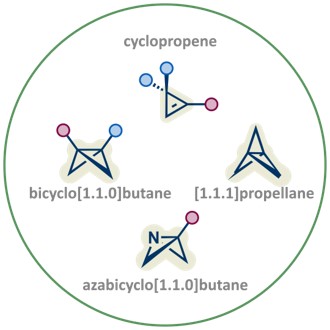
Hari’s team is using this energy within strained cyclopropane molecules to synthesise larger, 3D ring structures called bioisosteres, which can replace benzene rings in drug molecules. “It [bioisostere] is like a TV tower structure with arms and legs stretched out. So, it has a high chance to interact with other chemicals and form stable C-H bonds,” explains Hari.
These stable 3D bioisosteres solve another problem. When a patient takes a pill, much of it never arrives at the target site because the double bonds in benzene are oxidised by enzymes in the liver. In comparison, bioisosteres’ strong C-H bonds are hard for the liver to degrade, allowing more efficient drug delivery.
Metal catalyst waste in drug manufacturing is a parallel issue, and Hari’s group is tackling it by using light as a reagent. Both light and metal catalysts generate short-lived intermediaries such as carbenes, which can reform into the product. Carbenes are carbon atoms with only two bonds instead of the usual four. This leaves two non-bonding electrons, making it unstable and extremely reactive. The two electrons may occupy the same orbital as in singlet carbenes or separate orbitals as in triplet carbenes. Singlet carbenes react in a concerted process, while triplet carbenes react in a two-step process.
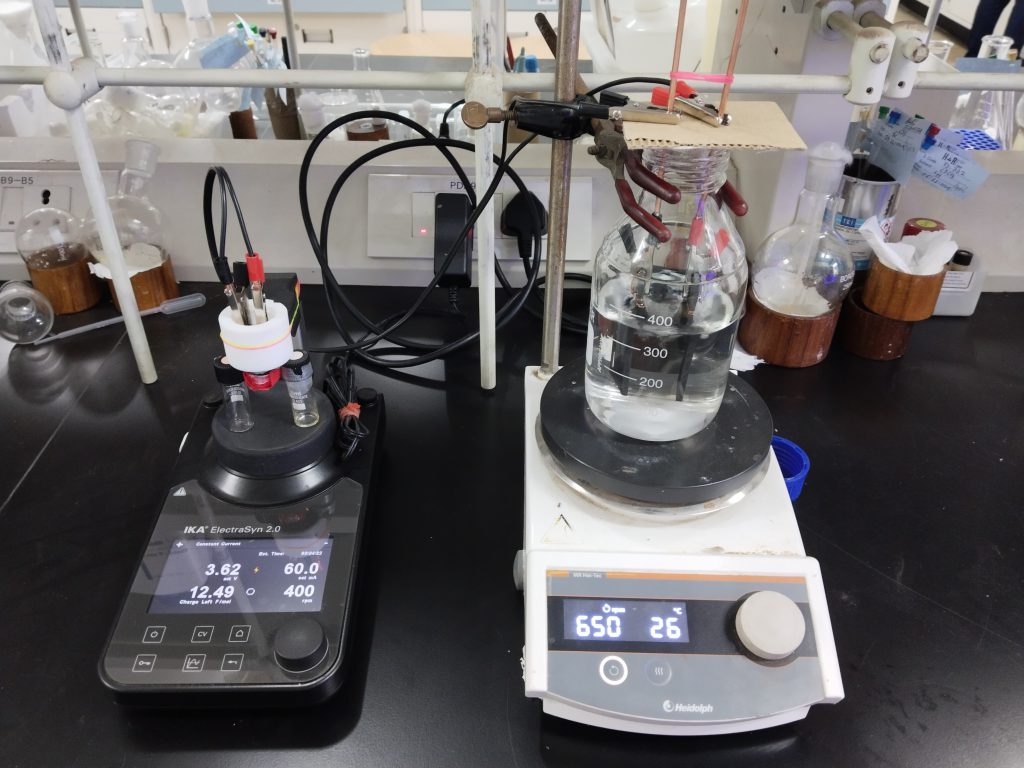
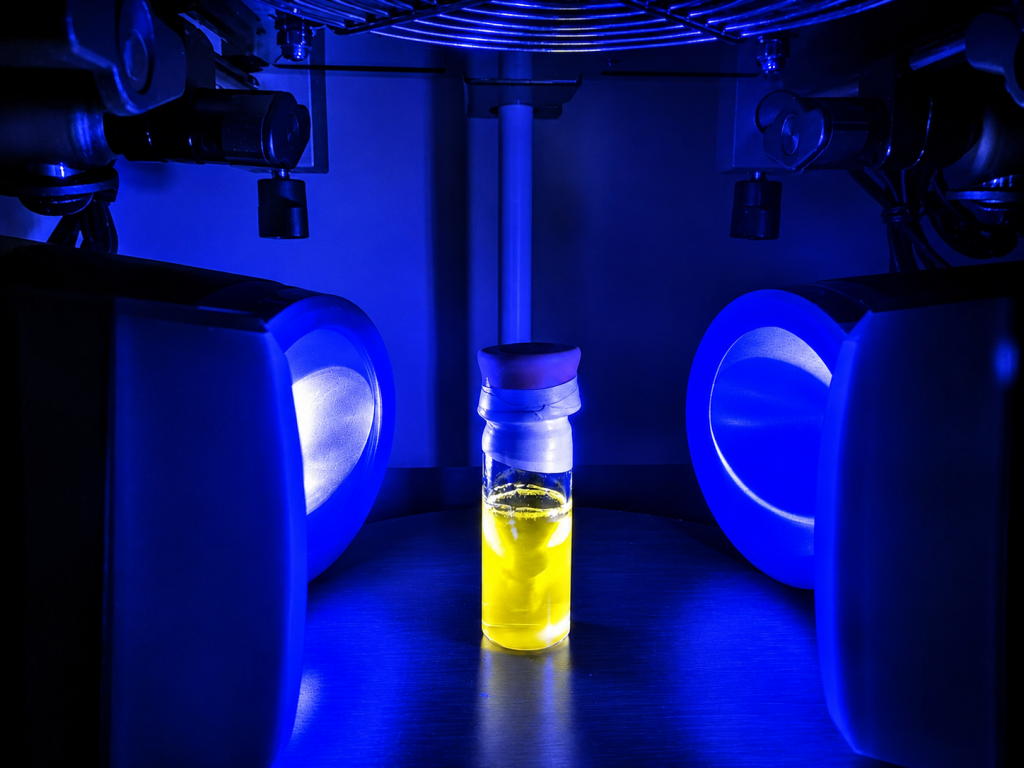
Metal catalysts typically generate only singlet carbene intermediates and have hence been used widely. But the catch with light as a catalyst is that it tends to produce a mixture of singlet and triplet carbenes, which can lead to multiple reaction pathways, mixed products, and lower yields, which is a problem when one specific pure compound is needed. So, Hari’s team found a way to tackle this – adding high temperatures with light shifts the equilibrium toward singlet carbene, while adding electricity favours the generation of triplet carbenes, opening routes to new chemical synthesis not possible with metal catalysts.
While sunlight – free, abundant and renewable – is an appealing choice to scale up light-powered reactions, it arrives as a potpourri of wavelengths and colours, whereas chemical reactions demand precision. In the large vessels in which chemical manufacturing processes are carried out, blue and green light will be absorbed by proteins and enzymes, leaving the reactants in the dark. The answer to this problem lies at the other end of the spectrum – infrared light, which reaches its target without being ambushed. “We are now developing reactions that run on an infrared light source. It is low in energy, and not many substrates absorb in that wavelength,” adds Hari hopefully.
Gentle solvents
In January 2018, commuters skirting Bellandur lake, Bengaluru, encountered a baffling sight – the water body was on fire. Once a wetland teeming with migratory birds, it has since become infamous. A thick, toxic white froth had built on the surface due to detergent waste and effluents discharged from nearby industries. When it ignited, it burned for hours. Interestingly, the chemicals responsible for this are not exotic but rather century-old organic solvents and industrial compounds that are the backbone of chemical manufacturing.
To perform chemical reactions, the reactants must be well mixed within the same solvent. Organic compounds do not dissolve well in water and require excess amounts of nonpolar solvents, such as chlorinated solvents, to fully dissolve the reactants, thereby generating toxic carcinogenic waste.
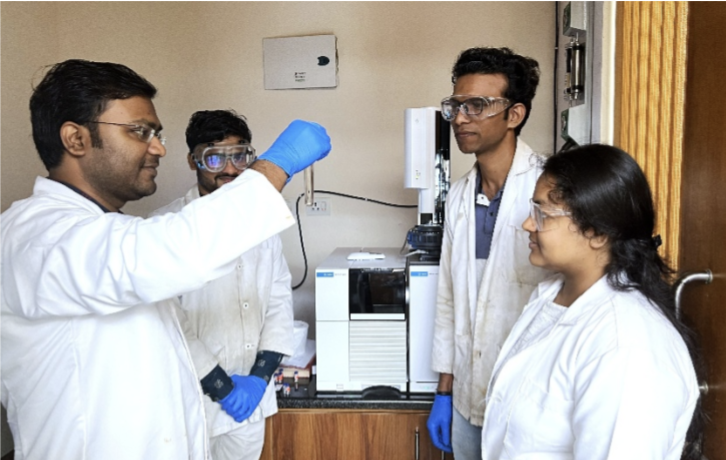
Green chemists like Susanta Hazra, Assistant Professor in the Department of Inorganic and Physical Chemistry (IPC), IISc, are finding ways to avoid the use of such toxic solvents. “Nature has been performing reactions in water for billions of years,” says Susanta. His lab works on detergent-like molecules, called micelles, which help perform organic chemical reactions in water.
Micelles are molecules with a water-repelling inner core surrounded by a water-loving outer region. In water, these molecules spontaneously assemble into tiny spheres with the water-repelling cores pointing inward, away from the surrounding water. Grease and oil are captured inside this hydrophobic core and carried away when the water is rinsed off.
Susanta’s lab exploits the same structure. The hydrophobic core of a micelle acts as a tiny reaction vessel, capturing organic reactants that would otherwise be insoluble in water. So, the reactants are crowded inside the micelle, and they collide more frequently and react faster. The result is a reaction that proceeds efficiently in water, without organic solvents, and often with better selectivity and reaction speeds.
Chemists have spent a century synthesising chemicals in organic solvents. But for millions of years, living cells have been running complex chemistry such as building proteins, breaking down sugars, and synthesising hormones in water. The secret lies in enzymes – proteins folded into precise 3D shapes to accelerate specific chemical reactions. Debasis Das, Associate Professor at IPC, takes inspiration from nature and uses enzymes to perform organic chemical synthesis in water.
The active site of the enzyme, where reactants bind and the product forms, is buried deep inside the enzyme. It is surrounded by a layer of amino acids that provides a suitable environment for hydrophobic substrates to bind and products to form.
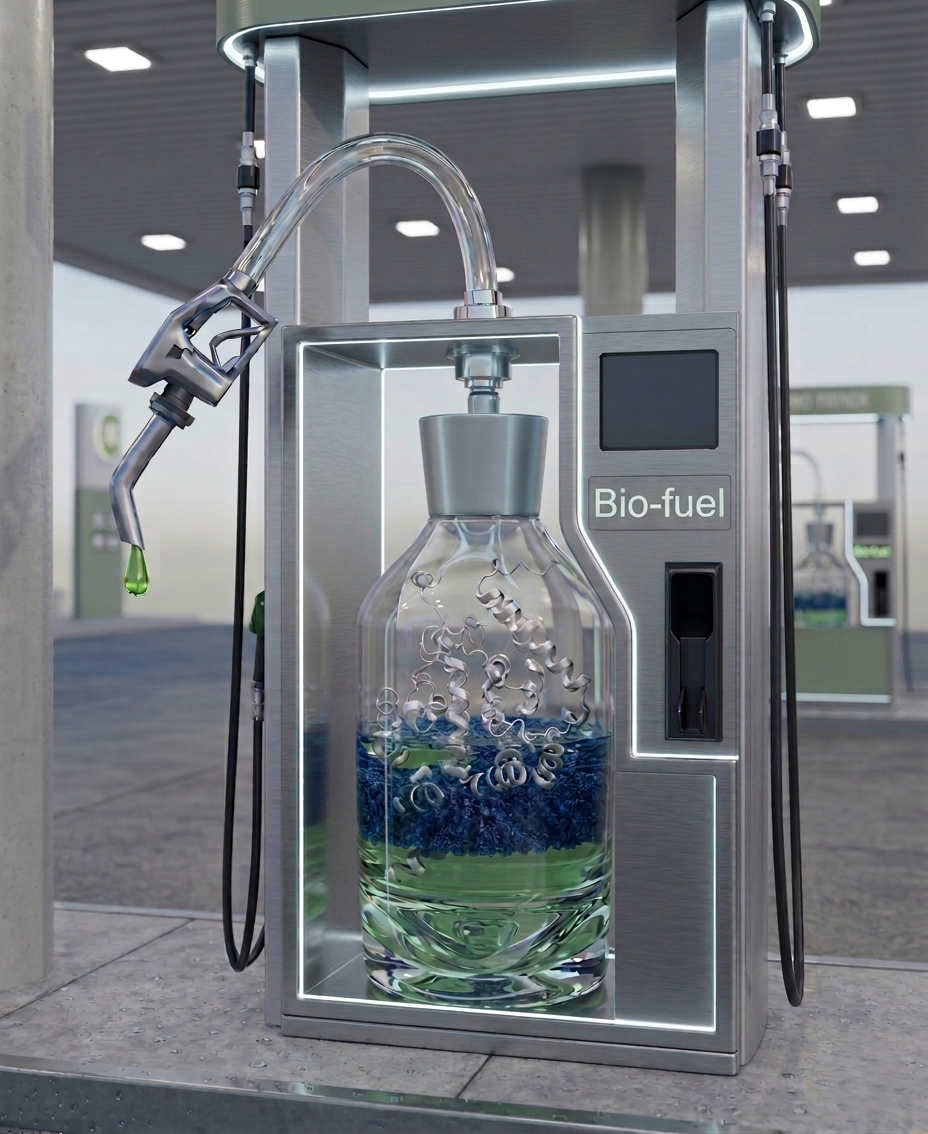
“There are many enzymes naturally that catalyse a wide range of chemical reactions in water, but they have not been explored fully,” says Debasis. For example, the enzyme UndB (a fatty acid decarboxylase) has the remarkable ability to convert fatty acids into terminal alkenes, which are important as fuels, polymers, and lubricants. But the enzyme can only carry out the reaction about 10-12 times before it stops working. To fix this, Debasis’ group resorted to protein engineering.
They found that the reaction produces hydrogen peroxide, which binds to the enzyme and inactivates it. To get rid of the hydrogen peroxide, the team added another enzyme, catalase, to degrade it. This substantially increased the activity of the UndB enzyme.
So, they combined UndB and catalase to produce a chimeric protein and cloned it into bacteria. When these bacteria are fed fatty acids and electron-rich compounds, they whip up terminal alkenes – hydrocarbon chains with a reactive carbon-carbon double bond at the end, which are used as versatile building blocks to make everything from lubricants and detergents to plastics and biofuels. The group has successfully taken this reaction from tiny microcentrifuge tubes to litre-scale flasks in the lab. They soon hope to test it in bioreactors with a capacity of 1,000 litres.
Closing the loop
Navneet Kumar Gupta spent his early years in a semi-rural area, closely observing farming life. It was only years later, while training to be a chemist, that he learned how practices such as burning agricultural residues and the heavy reliance on fossil resources contribute significantly to greenhouse gas emissions.
“I wanted to use chemistry for sustainability,” he says. That instinct took him through a Master’s thesis in biomass conversion at JAIST, Japan and then a PhD in sustainable catalysis at TU Munich, and eventually to IISc, where he is now Assistant Professor at the Centre for Sustainable Technologies (CST). His lab works at the interface of Green Chemistry, focusing on carbon circularity, biomass conversion, plastic recycling and upcycling, and CO₂ utilisation.
Under the Paris Agreement, nations have committed to reaching net-zero emissions by the mid-21st century, and carbon capture and carbon circularity technologies have emerged as key strategies. In parallel, carbon credit frameworks allow industries to invest in carbon-neutral technologies that either permanently sequester CO₂ or convert it into value-added chemicals and materials.
In Navneet’s lab, a major focus is on biomass-to-chemicals and biomass-to-fuels pathways, with particular attention to producing aviation fuels and fuel blends. Biomass is first depolymerised into sugars, which can be used to produce furanics. These furanics act as key platform chemicals for fuel precursor production and are further converted into fuel-range hydrocarbons.
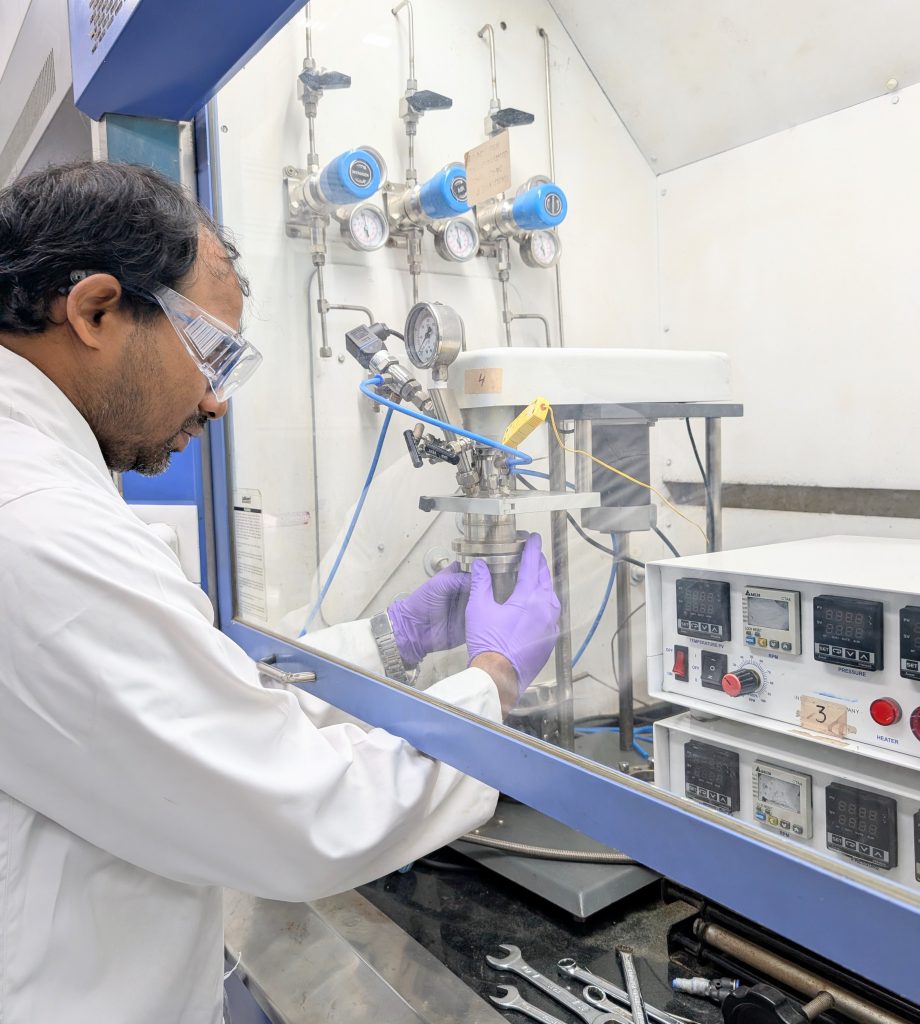
As a CO₂ utilisation strategy, the lab is focused on converting carbon dioxide into cyclic carbonates, which can serve as key intermediates for plastic production.
The lab also works on recycling existing plastics. Polyethene (PE), polypropylene (PP), polystyrene (PS), polyethylene terephthalate (PET), and other common packaging plastics are broken down using catalysts into their original building blocks or chemical intermediates. These can then be reused for producing new plastics or fuel-related chemicals. The carbon in these plastics, originally derived from petroleum at significant environmental cost, stays in circulation rather than being incinerated or landfilled.
The road not taken, yet
Here’s the challenge. Greener alternatives are often costlier to develop and implement, giving industries little incentive to abandon established but environmentally damaging processes. “Only the economic costs of chemical reactions are considered, but the cost to the environment is more important,” Susanta points out. When a student shows him a reaction that works, his first question is how many of the 12 principles of Green Chemistry does it satisfy?
“Traditional organic chemistry has developed over centuries, with well-established infrastructure and relatively lower costs,” explains Navneet. “Green chemistry is still relatively new and lacks the same level of industrial-scale support.” To bridge this gap, he emphasises that industry, academia, and policymakers must work together to translate Green Chemistry innovations from the lab to industrial scale.
India has long promised to tighten its chemical safety regime, with proposals modelled on the EU’s REACH (Regulation, Evaluation, Authorisation, and Restriction of Chemicals) framework. But progress has been slow.
When Miteni, an Italian chemical plant, shut down in 2018 after contaminating the drinking water of 350,000 people with per- and polyfluoroalkyl substances (PFAS, also known as ‘forever chemicals’), its machinery was dismantled, packed into freight containers, and reassembled in Maharashtra.
India, whose chemical sector is projected to hit a trillion dollars by 2040, must accelerate its transition to Green Chemistry. Otherwise, the costs can be dramatic. The burning lake in Bengaluru reminds one of Rachel Carson’s idyllic town in Silent Spring, where the birds stopped singing. In that seminal work, she wrote: “The road we have long been travelling is deceptively easy, a smooth superhighway on which we progress with great speed, but at its end lies disaster. The other fork of the road – the one ‘less travelled by’ – offers our last, our only chance to reach a destination that assures the preservation of our earth.”
Green Chemistry is that road.
Sindhu M is a PhD student in the Department of Bioengineering, IISc and a former science writing intern at the Office of Communications
(Edited by Sandeep Menon, Abinaya Kalyanasundaram)