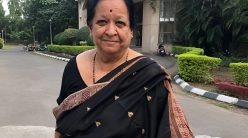
For KG Haridasan, IISc is truly home. It was on the campus that he grew up, did most of his schooling and on-the-job training, culminating in a nearly four-decade-long stint which ended with a role of Multi-Tasking Staff at the Department of Mechanical Engineering.
One thing that always drove Haridasan was his interest in learning. It held him in good stead as he not only picked up on the nuances of his official tasks but also helped him stay abreast when technology evolved at a rapid pace. Perhaps most interestingly, it made him one of the most popular staff members at IISc as he became the de facto photographer for all major events at the Institute.
Since retiring in 2024, his vocation has truly become his occupation, leaving him ‘busier after retirement than before.’
In a chat with CONNECT, Haridasan traces his life and times on campus.
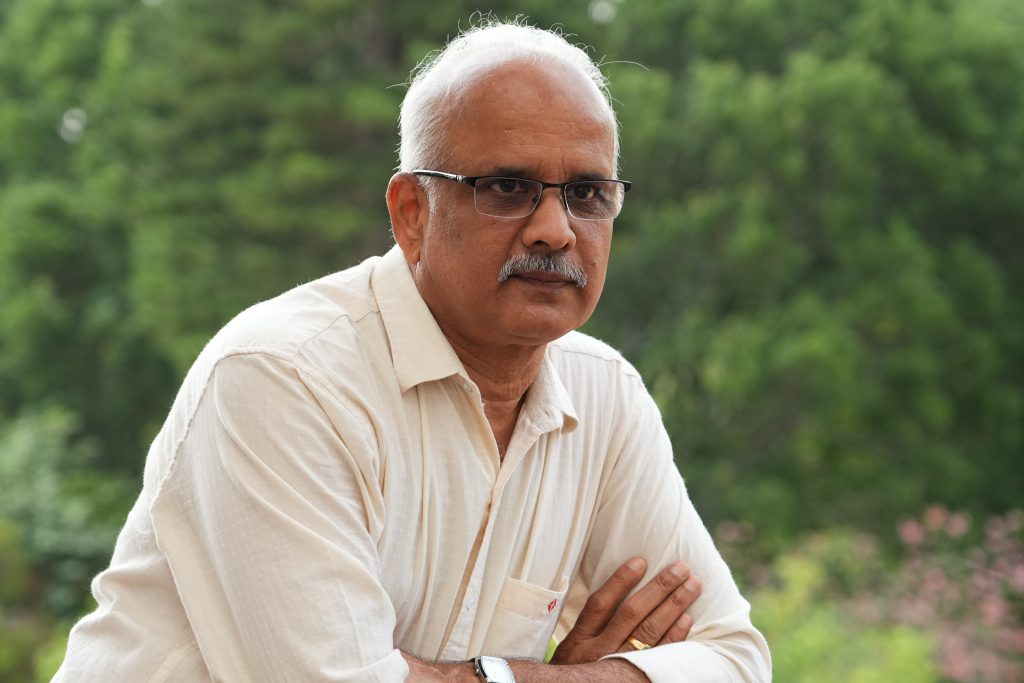
Can we talk about your childhood, which was in this very institution?
My father worked here for nearly 33 years. He worked in the mess and then in the hostel as an attender. He was a permanent employee. He retired in 1983. We lived in the quarters here; I was born here and studied here in a Kannada-medium Government Model Primary School till grade seven. Then I switched to the English-medium stream at MS Ramaiah High School. I found it difficult to understand the subjects, but I managed and finished matriculation in 1980. I wanted to study further, but due to my family background and circumstances, I could not.
You know, when I was studying in grade six or so, we used to roam in these forests. There were fewer buildings. Wherever you look, you would see greenery, and the climate in the 1970s was really cold, freezing. You couldn’t even see the other side of the road. Over the years, new departments have come up. It had changed a lot by the time I retired in 2024.
How did you end up working at IISc?
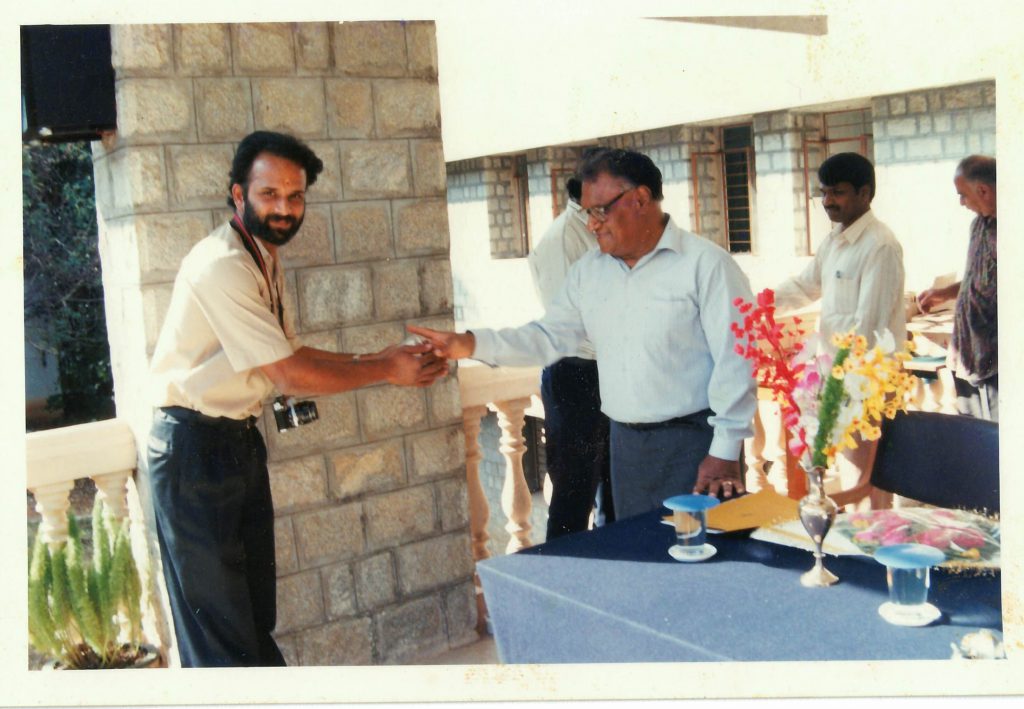
After matriculation, my father suggested that I do an apprenticeship in a technical company. I tried, but I didn’t get in. I then worked for nearly two years in an engineering workshop, where I learned lathe work, drilling, welding, manufacturing tools, and so on. After that, my father recommended my name to Prof S Seshan. He was a faculty member at the Department of Mechanical Engineering. Because of him, I got a job on a project in the Department of Metallurgy (now Materials Engineering) in 1983. I worked for nearly one and a half years with Prof GNK Iyengar, on material melting, heat treatment, property analysis, and so on. Then I got in with Prof Seshan on another project; I joined as a ‘mechanic’ in the foundry lab. So, I learned foundry, melting, moulding, several types of casting, some property analysis like hardness testing, elongation, sand testing, microstructure study, and more. I also learned black and white film developing and printing. Prof Seshan really supported me. On 14 May 1986, I got a permanent job in his lab at IISc.
‘I did get a chance to be in a learning institute, which gave me a platform to learn various types of work and technical skills’
Besides getting a salary, I wanted to learn something because I always had ambitions to learn further. That did not happen, but I did get a chance to be in a learning institute, which gave me a platform to learn various types of work and technical skills. I also worked with other faculty members, including Prof MR Seshadri, Prof MN Srinivasan, Prof KS Sreenivasa Murthy, and Prof S Satish Kailas. They all supported me and used to teach me about materials, different properties and alloys, and so on. I even learned how to use an optical microscope and how to take a microscope photograph.
I worked as a full-time employee for 38 years and 10 months. I can say that it is only because of Prof Seshan and others that I am here today. Whatever I have learned, whatever I eat, my family’s life, it is because of him.
You stayed on the campus your whole life?
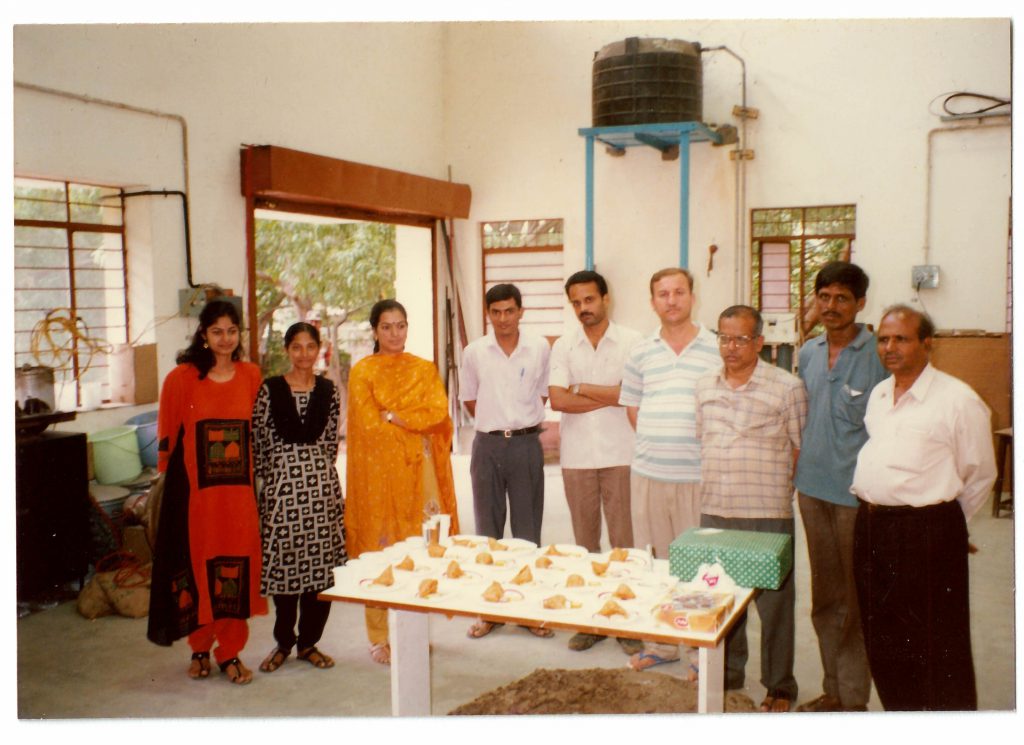
My father retired in 1983 and moved back to Kerala, but I stayed with a distant relative on the campus for two years. They used to work here as a cook in Roddam Narasimha’s house. I stayed with them till I got a permanent position. When I was working on the project before that, I was getting only Rs 200. I was also just 19, so I didn’t dare to live alone. In 1987, I got married and moved out of the campus, but we got a living quarters in the HMT campus in 1993-94. IISc has taken a contract there for housing. In 1997-98, we went out again and then around 2000-2002, we moved back to the campus.
How did you get into photography and become the go-to man for the job in the Institute?
Photography was part of my job. We used film cameras and film technology in those days. We used to manually develop and print everything. There was a lot of consultancy work from other companies for testing. Whatever work was being done, we had to capture it.
‘I had to capture experimental setups. I used to print 300-400 prints a night; it was demanding work’
For students, their publications had to be submitted in hard copy, with photos pasted into their theses. I had to capture experimental setups. I used to print 300-400 prints a night; it was demanding work. So, I learned about photography, and then I learned how to take photographs. Shamanna (another fellow staff member) was my guru in photography; he taught me how to take microscope photographs, about different lenses and different magnifications, how to use light, and other such things. Then he taught me macro photography. I was keen to learn because it was all about creativity. Slowly, people started to recognise me as the one who takes photographs.
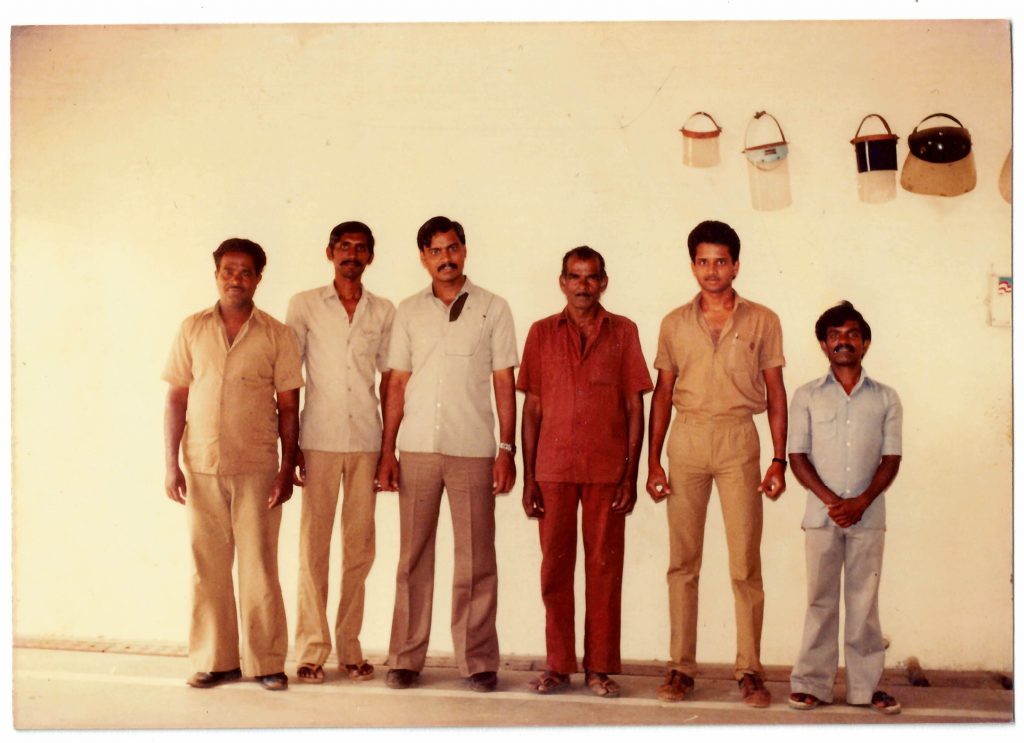
What was the first event that you took photographs of, which kick-started your parallel photography career?
My first event was in 1992. A student got married, and his reception was held in our community hall. He asked me to take photographs. Until then, I was taking only departmental photographs. Then all the staff learned that I knew photography and developing, and I knew how to make slides for projection. Because of this, faculty members used to call me to help make slides. I ended up working with most of the faculty members at IISc. Alongside that, I also did my photography.
Now you take photos for almost all the events at IISc …
Yes, after retirement, I have been taking a lot more. I am busier now than I was when I was working.
And what are you learning now? It looks like you have spent most of your life upskilling yourself one way or another.
Yeah, I’m extremely interested in learning new things and about modern technology. I want to learn AI, but because of my pending work and other events, I have not been able to concentrate on it. I know how to use AI, but I want to create more complicated things and tell stories through it. I will do it very soon.
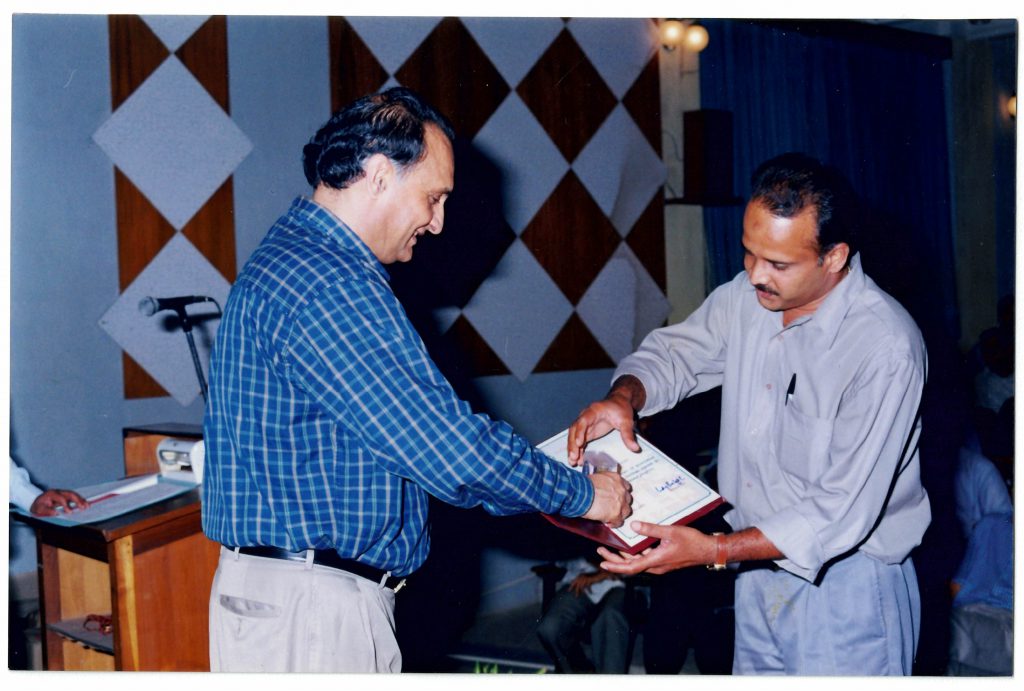
Did you ever think of leaving IISc for other opportunities?
Many students and faculty members suggested that I study further; even my family said so. They all said that I should go to evening college. They all supported me, but I don’t know why I didn’t continue. Everything requires money, and those constraints were there. I didn’t apply anywhere else for jobs either. This is the best place anyway. All the amenities are available. My son, Dr H Pradeep Kumar, studied here, then completed his MBA, and holds an honorary doctorate.
All your life, you have stayed in and around IISc. What does this place mean to you?
I can say that this is a temple of knowledge. During my school days, I used to learn yoga from Ashok Kumar, a student in the Department of Chemical Engineering. His experiments took place at night and lasted several hours. I used to sit with him after dinner and work till 12.30-2 am. He would also teach me about his work. I say this to show that if you have an interest, you can learn anything here. If you want to learn something, IISc has people who know it and will encourage and help. They are all truly kind people here.
(Edited by Abinaya Kalyanasundaram)