Growing up in rural Andhra Pradesh, Murthy Gudipati sometimes slept in fields looking up at the stars. A few decades later, he now studies them as an astrophysicist and planetary scientist at NASA’s Jet Propulsion Laboratory (JPL) in Pasadena. An IISc alumnus from the 1987 batch, he studies the evolution of different kinds of ice in the universe, and the surfaces and atmospheres of solar system bodies and exoplanets. He also serves as Co-Investigator and Investigation Scientist in NASA’s Europa Clipper mission. He speaks to CONNECT about what ice in deep space can tell us about the origins of life, and why he feels education might be humanity’s best bet for survival.
Where did you grow up, and what was your childhood like?
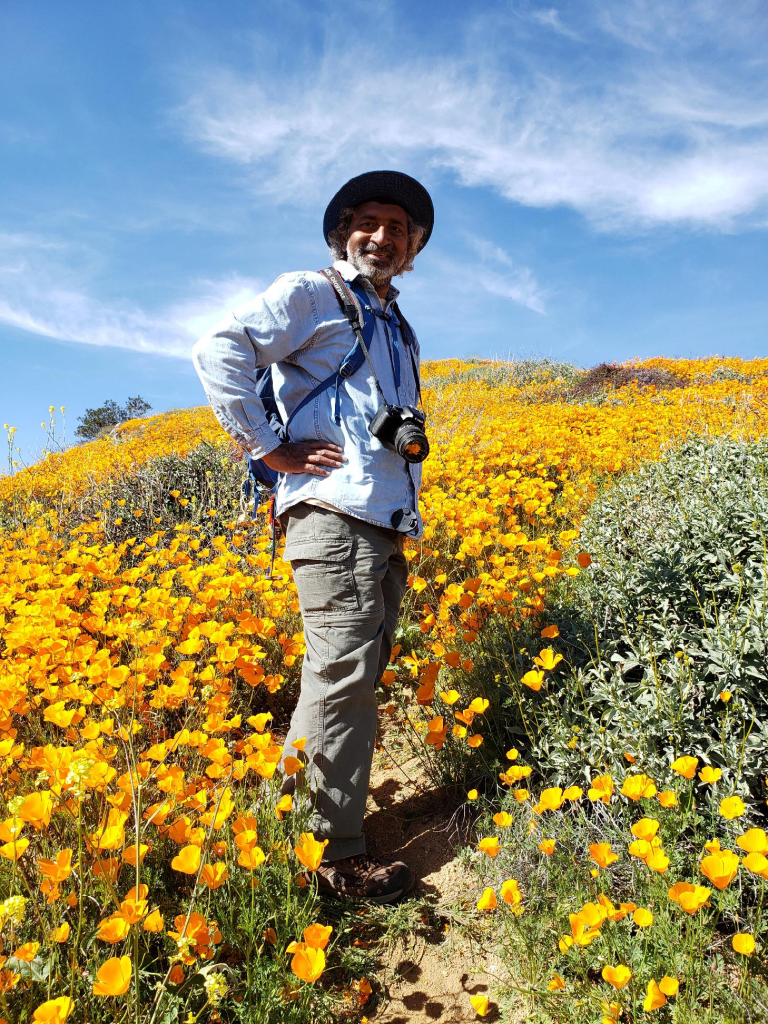
I grew up in a small village in rural Andhra Pradesh, with a population of barely 200. There was plenty of access to nature, and I would climb all kinds of trees to pick fruit, take care of cows and buffaloes, and help in our peanut fields.
I’d sleep in the fields at night during harvest season. With no light pollution in those days, the sky was full of dots … stars. For school, I would walk about four and a half miles one way, which took about two hours. I enjoyed that. It gave me ample time to fantasise, contemplate, and talk to myself.
That’s a beautiful memory. Is that how you got drawn to science?
I was drawn to the natural sciences as early as grade six. I probably started learning, subconsciously, during my walks – wondering why the sun rises around the same time and other such thoughts. I used to try to calculate how much I would have to walk based on the angle of the sun to the horizon (laughs).
Someone suggested I study economics and civics in college, to get a bank job, but I wanted to study mathematics, physics, chemistry, and natural sciences.
Chemistry is a difficult subject, but if teachers make you think rather than memorise, you realise the logic behind it
And then you specifically decided on chemistry.
That was actually influenced by my teachers. During my Bachelor’s at the SRR and CVR Government College in Vijayawada, I had excellent physics, chemistry, and mathematics teachers. Among them, our chemistry lecturer was outstanding. Chemistry is a difficult subject, but if teachers explain it in simple terms and make you think rather than memorise, you realise the logic behind it.
I also used to spend significant time at the UGC Library at the college, reading about quantum mechanics and theoretical chemistry, which deepened my interest.
How was your Master’s degree experience?
In those days, as a village boy, there was not much access to information. An unfortunate thing for people, even today, is not the lack of passion or motivation, but the lack of information.
By sheer luck, while visiting the local library in Vijayawada, I came across an advertisement from the University of Hyderabad (UH) for MSc admission interviews that included a travel allowance, so I applied for that. Hundreds of students wrote the entrance exam; I thought I wouldn’t have any chance to get through. But that evening, I found out I was one of the 25 pre-selected. After the oral interview, I travelled back to Vijayawada and a few weeks later, I received a telegram informing me that I was selected. I was jumping with excitement. I went from one bank to another seeking a loan, and finally, one bank offered a study loan, and I joined the UH for a Master’s in chemistry.
I had fantastic teachers there – Prof Govardhan Mehta, who later became the director of IISc, and Prof D Balasubramanian, who became the director of the Centre for Cellular and Molecular Biology (CCMB). In my third or fourth semester, I worked on a project in theoretical chemistry with Prof Eluvathingal Jemmis, who later retired as a professor at IISc and was the founding director of IISER Trivandrum. I was his first student.
My time at the UH strengthened my interest and my passion for chemistry, though physics, too, was always at the back of my mind.
I had the best five years of my life at IISc
How did you choose IISc for a PhD?
I actually wanted to go to the USA for a PhD, but my mom would be alone; my father died very early in my childhood. So, I decided to do a PhD in India.
I first interviewed at the Tata Institute of Fundamental Research (TIFR), and two days later at IISc. I travelled by train in the general compartment; it took one and a half days from Mumbai to Bangalore! I attended two interviews – one at the Department of Organic Chemistry and one at the Molecular Biophysics Unit (MBU). I got selected in both. I chose Organic Chemistry and worked with Prof K Venkatesan, with whom I had a great mentor-mentee relationship.
I began researching X-ray crystallography. Prof Ramamurthy, a photochemist, came on as my co-advisor. That was the beginning of my PhD career. I had the best five years of my life at IISc. When you go to an institution in your formative years, it contributes in shaping you. I was 21 when I joined, and about 26-27 when I left. That’s a critical time.
Your post-PhD journey seems like a trip across the world – you moved to Texas, then Germany and are now at NASA JPL.
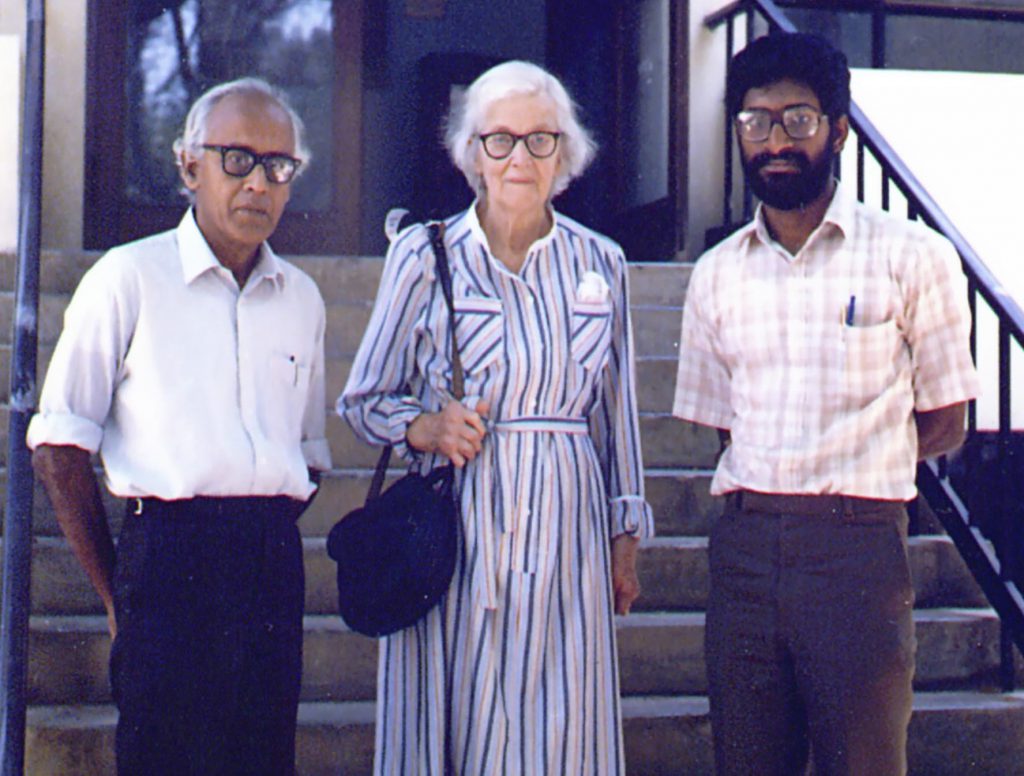
Yes, I decided to move away from crystallography; India already had too many crystallographers. So I went to Austin, Texas, to work on low-temperature spectroscopy and chemistry.
During my postdoc, I worked with a German student who became my girlfriend and, later, my wife. I moved to Cologne, Germany, to do habilitation, which is like a tenure-track position, in low-temperature spectroscopy. I completed that in 1998 and was looking for faculty positions.
Around that time, I met a NASA scientist, Louis Allamandola, at a Gordon Research Conference. The work I was doing in low-temperature spectroscopy focused on aromatic molecules called polycyclic aromatic hydrocarbons (PAHs), and he happened to be the one who proposed that these molecules are ambivalent in interstellar space.
I later visited him at NASA Ames Research Centre for a summer, during which we worked on an interesting project. A prevalent molecule in space is water … but water exists mostly as ice because the temperatures are so cold. What happens if the water and the PAHs are co-trapped to become ice?
Those three months opened up a new area of research in optical spectroscopy of water ice. I decided to move to the USA to the University of Maryland, College Park and the Stanford Research Institute. Lou and I continued our collaboration on PAHs in ice. After a few years, I moved to the NASA Jet Propulsion Laboratory, a part of Caltech, to focus more on planetary sciences, ice, and other materials in planetary environments.
What kind of insights can ice really give us about our universe?
When we say ice, it is usually water ice, right? But it can also be any other molecule forming a solid at very low temperatures. The uniqueness of water ice is that, spectroscopically, we have observed it in every astrophysical and planetary environment where the temperature is below a certain threshold, and typically with no atmosphere (except our own Earth). Even our Moon has ice in permanently shadowed regions, in craters where sunlight never reaches.
In the matter between stars in our galaxy, typically, it is a vacuum; we call this the interstellar medium. But there are regions with so-called molecular clouds; one of the more famous ones is the Horsehead Nebula. These are all extremely cold environments where all molecules freeze, and water is the dominant molecule in these ice grains. It is in a form called amorphous water ice, which our research has shown can support extremely complex chemistry because it is a place where the rest of the molecules in the interstellar medium are trapped. You have oxygen and hydrogen from water, carbon from carbon dioxide, nitrogen from ammonia, and sulphur – all these elements together, when subjected to radiation from galactic cosmic rays or nearby stars, even at these frigid temperatures, create almost a chemical soup. When we simulated that in the lab, we found that the building blocks of life can be synthesised there.
Among the many hypotheses on how life could have started on Earth, one is based on this. These molecular clouds, these ice grains – which already carry the chemical building blocks of life – eventually come together to form comet-like material. This happens because molecular clouds undergo gravitational collapse, where the pressure builds until a new star is born. Around that newborn star, the surrounding material – including these ice grains – gets incorporated into comet-like bodies.
In our solar system, there appears to have been a gravitational instability between Jupiter and Saturn around four billion years ago. This disruption flung these small comet-like bodies across the solar system, including onto Earth and the Moon. We think that soon after this bombardment – about four billion years ago – the first form of life on Earth was detected, about 3.7 billion years ago. This is the importance of ice and its connection with life on Earth.
You are also involved in NASA’s Europa Clipper mission. Can you share more about that?
Europa is one of the four big moons of Jupiter. It has twice as much water as Earth.
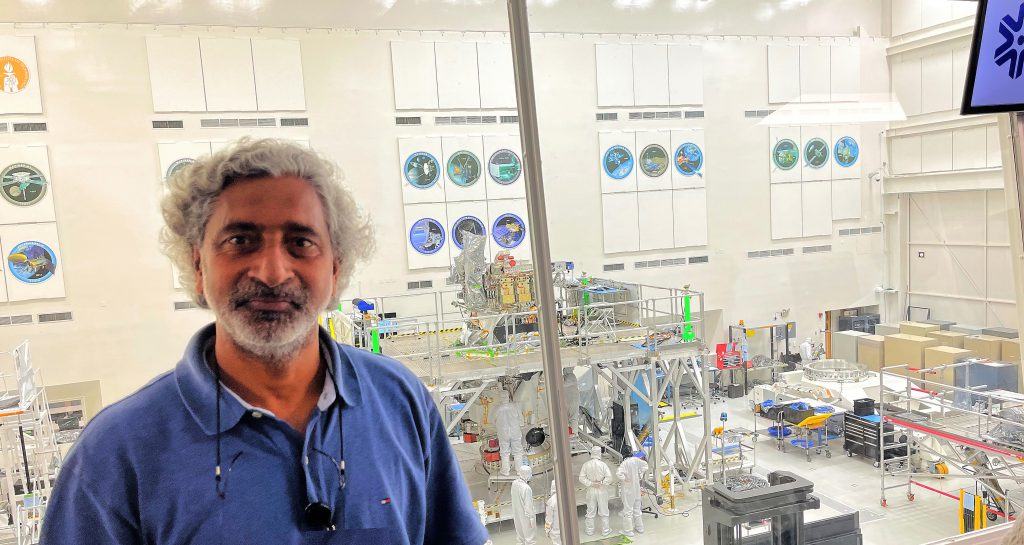
We want to understand how radiation affects ice on Europa and whether there is any exchange of water between its subsurface ocean and the surface through the ice crust. For example, if there were to be life, microbial life or something else, and if it gets pushed up to the surface, would it survive? How long can it survive? If it doesn’t survive, what radiation-driven chemical processes would occur? These are also things we study in the lab.
The spacecraft will reach Europa in 2030, right? What are you most excited about finding?
I would be extremely excited if we could see the night side of Europa, where there is no Jupiter shine, or Ganymede (another of Jupiter’s moons) shine … when it’s really, really dark … and see whether there is any ice-glow coming off from the surface.
Jupiter’s radiation, especially electrons and protons, bombards Europa heavily, day and night. Our lab work has shown that this bombardment leads to so-called electron-induced luminescence from ice. And that [glow] depends upon what kind of composition those ice regions have. For example, if the ice contains sodium chloride, it will not glow. If it has magnesium sulphate, it will glow really bright. So, if the surface of Europa is non-uniform, then different areas should glow at different intensities.
I would also like to know how thick Europa’s ice crust is and whether it is uniform. Then we can consider sending ice-penetrating instruments into the ocean one day to see what it is made of.
Europa Clipper is not a mission to find life … only to examine if conditions for life are present
Is it more promising to find signs of life on moons than on planets?
To find life somewhere else, we need to know what we are looking for. We have only one example – life on Earth. So, we are searching the universe with this one known example. Not because other kinds may not exist elsewhere, but because we have not yet found, either experimentally or otherwise, what that could be like.
Now, for carbon-based life, one of the most important ingredients, in addition to hydrocarbons, is water. So, we search for where liquid water is available. Mars once had liquid water, but its atmosphere is now gone, and the surface is dry. It has ice, but no liquid water. So, there might have been life, but it did not have enough time to evolve. So, the next thing that we look for is time to evolve. Other things include energy sources, minerals needed for life, and stability.
Other planets do not have these. So, we go to the moons. Of all the moons, Europa is the most important because it has liquid water inside, it has mineral-water interaction (rock-water interaction), and it has energy from an elliptical or eccentric orbit around Jupiter. Stability is also evident, as Europa has been like this for four billion years.
But Europa Clipper is not a mission to find life. It is only to examine if the conditions for life are present on Europa. If we find those conditions, the next mission can drill through the ice, enter the water, and see whether there is life. Or, if we are lucky, there might be plumes coming from deep within the ocean, and they may contain bacteria or other forms of life, so we can detect them more easily. That is a very rare chance, but that would be a jackpot.
I don’t know if humanity is ready to find out about life on other planets or moons.
One thing that happened to me going into astrophysics and planetary sciences is that I realised how precious life on Earth is. And that there’s no planet B for humans. We are taking life for granted. As for detecting life elsewhere in our solar system or in the universe, there is a non-zero probability. But when we find life elsewhere, it fills in that big intellectual void in human civilisation. However, I am not that optimistic that this could happen in my lifetime or in centuries to come.
I have been thinking about how we can build a better civilisation, one more at peace with our differences
Moving away from space for a bit … what motivated you to start IISc AANA and also work with the Notebook Drive initiative?
We have a responsibility to leave a better Earth for future generations. I have been thinking about how we can build a better civilisation, one more at peace with our differences. Education will help us develop logical thinking processes. If we can give every kid the ability to think, they may take a step back before resorting to violence.
So, I started a small scholarship programme, and I was also working with the Notebook Drive (a programme that promotes quality education in schools).
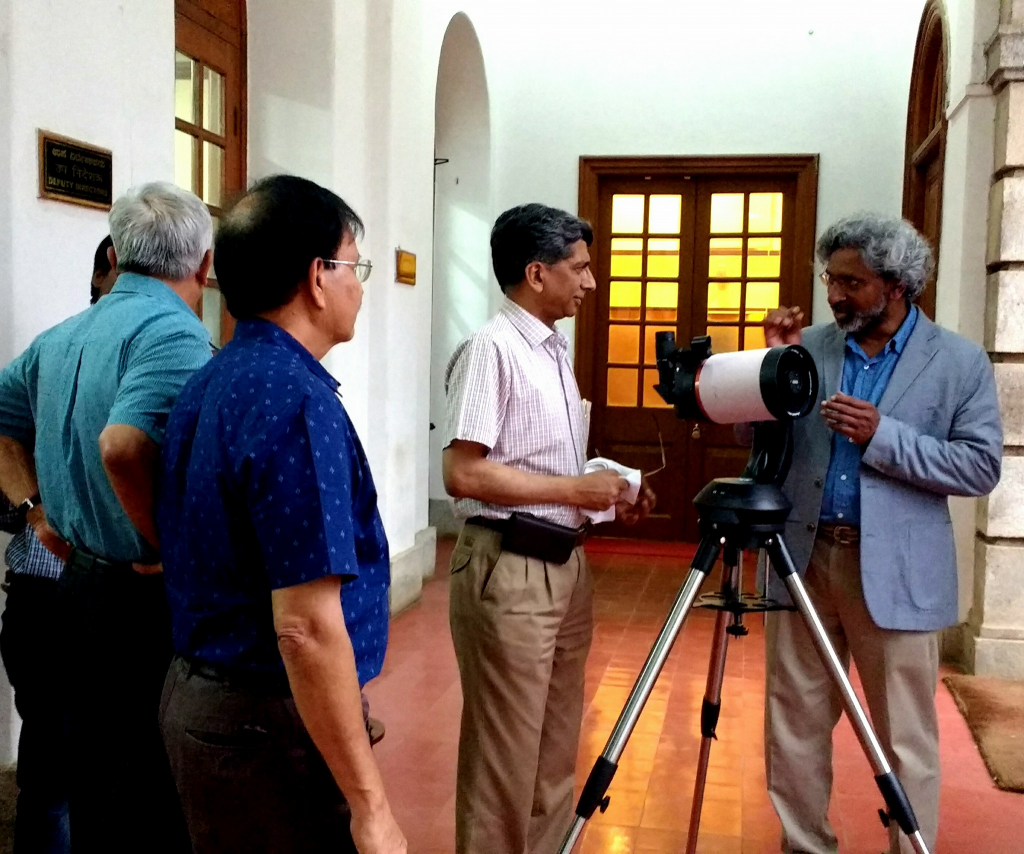
IISc has played such a critical role in my life. This gratitude led a few other IISc alumni and me to start the IISc Alumni Association of North America (IISc AANA) in 2000; it became incorporated as a non-profit in 2005. We have been working with directors since then, with students, and, of course, we are all doing things at an individual level. Whenever I come there, I try to mentor students.
Do you indulge in any hobbies?
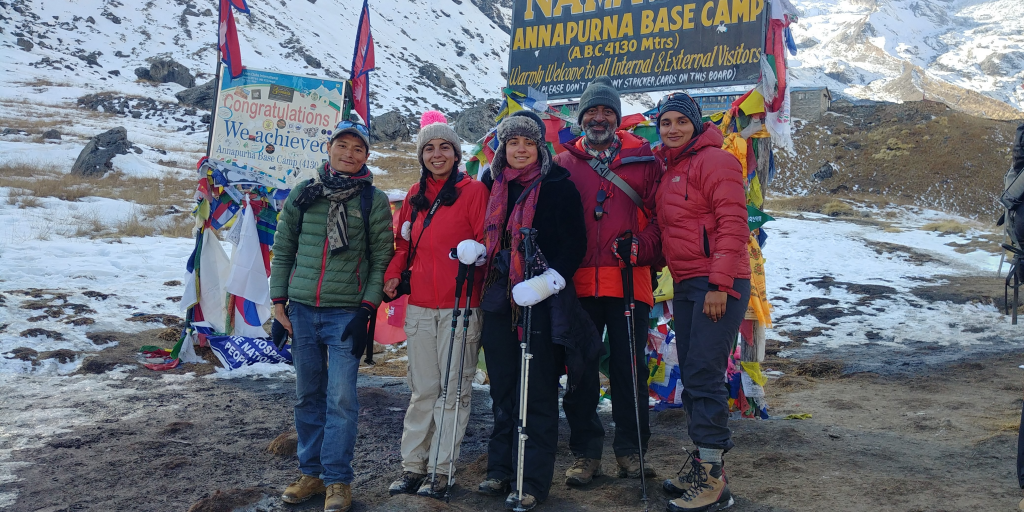
I enjoy vegan cooking. Listening to music across the world. We often go hiking in the mountains. One of our three daughters, Hima, is an avid mountaineer, and she took us on a week-long trek to Annapurna Base Camp. If we have visitors, I usually take them to the Mount Wilson Observatory, where Edwin Hubble discovered that the universe is expanding back in 1929.
Wow. Visitors must really like that. Space is fascinating, and humanity’s missions to understand it are even more so. Like the Voyager missions.
The interesting thing about the Voyager Mission, sent in the 1970s, is that they knew so much about the orbital mechanics of our solar system, that all the planets would be positioned such that the Voyager spacecrafts could take a gravity assist from each of them to go faster and further, while also studying them along the way.
Both Voyager spacecrafts, travelling at about 15 kilometres per second, are now entering interstellar space. Thousands or millions of years later, provided they do not collide with something, these spacecrafts could be the messengers of human civilisation to the universe and probably survive even longer than humanity.
A human-made spacecraft. Imagine … where we started and where we are … that’s the beauty of it [space exploration].
(Edited by Sandeep Menon)