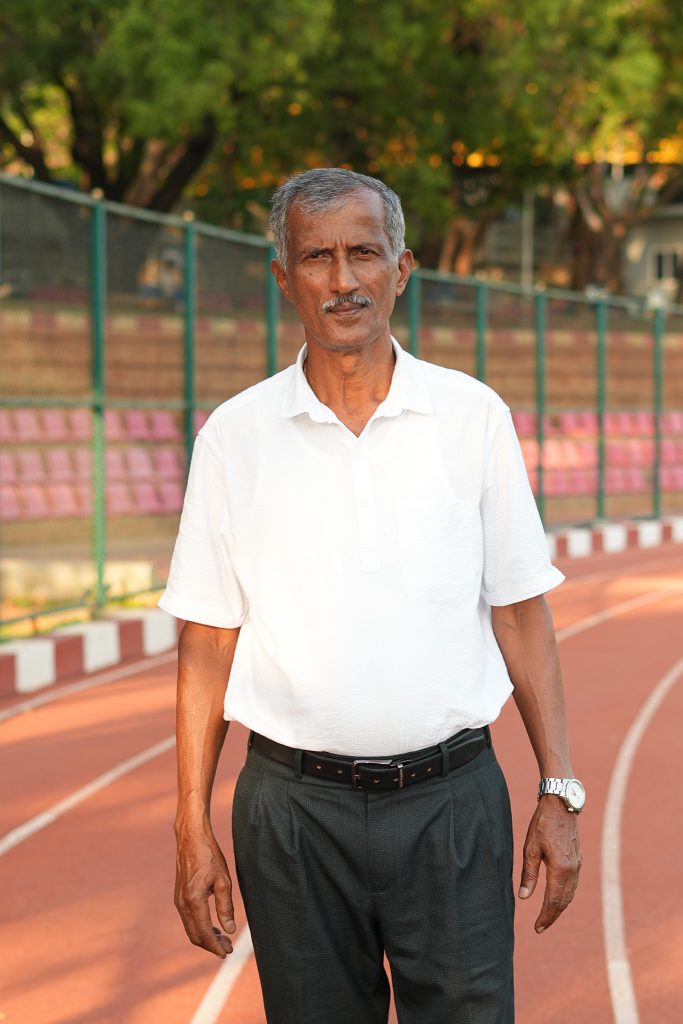
Growing up in Coorg, Karnataka, CP Poonacha was always engaged in sports and outdoor activities. He enjoyed them so much that he decided to make it his career. After completing a Bachelor’s and Master’s in Physical Education, he started his career at Karnataka University and later worked at Jyoti Nivas College, Bengaluru. He joined IISc in 1986 as a Sports Officer, where he has guided students in a wide range of sports and events and even provided personal mentorship. Now retired, the 69-year-old speaks to CONNECT about his beginnings, his three decades of service on campus, and how he is spending his retirement back in his hometown.
Please tell us about your childhood.
I hail from Coorg, where I completed my schooling through grade 10 at a rural government school. My father was an agriculturist, and my mother was a housewife. I was their only son, with an elder and two younger sisters. We tended the family land growing coffee, pepper, and areca nuts. My father, despite studying only up to grade seven, was a voracious reader. He told me captivating stories about world leaders, including the Maharaja of Mysore, Napoleon, Hitler, and Tipu Sultan. Later, when I joined IISc, he would devour every Kannada book in the JRD Tata Memorial Library, then regale my children with those tales.
Coorg is described as the “Scotland of India” for its rolling hills, mist‑covered valleys, lush green coffee estates, and cool, pleasant climate. With plenty of walking trails, streams, and open spaces, the environment naturally encourages physical activity and outdoor life.
Is that why you chose to study sports?
Yes, my love for physical activity and games has always been a part of who I am. In Coorg, people are naturally sports-oriented and very fond of outdoor games. Growing up, I enjoyed playing almost every sport – football, hockey, athletics, and indoor games. That passion naturally drew me towards a deeper understanding of sports through formal education.
After school, my goal was to become an expert in various sports so that I could guide and train others effectively. I believe that a sports officer must be well-versed in all the rules, techniques, safety aspects, and coaching methods to coordinate activities, conduct tournaments, and support athletes across disciplines. This conviction motivated me to study sports and build a career in physical education and student welfare.
I pursued my Bachelor’s degree (BA) at St Philomena’s College in Puttur Mysore University, Bachelor of Physical Education (BPEd) from MVAS College of Physical Education, Dharwad, Karnataka, with first rank and distinction. I also obtained a Diploma in Coaching Athletics from the National Institute of Sports in Bengaluru. I then completed my Master’s in Physical Education (MPEd) at Bangalore University. During my student days, I was a Decathlon champion and excelled at hockey and football. I secured first rank from the National Institute of Sport and Physical Education, and I was felicitated by the then Karnataka Chief Minister, Shri Gundu Rao, under the Bangalore Youth Services Department, which included a cash prize of Rs 5,000.
I had the privilege of being part of the team that trained athletes for the Asian Games in Bengaluru and of serving as an Athletic Coach for the 1982 Asian Games in New Delhi. I have also been a member of the Bangalore University committee for hockey for about 25 years.
Were you working before coming to IISc?
I worked for a year as a Lecturer at Karnataka University and then served for two years as Director of Physical Education at Jyoti Nivas College, Bengaluru. The college was exclusively for girls and had a well‑maintained feel. Because the college was autonomous, I enjoyed a great deal of freedom in my role.
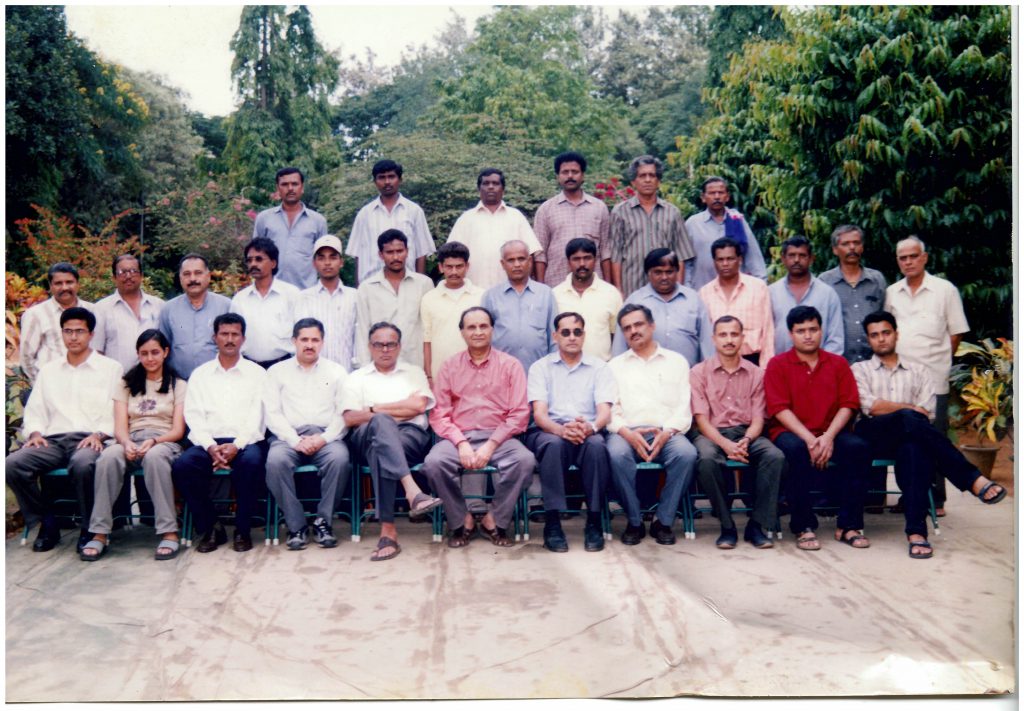
Since it was a new campus, I developed grounds for all major outdoor sports. I formed teams across disciplines and recruited expert coaches, enabling students to compete and win numerous prizes. Over time, I built a good reputation for the sports programme.
How did you join IISc?
I was staying with a friend at the HMT quarters in Bengaluru. On my way to work, I would often admire the IISc campus and the large grounds near Yeshwantpur. One day, I walked through the entire campus and wished to work at such a renowned institution. As if by providence, a vacancy for the Sports Officer post opened, and I applied. A distinguished panel interviewed me. I outperformed 44 candidates and was shortlisted for the viva. After the interview, I was selected as Sports Officer on merit.
Initially, Jyoti Nivas College tried hard to retain me. However, the IISc post was a higher-level, permanent Group A position and was an important step in my career, and I was required to join immediately. I had to meet the IISc Registrar and the Chair of the Gymkhana to request an extension of the joining date to complete my responsibilities and find a replacement at Jyoti Nivas College.
About 10 months after receiving my appointment letter, I joined IISc in 1986 as a Sports Officer. KV Shenoy was the Sports Officer before I joined. I eventually retired as Senior Sports Officer, having received two promotions during my service.
You stayed at the Institute for more than 30 years. What sports did you teach?
The size and quality of the Institute’s campus, its sports infrastructure, the support staff, and the opportunity to work with vibrant students were the major reasons I chose to stay at IISc. I have always been an all-round sportsman. You name a game, I know it. I engaged students in a wide range of sports, including cricket, football, hockey, badminton, and more. My main specialisation is athletics, and I coached students on running, jumping, throwing, and fitness training. I also provided coaching in billiards, snooker, and general gym-based fitness.
We built a strong sports culture at the Institute, with teams from different departments, a dedicated students’ team, and a staff team. Regular matches and competitions were organised on special occasions involving students, staff, and their families, promoting fitness and fostering camaraderie.
Were there any challenges you faced?
Working with highly intellectual students posed a challenge. Unlike regular universities, research institutes like IISc have a different rhythm; our students often have to balance heavy academic workloads with sports and cultural activities.
Another major challenge was the Gymkhana’s limited budget. With requirements for 25 different games and events, it was difficult to provide quality equipment and facilities for everyone. Due to financial and administrative constraints, I could not take our team to tournaments such as those at IISER Bhopal, and later, even sending UG students to external competitions became difficult.
Have any IISc students participated in national or international events?
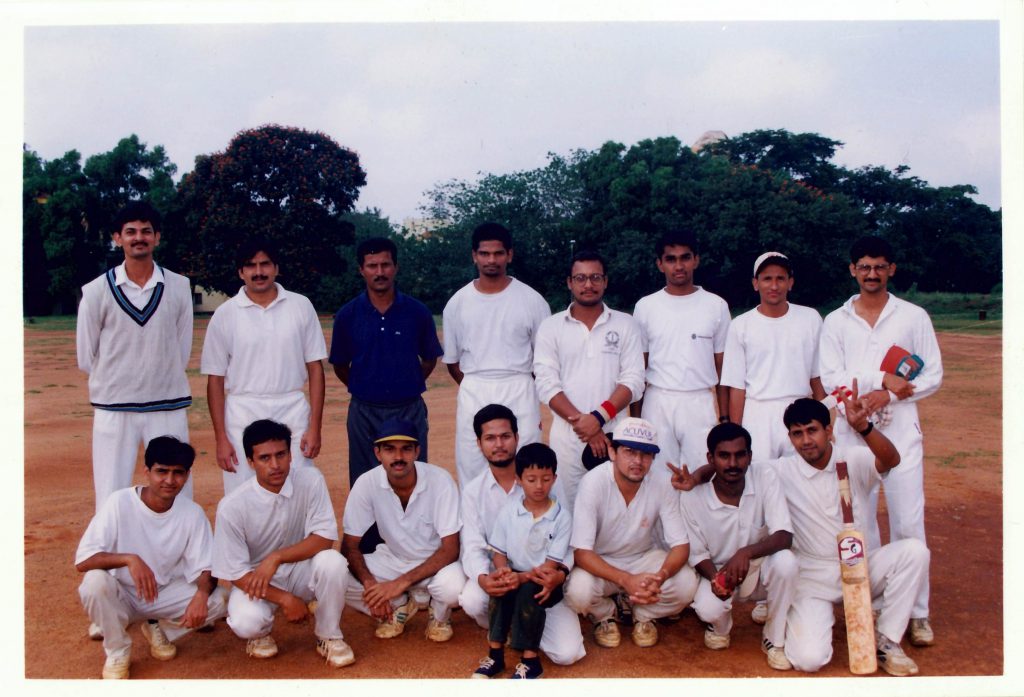
IISc students have participated in state-level teams in athletics, football, hockey, cricket, tennis, basketball, volleyball, billiards, and snooker. These players competed in varsity leagues and state association matches but often prioritised studies over advancing to the national or international levels because of the intense practice demands.
Tell us more about the Gymkhana activities and management.
The Gymkhana buzzes with a wide range of sports and events. It offers indoor games like badminton, chess, and table tennis, as well as outdoor sports such as football, hockey, cricket, and basketball. General activities include taekwondo, frisbee, aerobics, dance, film club, yoga, cross-country races, and swimming. Student fests in the past included Vibrations, and today there are Rhapsody (PG) and Pravega (UG), as well as events like a 32-km campus marathon from IISc to HAL.
The Gymkhana committee ensures seamless organisation and promotion of all athletic activities. It is composed of the Honorary President – a dedicated faculty member who provides strategic oversight and institutional support – the Sports Officer – the operational lead handling day-to-day logistics, event planning, and resource allocation – and the Students’ Body with elected student representatives who bring a lot of energy, gather feedback, and champion peer participation. This model has proven highly effective, fostering school spirit and lifelong fitness habits among the IISc community.
There were also movie screenings held at the Gymkhana earlier, right?
Yes, there used to be a movie screening on Friday nights. We borrowed movie tapes – mostly English films – from Mumbai and obtained the necessary permissions. A licensed technical person, Murthy, was appointed to operate the projector. I remember going to the commercial tax office to pay the required tax before each screening, as there were many formalities involved in showing a film in any place other than a regular theatre in those days. A generator was also arranged for an uninterrupted power supply. These movie nights became a major source of entertainment for students.
When I joined, the movie screenings had been suspended due to complaints about films allegedly being shown illegally. I discussed with the concerned authorities and helped regularise the process to make it fully legal. I serviced and restarted the projector. With the help of Thimme Gowda from the Department of Electrical Engineering, we checked the power connections, arranged proper entry and exit boards, and installed exhaust fans, trying to make the Gymkhana hall feel like a real movie theatre.
Similarly, the swimming pool had also been closed due to a lack of maintenance. I appointed a professional to maintain and operate the swimming pool and gradually brought it back into regular use.
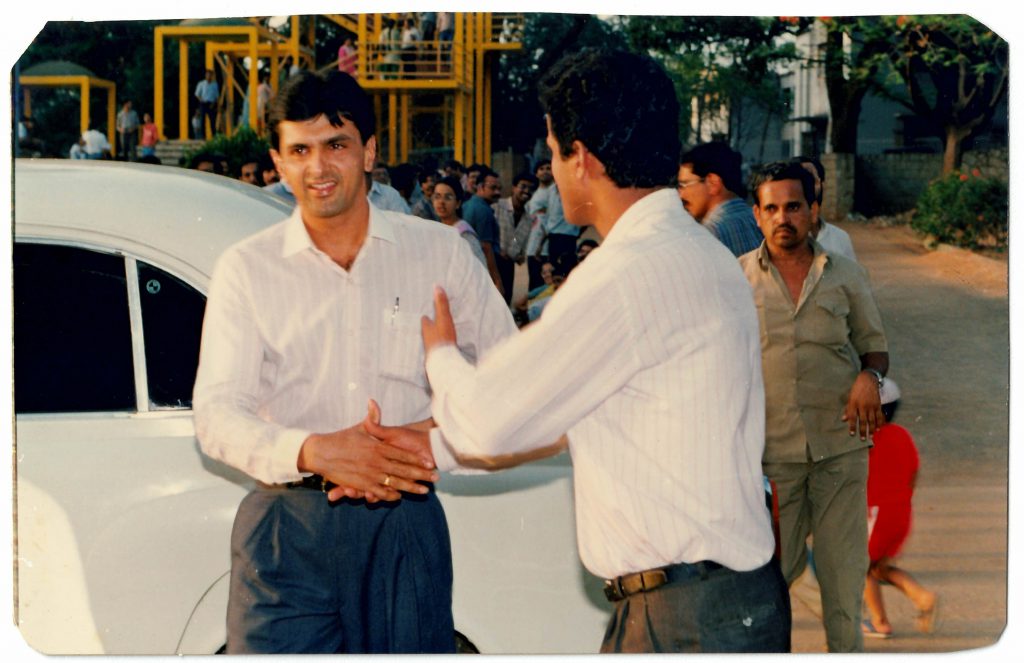
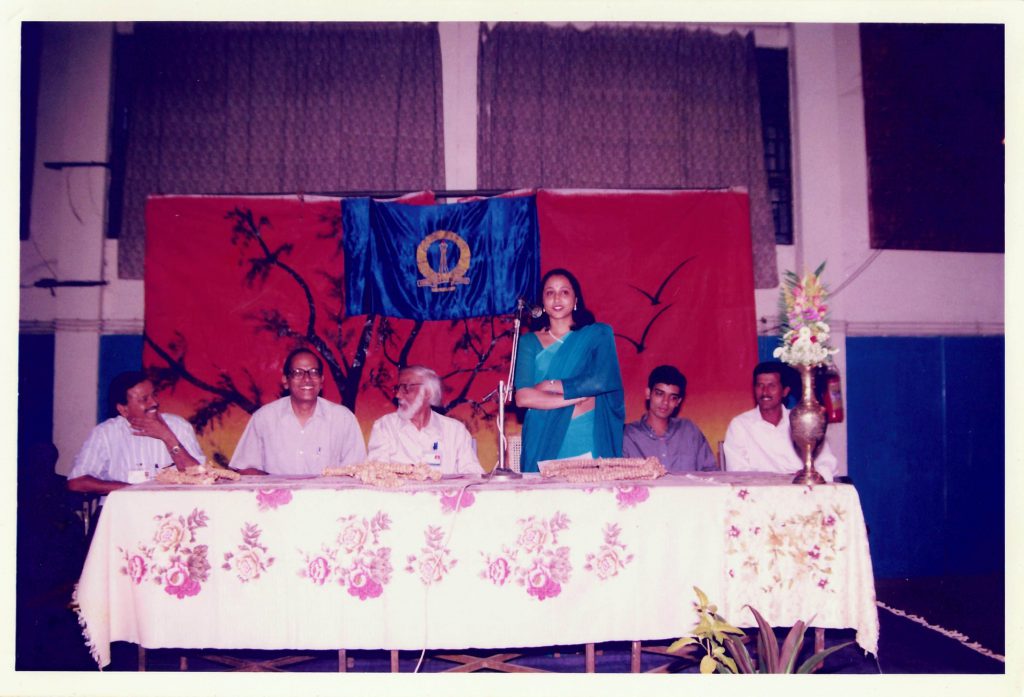
Legendary badminton player Prakash Padukone (left) and Ashwini Nachappa (right), Olympian and international medallist, during past Gymkhana Day celebrations at IISc (Photos courtesy: CP Poonacha)
Did you meet any dignitaries or sports icons during your tenure?
Yes. I have met eminent national leaders, including APJ Abdul Kalam, Ratan Tata, and the Honourable Minister Murli Manohar Joshi. Beyond these, the Gymkhana invited many world-class athletes, Olympians, and Arjuna Awardees to inspire our students during sports events, including Cheppudira Subbaiah Poonacha (1992 Olympian); Indian track and field stars Vandana Rao, Reeth Abraham, and Ashwini Nachappa; hockey player Ashish Bhalla; kabaddi legend C Honnappa Gowda; badminton star Prakash Padukone, and cricket legends such as Brijesh Patel and Anil Kumble, and many more wonderful sportspersons.
Do you have any fond memories with students?
Many. When injuries occurred – most often during hockey matches – students would ask me to stay with them while the doctors attended to them. I remember once assisting the Medical Officer with wound stitching, much like a nurse, offering comfort and support. On several occasions, both faculty members and doctors asked me to support students with psychological or emotional issues, providing informal counselling and meeting with parents to address concerns. I tried my best to encourage and uplift students, giving them courage and a sense of reassurance.
Additionally, I was actively involved in organising various games and competitions during the Great Days celebrations, such as Independence Day, Gandhi Jayanthi, Ambedkar Jayanthi, Kannada Rajyotsava, and International Women’s Day, which helped build a strong sense of community spirit on campus.
Tell us about your family life.
My wife is a retired Vice Principal of Renukacharya College for Women in Bengaluru and a keen hockey player. During my service at the Institute, she would often invite Directors of IISc and other senior faculty members as Chief Guests for her college events.
Our first son, Nithin, holds an MTech from the Department of Computational and Data Sciences (CDS) at IISc and works at Lam Research. Our second son, Nishank Bopanna, is a lecturer at Kuvempu University in Shimoga, and is pursuing PhD in Physical Education in the same university. Both are married and well settled.
I am proud to say that my family is actively associated with sports. I have spent a considerable amount on sports equipment, including sports shoes and badminton and tennis racquets. While studying Bachelor’s at St Joseph’s College, Nishank represented the Bangalore University football team three times.
Did you stay on campus?
Yes, I stayed in the campus quarters, which felt very safe and secure, and I never missed Coorg. Many students visited for tea and snacks, turning my home into a mini office where students would come to discuss sports, studies, and personal matters. They felt like family to me, and I enjoyed being part of their lives.
I truly enjoyed my career with the Institute and its students. My day often began as early as 6 am and went on until around 9 pm. Students would sometimes ask me to switch on the lights so they could keep playing basketball or other games, and I was happy to let them continue as long as they were safe and engaged.
I was also given the responsibility for Hostel Administration, which kept me closely involved in student life beyond sports. Having a Sports Officer is essential at the Institute, given its large grounds and many sports complexes.
How are you spending your time after retirement?
After retirement, I am happily settled in Coorg, where I manage my father’s agricultural land, which keeps me fully occupied. The routine and connection with the land give me a deep sense of purpose and satisfaction. I also support underprivileged students and help deserving families during marriage ceremonies. This is a small but meaningful way to give back to society and contribute to the well-being of my community.
I sometimes feel I could have built a house in Bengaluru, but I don’t regret not doing so. I am content knowing that I was part of such a great institution in our country.
(Edited by Kavi Bharathi R)