A life in pursuit of the monsoon
The year was 1944. Across Poona (now Pune), then in the Bombay Province of British India, the call for Independence echoed through homes, streets, and public spaces. At the heart of the city stood a house that the locals called “Liberty Hall”. It belonged to Dr VD Phatak, a respected physician and freedom fighter who had taken part in the historic non-cooperation movement – the Mulshi Satyagraha of the early 26 connect.iisc.ac.in 1920s. His home was a gathering place for political leaders, activists, and fellow nationalists.
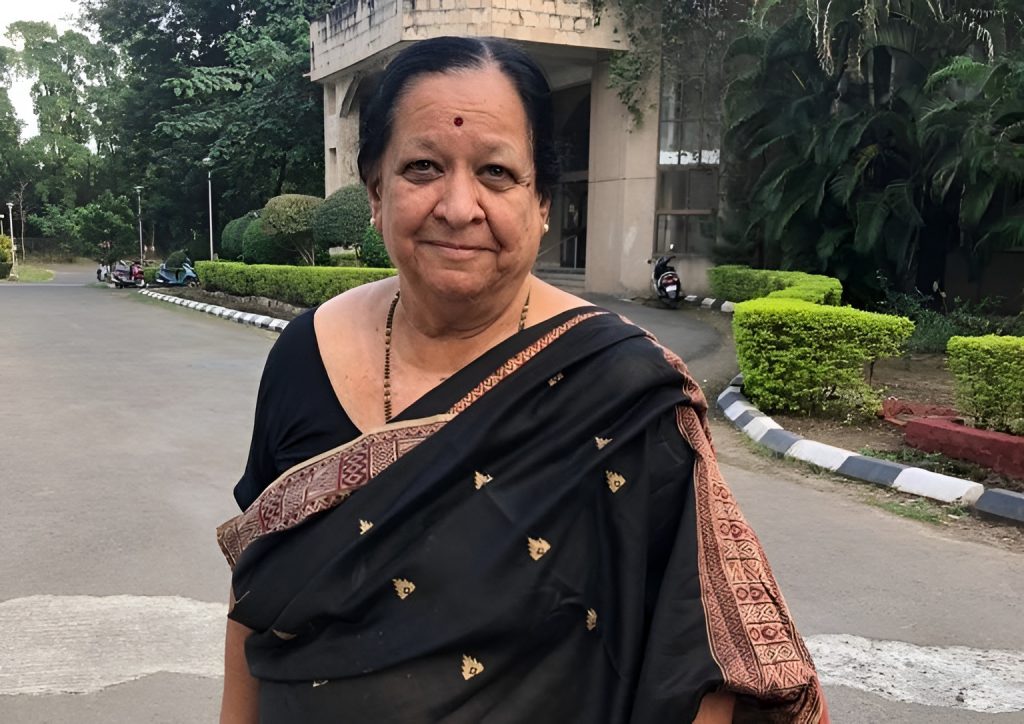
It was in this household that Sulochana Gadgil was born. Her father, the son of Dr VD Phatak, was also a physician with an MD in allopathic medicine. His interests, however, extended well beyond western medicine. He had studied Ayurveda and yoga in depth. Her mother belonged to a vibrant circle of Marathi women writers. As the third of four daughters, Sulochana grew up in a home alive with conversations about medicine, literature, public service, and the nation’s future. Yet, unlike most members of her family, she chose a different calling. She chose science. That choice would eventually change the way the world understands one of Earth’s most complex weather systems – the Indian monsoon.
Clouds begin to gather
Sulochana’s childhood education began in Pune, but it was at Rishi Valley School in Andhra Pradesh that her intellectual temperament found shape. Founded on J Krishnamurti’s philosophy of education, the school nurtured curiosity over competition and encouraged students to learn for the sheer pleasure of discovery rather than for scores. It was an outlook that stayed with her.
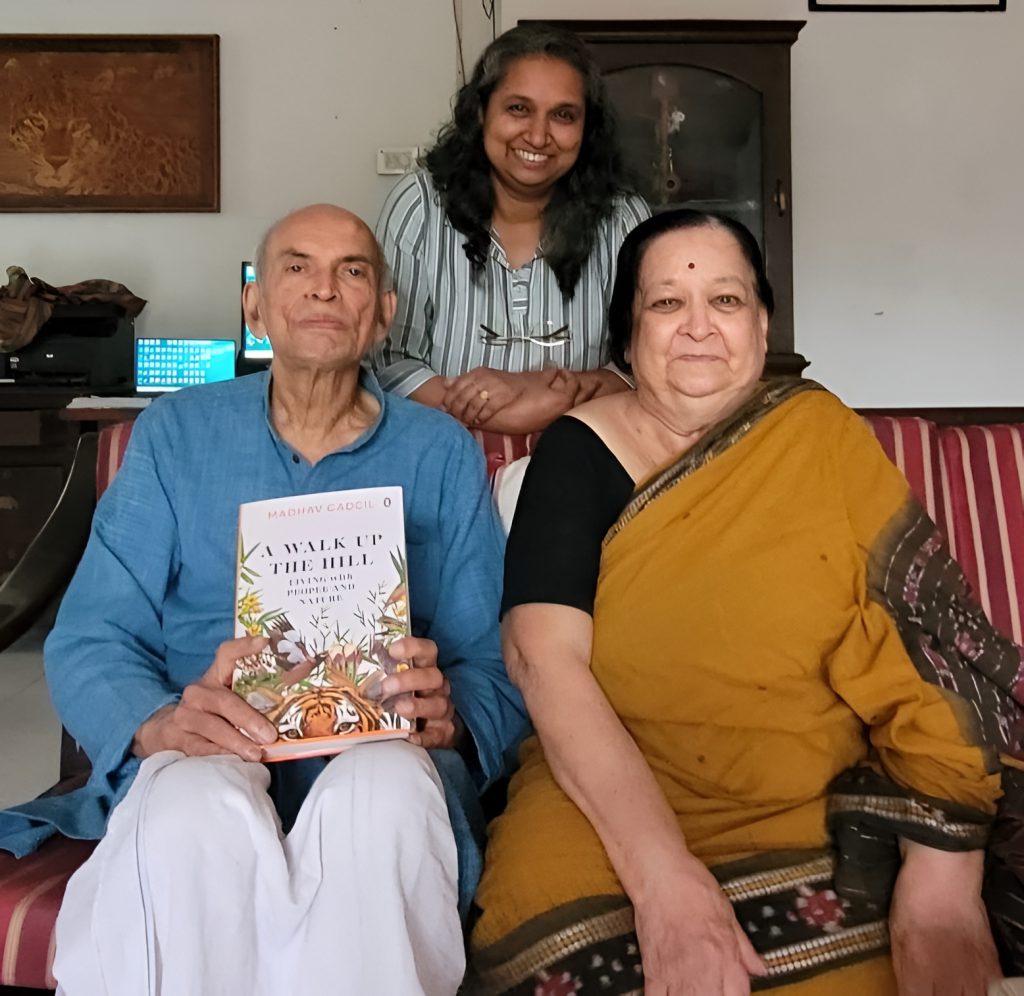
She carried that spirit back to Pune when she joined Fergusson College for her undergraduate studies. She recalled an incident from her college days in her autobiographical article, ‘My Tryst with the Monsoon’ (Lilavati’s Daughters: The Women Scientists of India, published by the Indian Academy of Sciences, 2008). During a particularly boring lecture, being unable to sit still any longer, she climbed the classroom’s high French window and leapt out. A fellow student, however, noticed this act. His name was Madhav Gadgil, who, years later, became her husband.
She chose to remain in the sciences rather than take the more conventional path into engineering
Mathematics had captivated Sulochana since childhood. She chose to remain in the sciences rather than take the more conventional path into engineering. She went on to pursue a Master’s degree in applied mathematics at the University of Pune. During these years, she and Madhav became engaged and eventually married. Coming from an academic family himself, Madhav believed that they should build not just a life together but also parallel careers in science, a conviction that would shape both their futures.
With scholarships in hand, Sulochana and Madhav left for Harvard University in 1965, where she pursued a PhD in applied mathematics. Drawn to the natural world, she specialised in physical oceanography under renowned American physical oceanographer and mathematician AR Robinson, building a strong foundation in applied mathematics and physics. Exposure to mathematical ecology through Madhav broadened her scientific interests. At the same time, a course in planetary fluid dynamics taught by the renowned meteorologist Jules Charney sparked a lifelong fascination with the monsoon. After completing her PhD, she spent a year as a postdoctoral researcher with Charney at MIT, where she mastered the science of modelling complex systems. This training laid the ground for her pioneering work on the Indian monsoon. It later enabled her to apply mathematical models to agricultural problems, including crop growth, pests, and diseases under a variable climate.
Becoming a monsoon scientist
In 1971, Sulochana and Madhav returned to India. She joined the Indian Institute of Tropical Meteorology (IITM) as a CSIR Pool Officer, where she trained under eminent meteorologists such as R Ananthakrishnan and DR Sikka. These formative years marked the beginning of her lifelong engagement with the Indian monsoon.
“My mother made one small shift in her career from oceanography to meteorology during her postdoctoral studies, though both belong to the broader field of fluid dynamics. It was a deliberate decision, driven by my parents’ desire to return to India and contribute to a field where much remained to be explored,” says Siddhartha Gadgil, Professor at the Department of Mathematics, IISc, and Sulochana and Madhav’s son. Besides Siddhartha, the couple has a daughter named Gauri.
While at IITM, Sulochana was offered a position at the newly established Centre for Theoretical Studies (CTS) at IISc. Founded by the then Director, Satish Dhawan, the Centre was conceived as an interdisciplinary hub that brought together scientists from mathematics, physics, engineering, and biology to tackle complex scientific problems. Sulochana’s strong background in applied mathematics and fluid dynamics made her a natural fit for the Centre, which she joined in 1973.
She began applying mathematical ideas to atmospheric science, laying the foundation for her pioneering work on monsoon dynamics and ocean-atmosphere interactions
There, she began applying mathematical ideas to atmospheric science, laying the foundation for her pioneering work on monsoon dynamics and ocean-atmosphere interactions. Madhav also joined CTS as a mathematical ecologist. “Many of my parents’ close friends are from the CTS days – distinguished biologist Prof H Sharat Chandra, another much younger biologist Prof Vidyanand Nanjundiah, physicist Prof N Mukunda. Slowly, almost everybody moved on to form independent departments,” says Siddhartha. Four separate departments came into being at IISc from CTS: Molecular Reproduction, Development and Genetics (now the Department of Developmental Biology and Genetics), Centre for Ecological Sciences, Centre for High Energy Physics, and Centre for Atmospheric Sciences.
Sulochana played a central role in establishing the Centre for Atmospheric Sciences in 1982, with Roddam Narasimha serving as its first Chair. She took over as Chair in 1989 and remained in the position until 1996. During these formative years, she helped establish atmospheric science as a major area of research at the Institute. Under the Centre’s evolving research programme, it grew into a leading centre for climate research in India, contributing significantly to the scientific understanding of the monsoon.
Finding scientific ground
“During the late 1970s and early 1980s, it became increasingly clear that the monsoon was at the heart of India’s agricultural economy. The India Meteorological Department (IMD) was primarily focused on short-term weather forecasting. The government wanted the monsoon studied from a longer-term perspective. They sought greater involvement from academic institutions in conducting fundamental research and providing scientific support to the IMD. The Centre for Atmospheric Sciences was established in this context, with a mandate to undertake theoretical studies of the monsoon. Our focus at that time was on understanding climate variability,” says well-known climate and atmospheric scientist Jayaraman Srinivasan, retired Professor at the Centre for Atmospheric and Oceanic Sciences and a former colleague and collaborator of Sulochana. “Many things were not available in the 1970s, like satellite data and computing power, yet the centre was able to make original contributions to the understanding of monsoons,” he adds.
The Centre’s research expanded from theoretical studies of atmospheric dynamics to modelling, satellite observations, and field experiments. In 1996, reflecting its growing interest in the interaction between the atmosphere and the oceans, it was renamed the Centre for Atmospheric and Oceanic Sciences (CAOS). Sulochana was a prolific collaborator, working with scientists across meteorology, atmospheric science, oceanography, and agriculture. Among her frequent collaborators were DR Sikka, PV Joseph, J Srinivasan, PN Vinayachandran, and GS Bhat. Her collaborations also extended to her son, with whom she frequently discussed her work. Together, they examined the links between monsoon variability, agriculture, and the Indian economy, including how monsoon rainfall affected GDP and food-grain production. They co-published two articles.
The journey takes shape
One of Sulochana’s early landmark studies was published in Nature in 1984. She and her colleagues showed that monsoon convection over the Indian Ocean increases with sea surface temperature (SST) only up to a critical threshold of about 27.5°C. Beyond this point, warmer waters do not necessarily produce more convection. This demonstrated that atmospheric dynamics play a crucial role alongside ocean temperatures. The finding helped explain the weak relationship often observed between Indian Ocean SST and monsoon rainfall and became an important foundation for later research on monsoon dynamics and ocean–atmosphere interactions. Its significance extended beyond this particular finding: it challenged the simple assumption that warmer ocean waters automatically lead to stronger monsoon activity, highlighting the complex interplay between the ocean and atmosphere. This insight remains relevant to understanding and predicting how the monsoon may respond to a warming climate.
One could feel the torrential rain when she pronounced ‘MONSOON!’ She was full of energy and positivity’
“One could feel the torrential rain when she pronounced ‘MONSOON!’ She was full of energy and positivity,” says Sajani Surendran, Chief Scientist at the CSIR National Institute of Data Science and AI (erstwhile CMMACS, Bengaluru), and Sulochana’s student since 1992 and later her associate till the end. “She was an excellent teacher. Her courses on ‘Geophysical Fluid Dynamics’ and ‘Tropical Meteorology and Monsoon’ were so popular that they were attended by senior experts, including eminent geophysicist Dr VK Gaur, along with us students.”
Sajani fondly recalls that Sulochana strongly believed that, whatever the subject of research, it should ultimately serve the nation and society. “Our work is global in nature. We study phenomena such as the El Niño-Southern Oscillation, mid-latitude weather systems, and processes in the Indian Ocean. But whatever we study has a connection to India, its climate or its economy, because anything that affects the monsoon, directly or indirectly, has consequences for the economy. This was also reflected in Sulochana’s work on agriculture, including her studies of groundnut productivity in Anantapur. She examined how sowing dates and the distribution of sub-seasonal rainfall are related, showing how fundamental research on the monsoon could have very practical implications for farmers.”
Over the course of her career, Sulochana combined observations, satellite data, and mathematical models to unravel the mechanisms underlying the variability of the Indian monsoon. Her research led to several landmark discoveries, including the identification of northward-moving cloud bands originating over the equatorial Indian Ocean and the crucial role of sea surface temperatures in triggering tropical cloud systems. These findings fundamentally reshaped the scientific understanding of the monsoon, showing that it is part of a planetary-scale atmospheric system rather than simply a land-sea breeze phenomenon. Beyond advancing atmospheric science, she also worked closely with farmers in Karnataka to translate monsoon science into practical strategies for rainfed agriculture, demonstrating how improved rainfall prediction could strengthen agricultural resilience.
Beyond the scientist
Sulochana’s pioneering contributions to monsoon meteorology and climate science earned her several prestigious honours. She received the Lifetime Achievement Award from the Ministry of Earth Sciences in 2008 for her outstanding work in atmospheric sciences. She was also honoured with the Norman Borlaug Award for applying climate science to agriculture and the Vikram Sarabhai Award for her contributions to tropical meteorology. In addition, she received the Astronautical Society of India Award and was elected a Fellow of all three Indian science academies – the Indian Academy of Sciences, the Indian National Science Academy, and the National Academy of Sciences, India – reflecting the high esteem in which her scientific work is held.
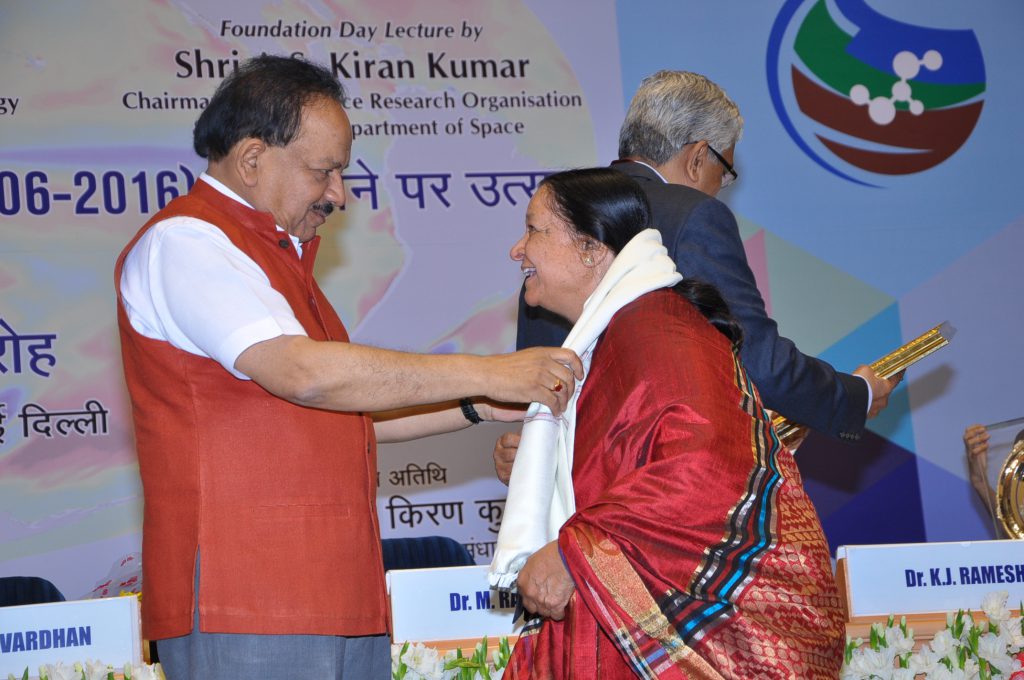
Sulochana retired from IISc in 2006 after a distinguished career spanning several decades. She continued her association with the Institute as an Honorary Professor until 2011. She passed away on 25 July 2025, leaving behind a life and career that reflected not only scientific accomplishment but also a deep sense of fulfilment.
PN Vinayachandran, current Chair of CAOS, was among Sulochana’s students in the early 1990s. He remembers her as a passionate teacher and an inspiring scientist. He recounts her lifelong fascination with the monsoon and her pioneering work in uncovering its connections with ocean science, satellite observations, agriculture, and the economy. “Her fascination for the monsoon is what anybody who met her would remember,” he says. He also remembers her as a generous and courageous leader – someone who was always willing to help colleagues and students and never hesitated to raise difficult issues. “She was a great human being,” he adds.
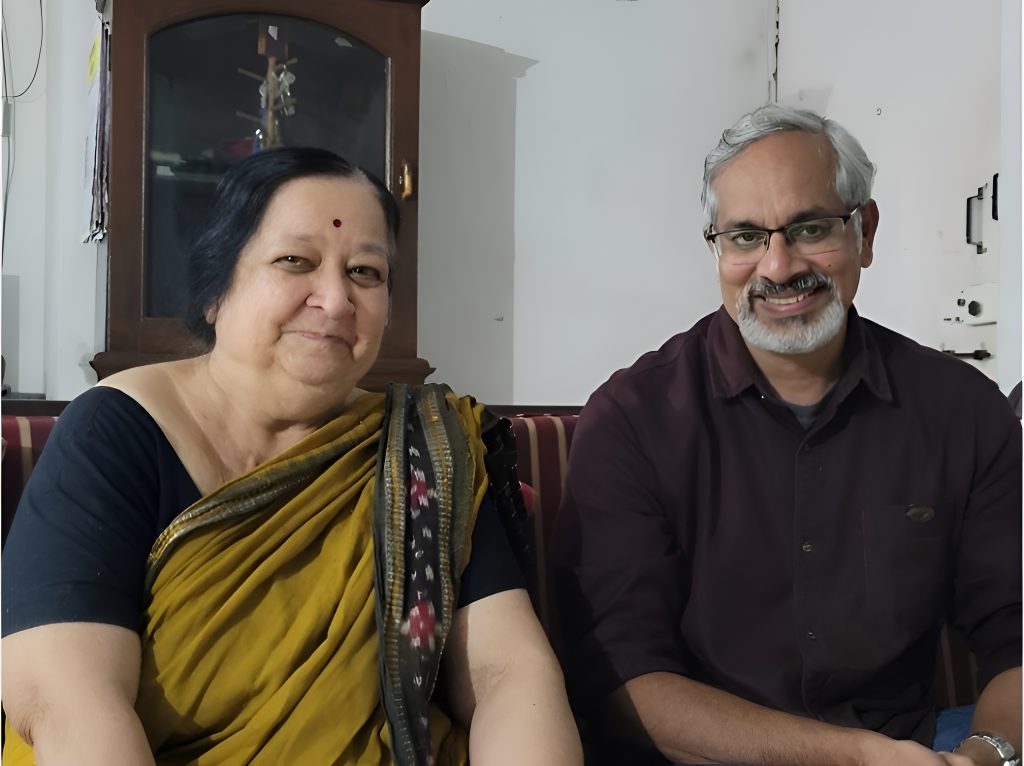
“Till the very end, Sulochana continued to enjoy research. Even after she retired and moved to Pune, she would join our weekly ‘Monsoon Café’ discussions online every Wednesday. Her interest in the monsoon never faded. She was never driven by citations, impact factors, promotions or fame. She published where she felt the work mattered, choosing, for instance, Current Science for research relevant to India. She simply enjoyed doing research and had little interest in power or position. That was what made her unique,” says Srinivasan.
He remembers that Sulochana’s abiding commitment was to keep national interest at the heart of her work. During her research in Anantapur, where she was investigating how climate variability affected groundnut yields, she invited local farmers to IISc to discuss the issue with scientists. The programme was bilingual: the farmers spoke in Telugu, with their remarks translated into English, while the scientists spoke in English, which was translated into Telugu. The meeting was as much about listening as it was about sharing scientific knowledge. At the end, the farmers thanked Sulochana and expressed their gratitude for inviting them to participate in a discussion about an issue that directly affected their lives. For Sulochana, this was an essential part of doing science – ensuring that research remained connected to the people and problems it was meant to serve.
To Sajani, Sulochana was much more than a distinguished scientist; she was a mentor who shaped the way she approached both science and life. She remembers Sulochana as someone who combined intellectual rigour with extraordinary warmth and generosity. What has stayed with her, among many other things, is the way Sulochana made everyone around her feel valued while remaining deeply committed to research and to the people she mentored.
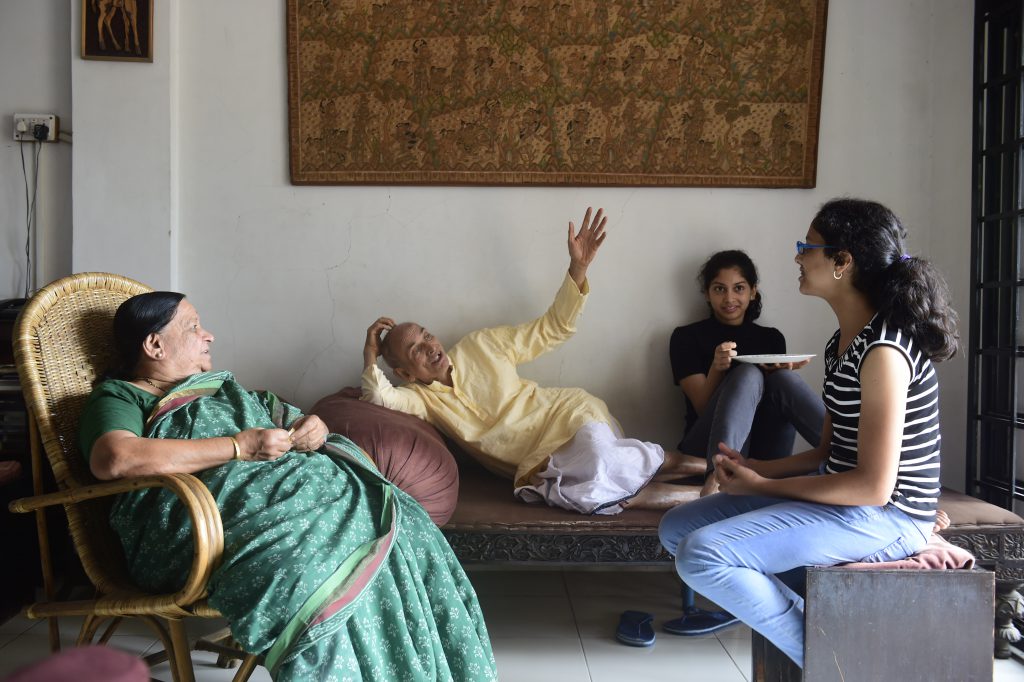
“She was a very warm, generous, and free-spirited person. She loved cricket, music, reading and good food, and would often bring sweets and delicacies from Pune for her colleagues and friends,” Sajani says. She recalls that Sulochana was always ready to help students and colleagues whenever they faced difficulties. Despite her stature as a scientist, she remained approachable and deeply engaged with everyone around her. She was also incredibly dedicated to research. Every evening, she would return to CAOS after work hours for discussions with students and was genuinely interested in every research problem, however small. She was well-read, liberal, and intellectually curious, and had the wonderful habit of laughing wholeheartedly. “That warmth is something I deeply miss,” Sajani says. For her, Sulochana’s greatest legacy was perhaps not only the science she left behind, but also the people she inspired to think deeply, work generously, and remain curious.
Sulochana Gadgil found purpose and joy in her work, while making space for the many other things that enriched her life. She believed that a fulfilling scientific career need not come at the cost of balance, and her own life reflected that conviction. She wrote in her autobiographical article: “I have always been treated as a capable scientist who happens to be a woman rather than as a woman scientist, and never experienced any gender discrimination. Over the last three decades, as a working scientist in India, I have never witnessed any discrimination against women, whether in the selection of students or for jobs, or in assessment for promotion. In this congenial atmosphere, I believe that women have every opportunity to achieve their potential as scientists.”
(Edited by Abinaya Kalyanasundaram)