Research before the digital era
When Raghavendra Gadagkar, Professor and National Science Chair at the Centre for Ecological Sciences (CES), IISc, was a graduate student, he came across a 1958 article in Scientific American by American psychologist Eckhard H Hess. Hess had done research on imprinting in animals and written about how early experiences in animals influence and shape adult behaviour. Hess and others had found through their experiments that young ducklings who had to face hurdles in their path demonstrated stronger imprinting. Because they had to expend efforts to either remove or overcome the obstacle, their learning patterns were stronger than those of control ducklings. Gadagkar draws an analogy from this insight to the process of doing research. The harder it is to do something, the greater the possibility of learning. He would know; he belongs to a pre-computers, pre-Internet, and pre-ChatGPT generation of researchers, who had their work cut out for them.
Today, computers have transformed the process of research into something faster, more accessible, and infinitely more connected. From typing manuscripts to running analyses on massive datasets, technology has reshaped every part of academic work. The internet made journals, archives, and global collaborations just a click away. For researchers who began their careers in the 2000s, the use of computers became non-negotiable.
Computers have transformed the process of research into something faster, more accessible, and infinitely more connected
We take notes on laptops, store years’ worth of data on cloud drives, download datasets in seconds, and run statistical analyses using sophisticated software. Research papers from across the world are available almost instantly, as are audio recordings and videos, lectures and seminars, and colourful illustrations. And now, with the almost forced integration of AI into every search engine, you get AI-generated summaries for every paper even before you ask for it!
Imagine a time before all of this, when there was no internet, no computers, no photocopying machines. Researchers who began their work between the 1960s and 1980s will tell you very different stories. Every stage of research was slower and often far more uncertain than it is today.
Did the presence of hurdles make pre-internet research much harder or more enriching?
Pen-and-paper to printers
“It was a different game. [There were] no computers. The whole process [of writing and editing] took a long time, and when we had to revise, it would start all over again,” recalls Kusala Rajendran, former Professor at the Centre for Earth Sciences (CEaS), IISc. In 1980, she joined the Centre for Earth Sciences at Trivandrum as a young geophysicist. After completing her doctoral research at the University of South Carolina, she returned to India in 1993, the same year that the Latur/Killari earthquake struck. She recounts how difficult it was to coordinate logistics out in the field, in Killari, Maharashtra, where she was dispatched for seismic forensic analysis along with her collaborator and husband, CP Rajendran. Every step of doing the research – finding accommodation, contacting drivers, and facing multiple language barriers – was difficult largely due to the lack of internet.
Most writing was done manually using pen and paper or typed out using a typewriter. Instead of the comment bubbles that your supervisor now adds to your Google Doc in the middle of the night, most edits on paper used to be handwritten. Committed reviewers used to go one step ahead and use red ink and remarks in the margins to suggest changes.
Illustrations for papers were drawn manually. A professional draughtsperson would use references provided by the authors to carefully trace it with India ink on a light-sensitive paper. This tracing would be placed over a sheet of light-sensitive diazo paper and exposed to ultraviolet light in a dark chamber. When placed in a chamber containing ammonia vapour, ammonia reacts with unexposed areas of diazo coating, revealing dark lines wherever the India ink blocks light. Thus, one could get a nice, sharp copy of the original illustration.
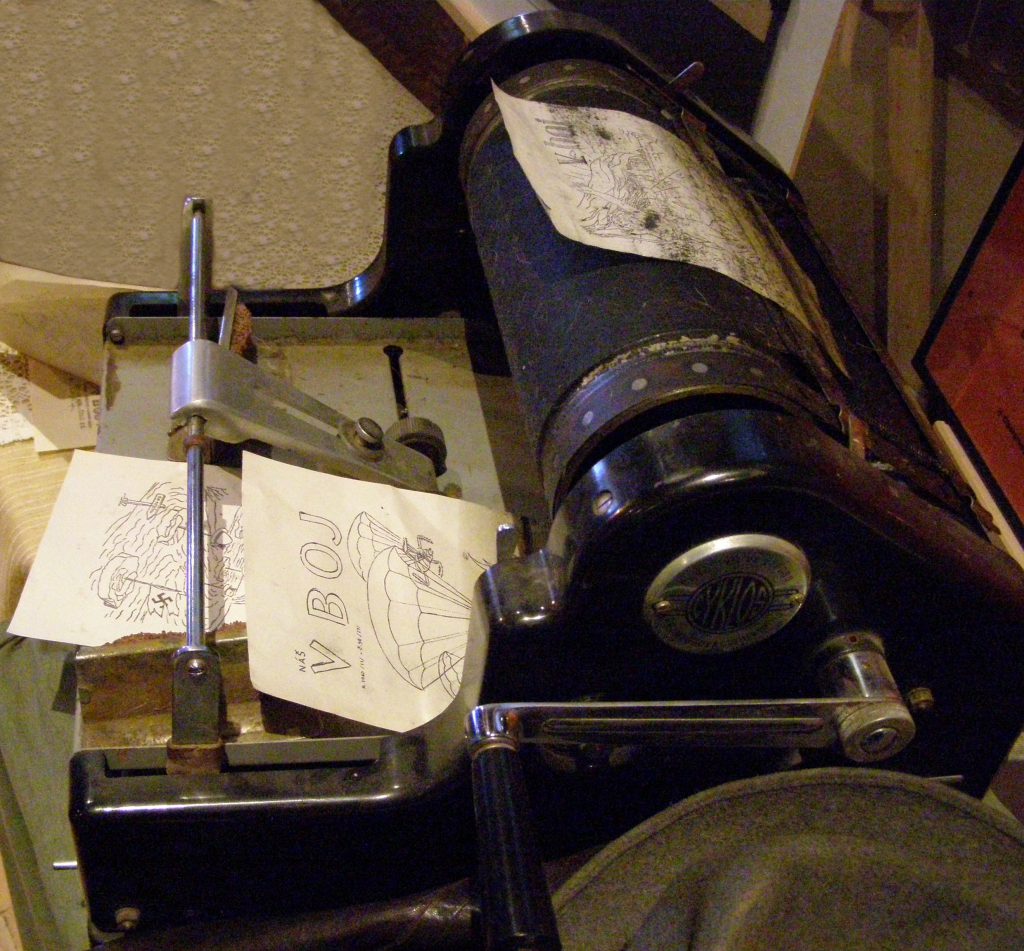
Today, getting copies of papers is not really something you would think twice about. There are printing and Xerox centres everywhere and colour printers in almost every lab. However, photocopying machines were introduced in India only in the late 1980s. Before that, researchers in institutes relied on making handwritten copies of papers. In 1879, David Gestetner came up with the design for a machine called the cyclostyling machine, which made taking copies of documents much easier. Using a wax stencil, words were typed out and a stencil would get perforated with holes to give the impression of letters. The stencil was then put on a rotating drum with ink and rolled on paper to get printed text. This method made generating multiple copies of papers much easier.
In countries like the USA, things seemed to have been slightly more convenient for scientists with systems and equipment that made writing and printing easier. Chandan Dasgupta, a theoretical physicist, pursued his doctoral and postdoctoral research in the USA in the 1970s and joined IISc as an assistant professor in 1987. He shares his experience of research outside India.
Special typewriters were introduced to the market in the USA which made typing out special characters less of a hassle, one of which is the IBM Selectric which debuted in 1961. Traditional typewriters had the individual metal swinging arms assigned to each letter, such that when individual letters were hit on the keyboard, the corresponding metal arm would strike the page. The IBM Selectric made this system a bit more flexible by replacing the arms with a rotating typeball that had all letters embossed on it, such that it could rotate in different angles to leave an impression of different letters. This also allowed typists to include different scientific notations in the papers, simply by replacing the typeball. For theoretical physicists who had to include a lot of equations in their papers, this proved immensely helpful. However, despite these advancements, researchers still had to write manuscripts manually and give them to secretaries who could type it out properly, since not everyone was trained to use these typewriters.
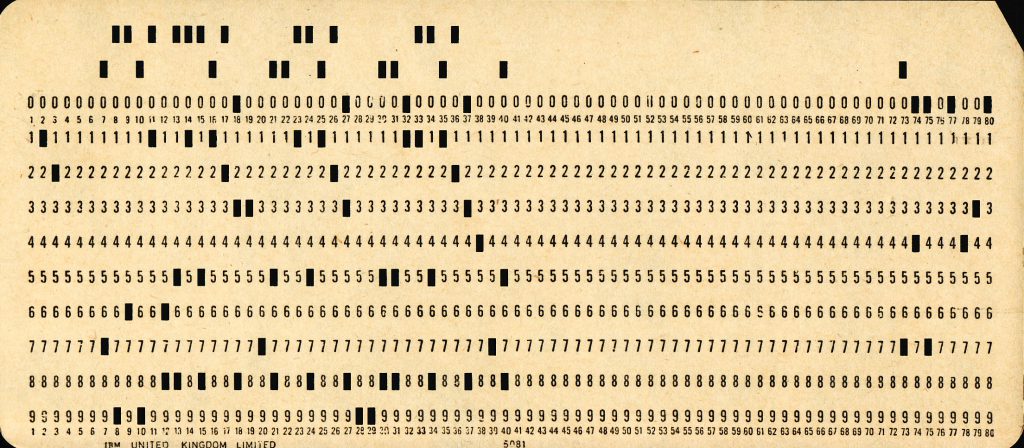
Running codes for statistical analyses and other calculations was also not as straightforward as it is today. Codes had to be punched on a deck of cards and handed over to computer operators. They would then return the results or required output in 12-24 hours. Most computers now run codes and even detect syntax errors almost instantaneously. However, in the pre-digitisation era, you would realise your mistake only once the output was generated – after 24 hours.
Researchers then also relied on the draughtsperson to get precise and accurate graphs by providing them datasets. Similarly, since data repositories like Dryad, Zenodo, and GitHub didn’t exist back then, researchers relied on the expertise of the same draughtsperson to get data from graphs in published research papers. The draughtsperson would trace coordinates in the graphs and give the relevant data to the researchers.
Another area that modern technologies have revolutionised is accessing information. But what did finding papers or references look like decades ago?
Before Ctrl+F
With search engine optimisation and the system of adding keywords in papers, finding papers in one’s area of interest is quite easy now. However, before Google and DuckDuckGo, researchers usually had to resort to following a paper trail of cited publications.
When Gadagkar began his research journey at CES in the early 1980s, he was keen on studying the evolution of social behaviour in insects like paper wasps. His memories of doing science are filled with long hours in libraries, handwritten notes, slow correspondence, and the patience that scholarship once demanded by default. Every part of the research process was slow and yet, seemed to be more “intentional” than it is today, he recalls.
Being a voracious reader, Gadagkar continues to rely heavily on libraries even today. Back then, he had no choice. “We used to go physically to the library to retrieve any kind of information. Very often, we stumbled upon things we were not looking for,” he reminisces. “That doesn’t happen today. People borrow e-books and audiobooks but don’t go to the library, which actually stocks all of these. The library culture has disappeared.”
‘The library culture has disappeared’
Today, all journals are available online. In the 1980s and earlier, however, libraries were the primary source of journals, research papers, and back issues for a student.
Alternatively, students often resorted to snail mailing authors for specific papers in their field of study, especially those published recently. And most authors obliged. “Most journals would provide some hard copies free of charge that the author would distribute on request,” shares Kusala. Papers were mailed by post, delivered via sea or land transportation, and it would take 2-3 weeks. Air mail was a slightly more expensive option that students occasionally relied on, with papers delivered sooner, within 3-4 days.
Around the year 2000, the transition from physical papers to online platforms began, and researchers like Kusala, who moved to IISc after 2005, had full access to online journals.
The current generation also heavily relies on social media to connect to global science. Back then, however, there were fewer researchers in most fields. The overall academic network was much more sparse without the internet, but the network itself was very strong and reliable, according to Gadagkar. Most young researchers sent postcards to authors all over the world to get printed copies, and the authors would also very often oblige. Gadagkar fondly remembers how he used to get replies from the authors with a signed printed copy of the paper. “99% of them replied, and I could technically access any paper by just sending a postcard. These were signed or autographed. They were valuable and precious to me. I collected them over the years.”
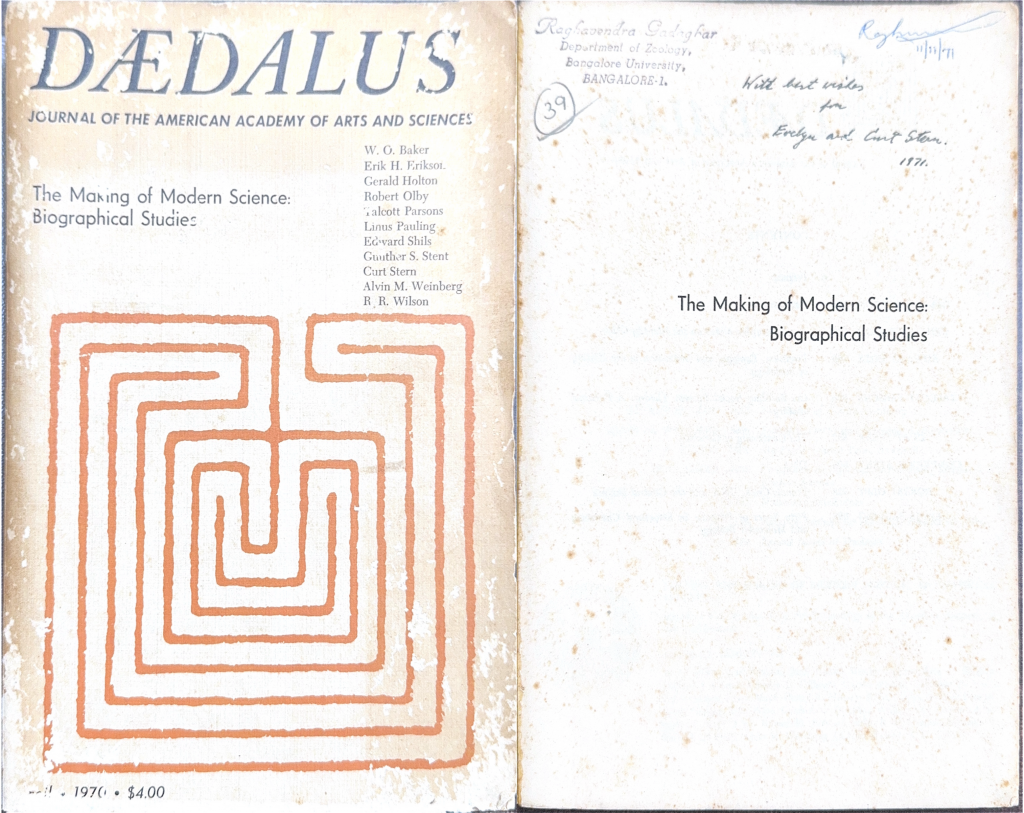
Academic networking was not easy, but it was meaningful and qualitatively richer, according to Gadagkar. “As an undergrad, I had a good international network,” he says. “Once, I wrote back to a Canadian scientist in marine biology with reference to her work, suggesting improvisation to the published methodology by air mail. The professor was duly impressed and invited me to join her lab as a PhD student.”
Fund-amental issues
Attending a conference is another major facet of academic life. But the number of conferences earlier was fewer compared to now.
In the rare event that students came to know about a conference, it was through a common university telegram system. Consequently, there was also very little funding allocated for such international conferences, as was the likelihood that a student could attend these events.
In those days, funding for doing research as well as setting up labs was low, but did not seem to be as limited as it is today, says Vidyanand Nanjundiah, former Professor at the Department of Developmental Biology and Genetics (DBG), and CES, IISc.
“When I was a student doing theoretical work, research life was relatively easy. Later, after joining IISc, I discovered that students had to scrounge on laboratory expenses, especially when something needed to be imported. Even so, my impression is that when it came to doing interesting work, funding was rarely a primary constraint. Student fellowships were small but students were not burdened by the thought of having to raise a part of research funding themselves. In a sense, it was a super-abundant environment,” he recalls. Research was “more exploratory” in nature, he says. “Ideas were thrown at you.”
There was a “lot of interest and a sense of purpose among the young researchers,” Nanjundiah adds. “Doing science was fun.”
He also points to how the increased pace of research has now triggered a “big rush” to publish or perish. “All of the things that we consider as easy now – typing out manuscripts, posting on websites, mailing immediately – give the false impression that the system is functioning more efficiently,” he says.
The process of academic research was, is, and will remain laborious and demanding, despite the promise of rewarding results. The internet and digitisation of resources may have improved networking and accessibility to some resources, but the lack thereof was what made earlier researchers resourceful and innovative. On the other hand, competition for funding and resources has considerably increased now.
Every generation of researchers has had to face and overcome unique challenges in their journey. That is exactly what makes the pursuit interesting.
“The whole point of research is that it is not easy,” Gadagkar adds. “Research was never meant to be fast. Where is the fun in doing quick and easy things?”
Souptika Das is a former MSc student at IISc and a former science writing intern at the Office of Communications
(Edited by Ranjini Raghunath)