Demystifying nature’s oldest pigment producers
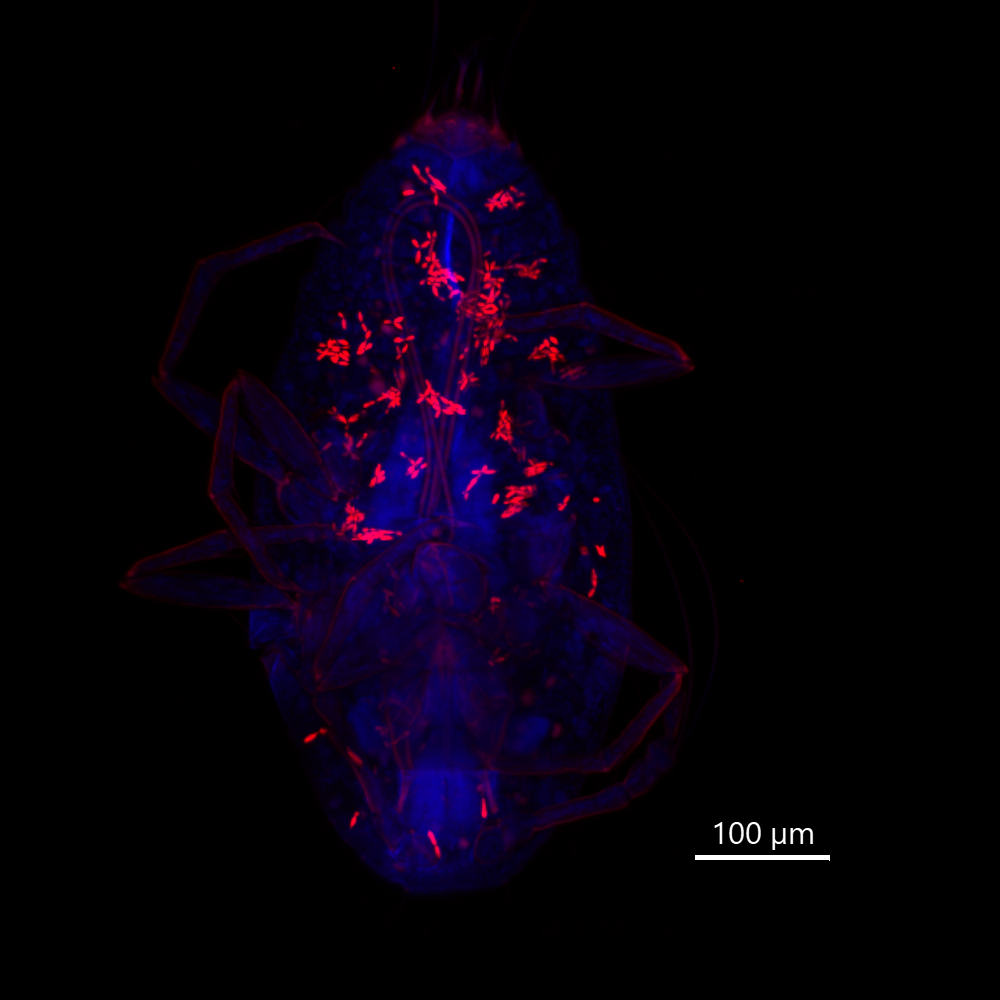
In Shantanu Shukla’s lab, dissecting insects is routine. The well-lit room, located in the Department of Developmental Biology and Genetics (DBG), IISc, is filled with young scientists studying scale insects – tiny plant vampires that feed on the plant phloem sap.
The team investigates the intimate relationship between insects and their endosymbionts (organisms living inside them). One among them is the lac insect, Kerria lacca. These tiny insects are the source of a culturally and economically significant vivid red pigment – one that has coloured everything from the vermillion on Indian brides’ foreheads to the masterpieces of European Renaissance paintings.
India is one of the world’s largest producers of lac pigment, harvested from forests in Jharkhand, Chhattisgarh, and Bihar, where farmers wait months for lac-encrusted branches to mature before collecting them.
Yet, how exactly these creatures produced the pigment remained a mystery for ages.
In the 1930s, two scientists, M Sreenivasaya and S Mahdihassan, from the Department of Biochemistry at IISc, travelled across the country collecting specimens and examining them closely, but the limited tools at the time could only take them so far. After nearly a century-long lull, Shantanu’s team set out to unravel the mystery.
“This was a convergence of multiple, interesting topics – scale insects, their microbial endosymbionts, and the culturally and economically important model system which produces the pigment, which has been one of the most famous exports of India for thousands of years,” says Shantanu, Assistant Professor at DBG.
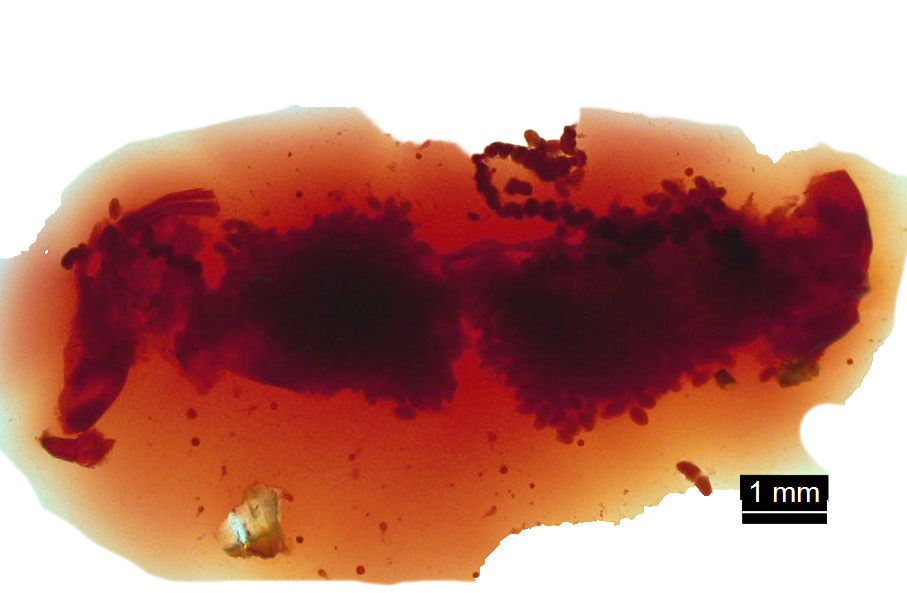
They began, as all genomics studies must, by sequencing the genomes of everything they could find – of the insect itself and of the microorganisms living inside it. When they cut open a lac insect, they were in for a fabulous sight. “It was full of red colour – it was just oozing out,” Shantanu says. They peered further and discovered something floating in the insects’ haemolymph (blood) – yeast-like fungal cells. They also found a single bacterium species of Wolbachia living inside the insect.
By mapping the genes, they discovered that these microbial partners were synthesising essential amino acids and vitamins that the insect could not obtain from its nutritionally poor phloem sap diet.
But where was the colour coming from?
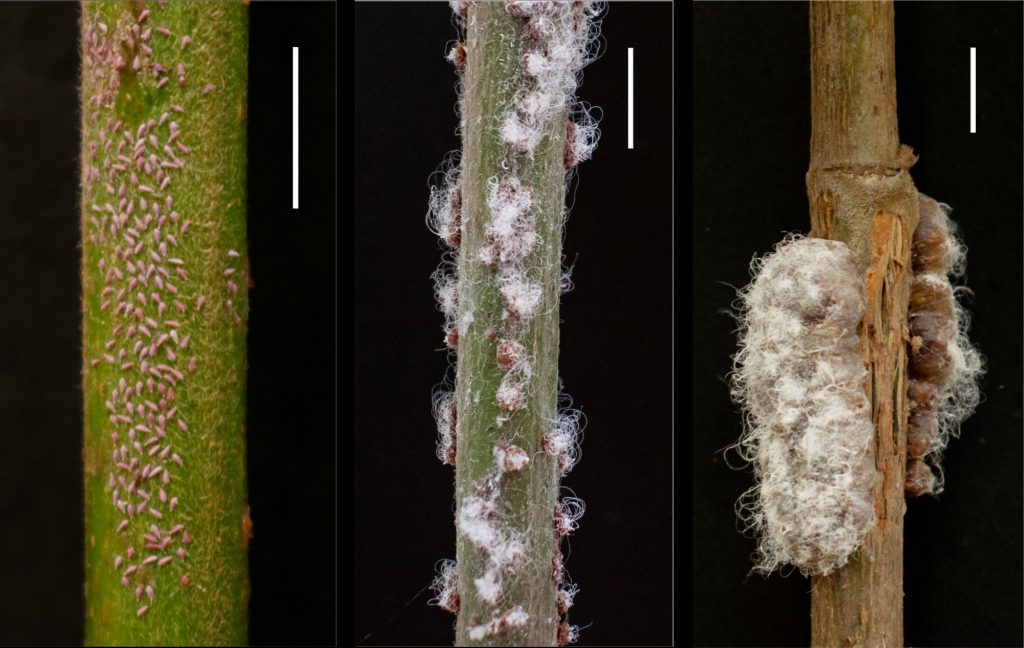
The crimson pigment of the lac insect – known chemically as laccaic acid – has two structural components. “The first is a molecular backbone called an anthraquinone. The second is a side chain: the amino acid tyrosine, attached to the backbone like a decoration. To make the pigment, you need both,” explains Shantanu.
Shantanu’s team ran a process of elimination: Does the gene for making each pigment component exist in the genome of the insect, bacterium, or fungus, or did it get it from its diet? For tyrosine, the answer was easier. The related genes were not present in the insect’s or the bacterium’s genome, nor in the diet. Only the fungi’s genome had them. “That was the first concrete hint that the fungus was making a critical ingredient of the pigment,” notes Shantanu.
The source of the backbone anthraquinone was harder to decipher, as it has a more complex structure than tyrosine. The team suspected that it should be built by a class of enzymes called non-reducing polyketide synthases. When they searched all three genomes (insect, bacteria, and fungi) for the genes that could produce such enzymes, they eventually found one gene in the fungal symbiont.
It turned out the insect was not producing this famous pigment. The
fungus living inside it was.
“There’s lots [more] to understand about it. There are multiple enzymes
involved, with complex chemistry,” notes Shantanu.
Hidden world of colours
When most people think of fungi, mushrooms come to mind – ones you eat or, occasionally, the kind that alters your mind. Since ancient times, humans have domesticated fungi to produce food, including baked goods, wine and beer, and several revolutionary medicines such as penicillin.
But fungi also have a lesser-known talent: making colours. For centuries, people have used natural dyes without realising that some were from fungi. Shantanu’s findings now add to this ever-growing repository of fungal pigments, which are increasingly being considered better alternatives to synthetic dyes. They are more stable, eco-friendly and can be used in a variety of industries from food and textiles to cosmetics.
Many fungi produce pigments as chemical weapons – antimicrobial and insecticidal compounds that help them survive in competitive environments. “These compounds happen to be coloured, which is what makes them valuable to us,” notes Shantanu.
“The category of pigments is largely human-defined – things that look coloured to our eyes. Many fungal pigments are secondary metabolites – these colours are not strictly required [by fungi] for basic growth or reproduction, but they can provide critical advantages for surviving,” explains Sunanda Sharma, an interdisciplinary research scientist and artist based in Berkeley, USA.
Sunanda’s research journey began over a decade ago in Massachusetts, with a biology degree, followed by early research focused on spatial and emotional memory in neuroscience. Her passion to combine science and design made her take an unlikely turn, and she began working with a designer and an architect at MIT’s Media Lab, where her obsession with colours in nature took root.
“Why do organisms as distant from each other as humans and cephalopods (like the octopus) share the same pigment chemistry? Why does the same class of molecule that colours the ink of an octopus also appear in the human brain? What does this reveal about the evolutionary history of colour itself?” pondered Sunanda.
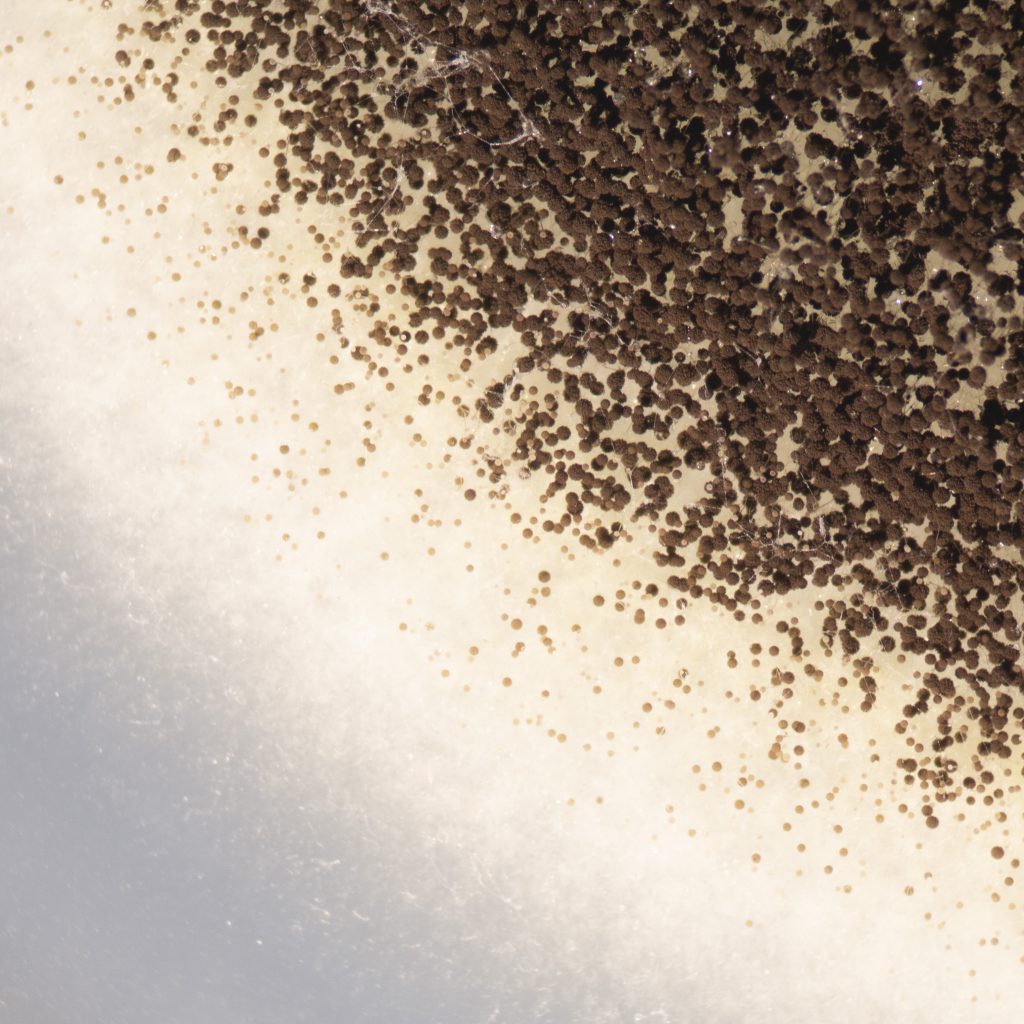
It was during an artist-in-residence programme with Vera Meyer, a self-taught artist and professor of applied and molecular microbiology at TU Berlin, that she began to focus on fungal pigments, specifically working with one of the most overlooked organisms – Aspergillus niger, the black mould found on bathroom corners, rotting fruit, or the forgotten bread at the back of the shelf. “It’s there, everywhere, and I never really paid attention to it until I did that project [during the programme],” says Sunanda.
Then came COVID-19, a lockdown, and a decision. Sunanda refused to let her research stop. Without a laboratory, she did what scientists with limited resources and burgeoning curiosity have always done – she improvised. Her basement became her lab. She ordered a cheap egg incubator from Amazon, the kind people use to hatch chicks. She used a baby bottle steriliser as an autoclave for glassware. She also rescued a microscope from a university loading dock. And in this makeshift space, she slowly began growing Aspergillus niger.
When she saw it under the microscope for the first time, she was stunned. “When you zoom in, it’s beautiful – just the way that the pigment is patterned across the organism,” notes Sunanda. Melanin – the same class of pigment that colours human skin, eyes, hair, and the substantia nigra deep in the human brain – was patterned across the fungus in striking ways, almost portrait-like. She calls this ‘chemical kinship.’
‘When you zoom in, it’s beautiful – just the way that the pigment is patterned across the organism’
Sunanda also noticed a gap between scientists, who understood fungal pigments at the molecular level, and designers, artists, and textile makers who wanted to use them but didn’t know how. So she founded the Living Colour Database (LCDB) – an online dictionary of microbial pigments useful to both researchers and artists. The inspiration came partly from a book called Werner’s Nomenclature of Colours, published in the 1800s by a Scottish painter, Patrick Syme, based on the German mineralogist Abraham Gottlob Werner. “It was one of the first biological colour dictionaries – a guide to the colours of the natural world, with swatches, names, and examples drawn from animals, plants, and minerals,” notes Sunanda. The book was famously used by Charles Darwin during the HMS Beagle voyage – a five-year coastal survey expedition in South America, the Galapagos Islands, South Africa, and more – to record the colours he encountered in nature.
LCDB currently has about 445 pigment entries, covering 110 unique pigments from 380 species, primarily of fungi and bacteria. Sunanda aims to expand it to include pigments from algae and protists.
While understanding, cataloguing, and making fungal pigments accessible matter, a persistent question remains: Can these colours move from laboratory curiosity to real-world industry use at scale?
Scaling up
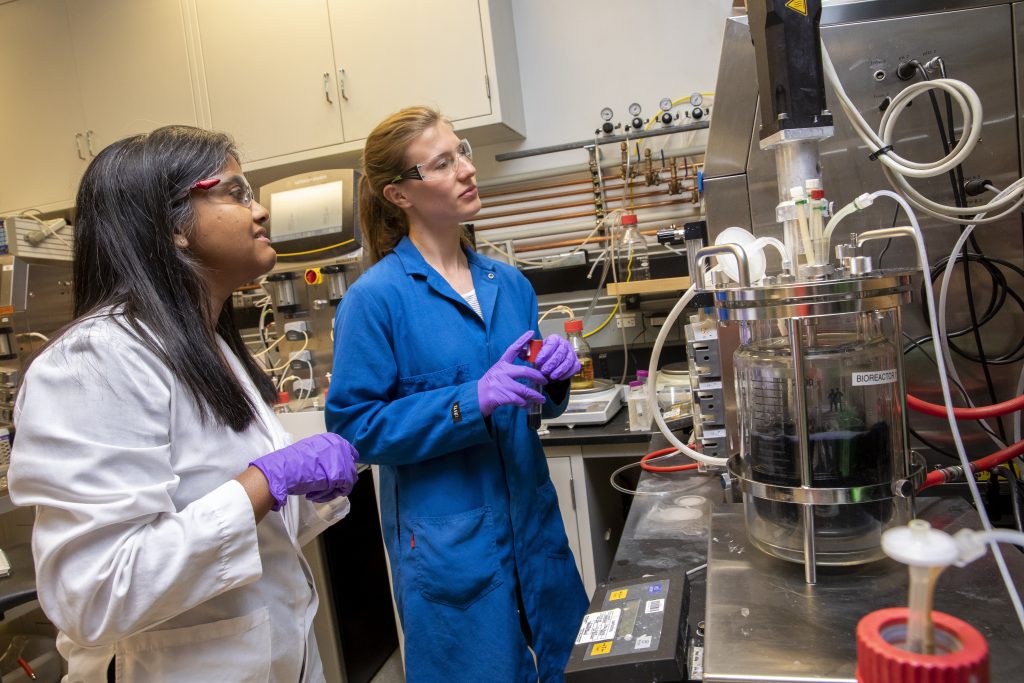
In most synthetic biology laboratories, success is measured in milligrams. A researcher spends months engineering a microorganism, optimising hundreds of conditions, and, if everything goes right, might produce a few milligrams per litre of their target compound. They publish, declare victory, and move on to the next project.
Aindrila Mukopadhyay, a senior scientist at Lawrence Berkeley National Laboratory, was not expecting anything different. The molecule her lab was working with was indigoidine – a vivid blue pigment known to scientists since the 1950s. Indigoidine has a deep blue colour remarkably similar to indigo, the textile dye notably used in denim. Processing synthetic indigo has health and environmental risks as it is derived from petrochemicals. So, scientists are considering turning to microbial dye production.
“Fully chemical synthesis of Indigoidine hasn’t been worked out, but biology seems to be a real champion at making this molecule,” notes Aindrila. Her team was using genes from Streptomyces bacteria (which naturally produce these pigments) and Bacillus bacteria, which they engineered into yeast as a host. But the problem was that it only produced a pale blue pigment at low levels. Usable for experiments – not for industry.
They then tried something almost on a whim. Colleagues at the same institute were developing a fungal expression system, Rhodosporidium toruloides, as a host for biofuel production. They had engineered a strain that produced remarkably high quantities of a terpene compound, bisabolene. “That strain was named ‘Golden Boy’,” says Aindrila.
Aindrila’s team borrowed some Rhodosporidium and engineered this with the Streptomyces and Bacillus genes. It was not a guaranteed bet. “The organism was not a conventional, synthetic biology host as Saccharomyces [yeast] is,” states Aindrila. It is harder to engineer. However, to their surprise, the Rhodosporidium produced a deep blue colour. “Every colony was saturated with a rich, intense blue that looked nothing like what they [the yeast] had been producing before,” says Aindrila. When they measured the yields, they were astonished. While 10 to few hundred milligrams per litre could be considered a publishable result, Aindrila’s lab was producing about 18 grams per litre.
“Something about Rhodosporidium – its natural metabolism, its capacity to accumulate precursors – simply clicked with the indigoidine pathway in a way that yeast metabolism never allowed,” says Aindrila. Keeping up with the tradition established by ‘Golden Boy’ down the hall, “we called this new strain Bluebelle,” she adds.
Aindrila notes that indigoidene is not a direct replacement for indigo but is a fungible replacement. But there is a concern – a highly hydrophobic compound, which has very low solubility in most solvents. And the few solvents that do work are not easy to distil.
“In this case, the challenge was not just the biology but also in the downstream processing. They will have to figure out how to extract this material and get it to purity,” she adds.
Commercialisation and future
Engineering and scaling fungal pigment production may take time, but an even greater challenge lies in first identifying them. Sanjay Singh, a scientist and curator at the National Fungal Culture Collection of India, points to Monascus as proof.
For centuries, communities across East Asia have been producing a fermented food called ‘red rice’ using a food colouring substance so deeply embedded in their culinary tradition that most have never stopped to think about where the colour comes from.
The answer is “Monascus, a fungus that produces more than eight chemically distinct red compounds,” each with its own molecular identity. “Monascus red pigment was granted GRAS (Generally Regarded As Safe) status for use in food,” says Sanjay.
It was one of the earliest examples of a fungal pigment being used in the food industry, notes Sanjay. Then came a complication. Decades after Monascus was deemed safe, more sensitive analytical tools found that it had a mildly toxic compound. Though it retained its GRAS status, considering it was only mildly toxic, the episode was a warning: the same biological machinery that makes a fungus a master chemist can also make it dangerous for human consumption. Some pigment-producing fungi co-produce mycotoxins as a byproduct of their metabolism. “There is no simple spot test. Every candidate organism must be rigorously screened,” says Sanjay.
Sanjay has spent over two decades collecting pigment-producing fungi from India’s forests, studying them in his lab in Pune. India, with its biodiversity hotspots, has roughly 28,000-30,000 fungal species, which remain largely unexplored for pigment production. But the path from forest floor to factory is long – it needs fermentation expertise, downstream processing, a regulatory framework, and eventually an industry partner.
India has roughly 28,000-30,000 fungal species, which remain largely unexplored for pigment production
But the case for pushing them forward is strong, as they are environmentally safer than synthetic dyes. “Synthetic dyes are largely non-biodegradable. Their industrial effluents pollute waterways, accumulate in soil, and disrupt microbial ecosystems,” says Sanjay.
Can fungal pigments ever completely replace synthetic dyes? “Even if it replaces 50% of synthetic dyes, it is a big task. Even if fungal dyes are a little expensive, but are safe for human beings, our environment, and our planet, I think nobody will hesitate to pay a little bit extra for that,” notes Sanjay.
Besides, as Aindrila notes, replacing synthetic dyes entirely is not the goal. “Even a partial shift builds something valuable: a premium market for products people put on their bodies and in their food, and a manufacturing base that is not hostage to a single chemistry or a single supply chain.”
For Sunanda, the field of fungal pigments is about more than applicability. It is, at its heart, an act of rediscovery. “We are still learning from the natural world, and also our foremothers and forefathers. People have been doing textile dyeing for an extremely long time. So, in some sense, we’re rediscovering and relearning what’s there. It’s a nice lesson in humility, that even though we may have newer methods, there’s a heritage that we’re building on and it’s worth figuring out.”
(Edited by Abinaya Kalyanasundaram)