Where chaos, curiosity, and clarity reign equally
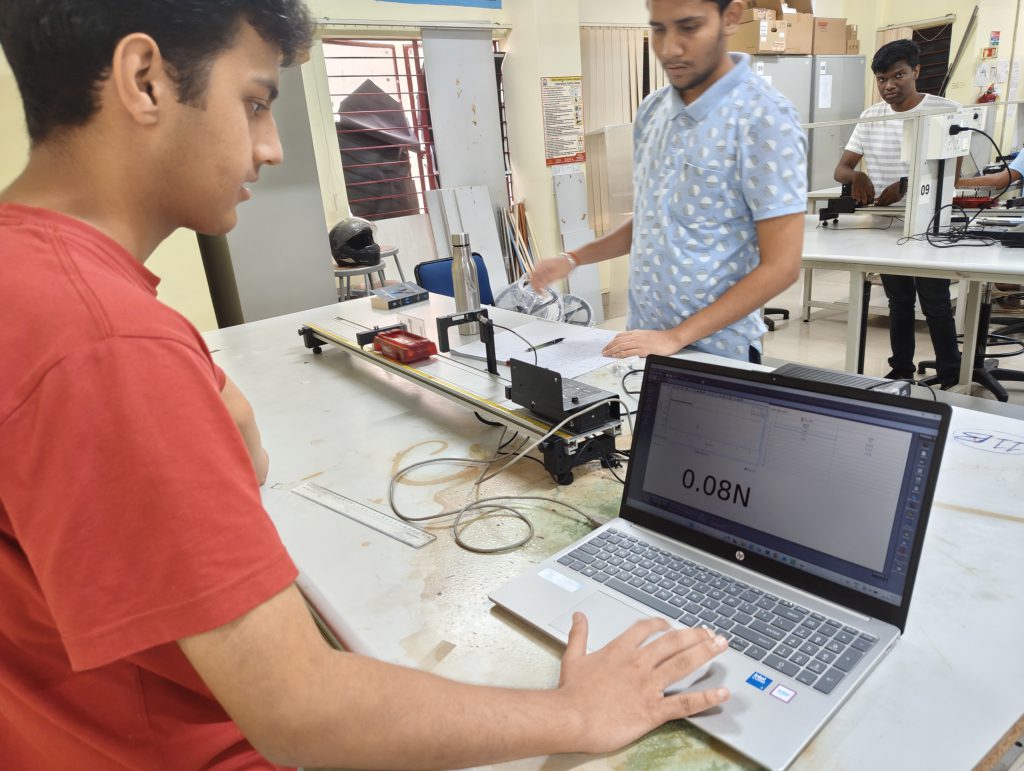
Amrit Mahendra Joseph still gets a faraway look in his eyes when you bring up his first-year undergraduate physics lab at IISc. The former UG student, who just completed his Master’s in mathematics, laughs about it now, but back then, an incident involving the impulse-momentum theorem felt like physical torture. On paper, the experiment is straightforward: measure the impulse imparted when a moving cart collides with a bumper using two different methods, which should yield identical results. The first method uses a high-precision photogate sensor to track the cart’s change in momentum – simple mass multiplied by velocity. The second calculates the area under a force-time graph, captured by a force sensor embedded right in the bumper to measure the impact during those fleeting milliseconds of collision.
The physics was simple. The math was clean. But experiments aren’t done on paper. They are performed in the chaotic reality of a lab. And for Amrit, that reality was about to unravel.
He simply could not fathom what was going wrong. He restarted the photogate and the force sensors, replaced the cart and the bumper, and repeatedly rechecked his units and decimal points. Yet, no matter what he did, the two methods simply refused to align. They weren’t just slightly off; they were in entirely different dimensions! The error margin? A staggering 2000%.
Amrit left no stone unturned. But after four failed attempts to minimise the discrepancy, he ultimately threw in the towel. He summoned the lab instructor and declared that the apparatus was either broken or had woken up and chosen to rebel against the laws of physics. The instructor, with years of experience fixing broken experiments and tutoring clueless students, calmly walked over to Amrit’s station to show him how it was done. Amrit stood by, hopelessly torn. Should he pray for the apparatus to magically work so he could finally get the data and be done with it? Or should he pray for it to fail again, vindicating his claim and proving that he was not the one at fault?
Contrary to popular belief, we all have a lot of silly stories to tell – of spilled chemicals, forged data points (shh!), and downright instrument betrayal
Amrit isn’t the only student with an embarrassing anecdote from the UG labs. Contrary to popular belief, we all have a lot of silly stories to tell – of spilled chemicals, forged data points (shh!), and downright instrument betrayal. While textbooks present science as a series of inevitable triumphs, the truth is that experimental science is less about the ‘Eureka!’ moment and more about the journey of getting there. The chasm between the blackboard and the bench is far wider than we initially imagine – and labs are where we realise this.
In a physics lab, even a standard falling-body problem refuses to follow the textbook script – air resistance inevitably gatecrashes the party. Any veteran chemist would tell you how restricting the formation of unwanted side products is often more troublesome than making the main products. As for biological cells in a culture, I can personally vouch for this: the weather and the economy are not nearly as volatile as the moods of these microscopic Petri plate princes. After a point, one needs to accept that trying and failing is the norm. What really matters is whether you have the grit to pick yourself up again to repeat the cycle. Again and again. In fact, success is accidental – when you do claim to have succeeded, lab instructors and teaching assistants (TAs) tend to look at you with more scepticism and suspicion than a convicted criminal.
A (curve) fitting example
The ultimate test of this grit arrived once during our first year physics lab end-semester exams. We had been promised experiments that resemble the ones we had already done, but with slight variations. What we weren’t told was the scale of those variations.
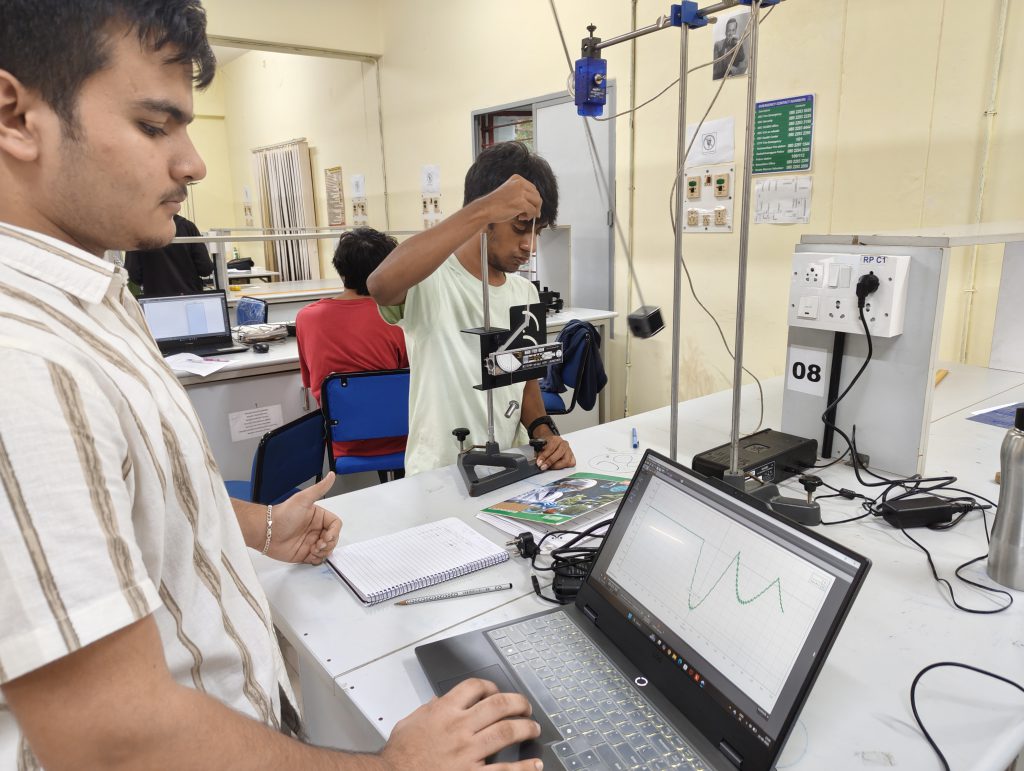
My assigned task was to calculate the coefficient of friction between a cart and an inclined plane. Besides these two, I was given a stopwatch, a bunch of different weights, and an inclinometer (to measure the angle of inclination). The instructions were deceptively simple: vary the angle of the incline three times, repeat the process with different weights added to the cart, and compile the data into two linear graphs whose slopes would directly yield the coefficient of friction. With a couple of free-body diagrams and some algebra, it sounds fairly straightforward, doesn’t it? I thought so too – until I realised the catch: Which exact quantities was I supposed to plot? Deciding to defer this crisis to later, I focused on getting the readings first. However, that proved to be a herculean task in its own right.
I found myself staring blankly at the apparatus, struggling to figure out which part plugged into where, let alone knowing how to coax a coherent reading out of it. Following a protracted (and entirely futile) battle trying to fit the inclinometer into place, I turned to my trusty protractor to save the day. While we had worked on determining the coefficient of friction as part of our curriculum, we had used sophisticated tracking software then. Thus, this avatar of the experiment was entirely unfamiliar and more like bumping into a long-lost childhood friend 20 years later, only remembering their name and nothing else.
As if things weren’t bad enough, the PhD TAs make sure to personally pop up at your table every 15 minutes – not so much to help you as to remind you exactly how far behind you are. “You should have finished setting up your apparatus by now!” When you finally crack and ask, “What am I doing wrong?” they don’t answer directly. Instead, they give you a smile – a kind, pitying smile that is best translated to: “Everything, my boy!”
In the end, after much head-scratching, I managed to come up with a monstrous, ugly-looking expression (both on the sheet and on my face) combining various quantities, which, miraculously, did yield a linear graph. Was it the right answer? For the sake of my mental well-being, I chose to never find out.
A tale of two reagents
As we transition from the controlled chaos of UG labs into the mayhem of actual research, we realise that these failures were in fact the clichéd stepping stones in our journey as scientists. If you obtain an otherworldly error margin, you can at least turn to the instructor in the UG lab. But in the real world, the guidance vanishes. You chart your own course. In these moments, patience is key. The wait can be agonisingly long, and the light at the end of the tunnel may at times seem a distant dream. But when your efforts finally bear fruit, the satisfaction is unparalleled.
Speaking of long waits bearing fruit, the biology lab deserves a special mention. The queue for the microscope is sometimes second only to the queue outside our messes when special lunch is served. During one such wait, the curious alchemist in me was suddenly intrigued when I saw nearly full bottles of ethanol and acetic acid on the lab shelves. There they stood; poor things, I thought, crying for their contents to be used. As I waited in the queue, I could empathise with their imagined identity crisis. You see, I believe that the sole purpose of a chemical reagent is to sign off from this world with a flourish. Unfortunately for the two liquids, their day of chemical glory did not seem on the cards, rather, an anticlimactic death by expiration was looming large.
With this deep emotional understanding (and an equal measure of boredom), I made up my mind to help them. I would give them the meaning their lives deserved.
My messing around had literally borne fruity-smelling compounds!
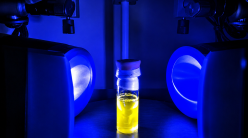
I discreetly took a few drops of both, mixed them together and warmed it slightly, like I had read in class (sulphuric acid – a catalyst for the reaction – was not to be found anywhere, unfortunately). Slowly but surely a faint, unmistakable scent began to waft from the beaker. An ester – a class of chemicals with fruity aromas – had formed. My messing around had literally borne fruity-smelling compounds!
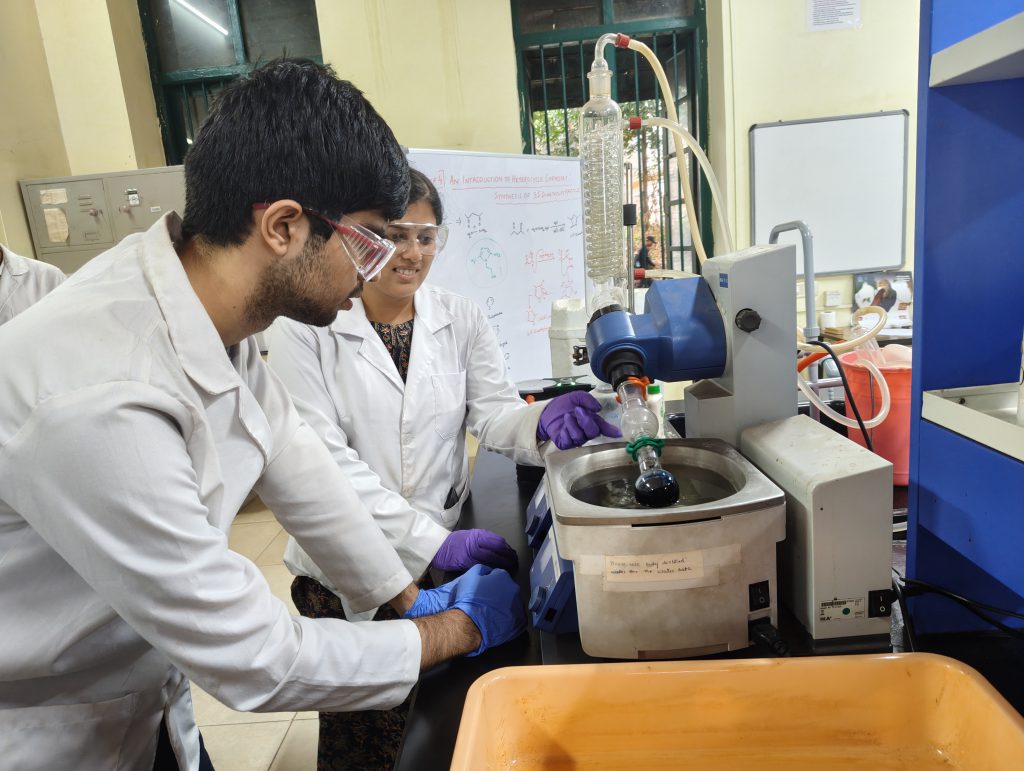
In fact, our instructors encourage such inquisitiveness. Eswara Rao Tatta, the biology lab instructor, explains that the enthusiasm to try out things beyond our stipulated experiments is what will shape us into better scientists. “We might overlook or take certain aspects for granted, but when a student questions us about it, it makes us wonder too,” says Tyby Monachan, TA in the physics lab. “I have learnt many new things in that manner, just by interacting with students, and while correcting their lab reports.”
One of the most daunting tasks for instructors is ensuring that lab work stays synchronised with the fast-moving frontiers of modern science. Mamata Mahato and Siddharta De, the chemistry lab instructors, say that they often try to weave contemporary breakthroughs into the curriculum.
“[For example], the 2025 Nobel Prize in Chemistry was awarded for the synthesis of a new class of molecules called metal-organic frameworks. Inspired by it, we added an experiment on the facile synthesis of a simple metal-organic framework (ZIF-8) to our curriculum. We also demonstrate its use in adsorbing methyl blue dye from water,” Mamata explains.
These metal-organic frameworks (MOFs) are more than mere academic curiosities; they hold immense potential for tackling global crises from carbon capture and harvesting water from desert air to storing toxic gases and driving chemical catalysis.
The TAs also view their roles as extending beyond just technical guidance and grading. Ariakutty CS, a Physics lab TA, sees her role as a facilitator, ensuring that no student gets left behind and everyone gets to experience all the experiments firsthand. In the biology lab, TAs Asiya Rehman and Uma N often strike up casual conversations with us. They provide a steady, reassuring presence that every undergrad fresher needs, because it is the first time away from home for most of us.
Been there, done that
Of course, we cannot talk about UG labs without mentioning the delicate art of value manipulation. We’ve all been there during a chemistry titration – your first reading was 10.1 ml, your second a solid 10.2, and then disaster strikes. On the third run, you cruise up to 10.1, and then 10.2, and 10.3 as well. And that stubborn tint of KMnO4 remains in the pink of its health, refusing to disappear. By the time the colour vanishes, the burette reads a soul-crushing 10.7 ml. Glancing around, you see your friends already packing up to head out for evening snacks. This creates a moral dilemma: do you repeat the titration chasing a legitimate third reading, or do you choose freedom?
Naturally, you choose freedom. With the meniscus sitting defiantly at 10.7, you wait for the TAs to get engrossed in a deep discussion with a nearby student. Then, you seize the moment. Stealthy as a ninja, you quietly top up the burette with fresh KMnO4 until the burette column climbs back to exactly 10.2 ml. “Aha,” you whisper to yourself, “concordance!” With a somewhat troubled conscience but a signed lab manual (yay!), you’re out the door before the pink has even settled in the flask.
Sometimes, however, you can’t just fudge a reading. In the biology lab, despite more than 15 redos, not finding the Drosophila’s polytene chromosomes under the microscope hurts. Not least because you must submit a picture of those chromosomes in your report. Such testing times require you to probe deep – not into the Drosophila, but into your pockets to treat your friend at Sarvam. “Yaar, send me your chromosomes picture na!”
While we come up with creative techniques to salvage our failed experiments, the instructors have also come up with creative ideas to test our lab skills. The biology lab instructors once concocted a truly unique exam pattern – a cross between a quiz show and a game of musical chairs! The students were split into batches of 20 each. There were a total of 20 questions to be answered, and each question was assigned to a unique lab station. Every student would be assigned one station to begin with and given exactly one minute to answer the question. Once the time elapses, all the students shift to the next station for the next minute. And on it goes for 20 frantic minutes. This way, they could include microscopic slides, samples, and instruments from varied experiments to accompany the usual theoretical questions.
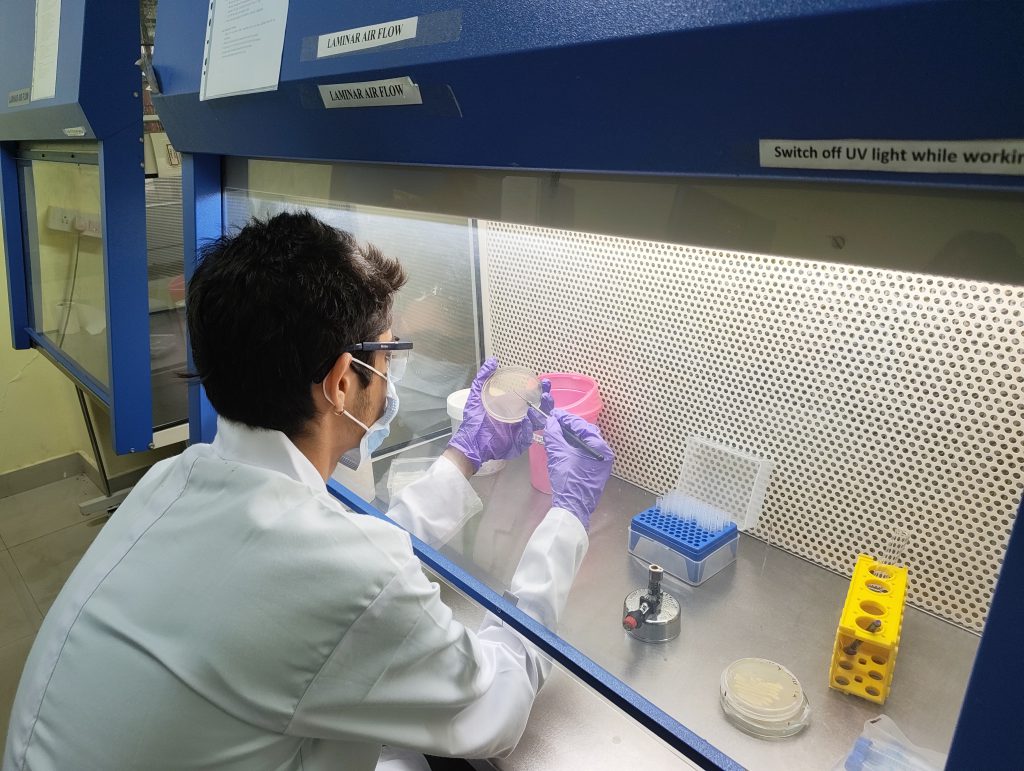
Indeed, lab exams necessitate elaborate preparation by the TAs and instructors. Setting the questions, printing them, preparing the slides, and samples are all tasks that the TAs and instructors race against time to complete. Tyby and Ariakutty admit having spent hours doing the experiments themselves ahead of the exams to ensure that the apparatus is working properly, and the readings aren’t significantly off.
But sometimes, it is just not meant to be. Just ask the instructor at Amrit’s table. Confident in his expertise, he reconfigured the entire apparatus to produce the cleanest readings possible. He then calmly switched on the power supply. The system started running, and Amrit’s mind began racing. The sensors worked tirelessly and spit out their readings.
Out came the calculators. The error margin? 2100% this time! The instructor stared at the screen, frozen in disbelief. Amrit heaved a sigh of relief, his sanity instantly restored – it wasn’t his fault after all. Finally, the instructor turned to him and said, with a heavy sigh: “You know what, turn your reading in.”
Clearly, physics had taken the day off, and the weary instructor was happy to clock out as well.
Manauv Vyas is a second-year undergraduate student and a science writing intern at the Office of Communications.
(Edited by Ranjini Raghunath)