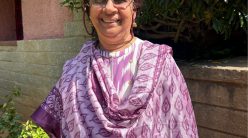
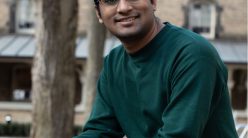
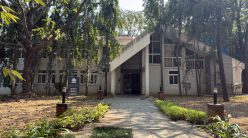
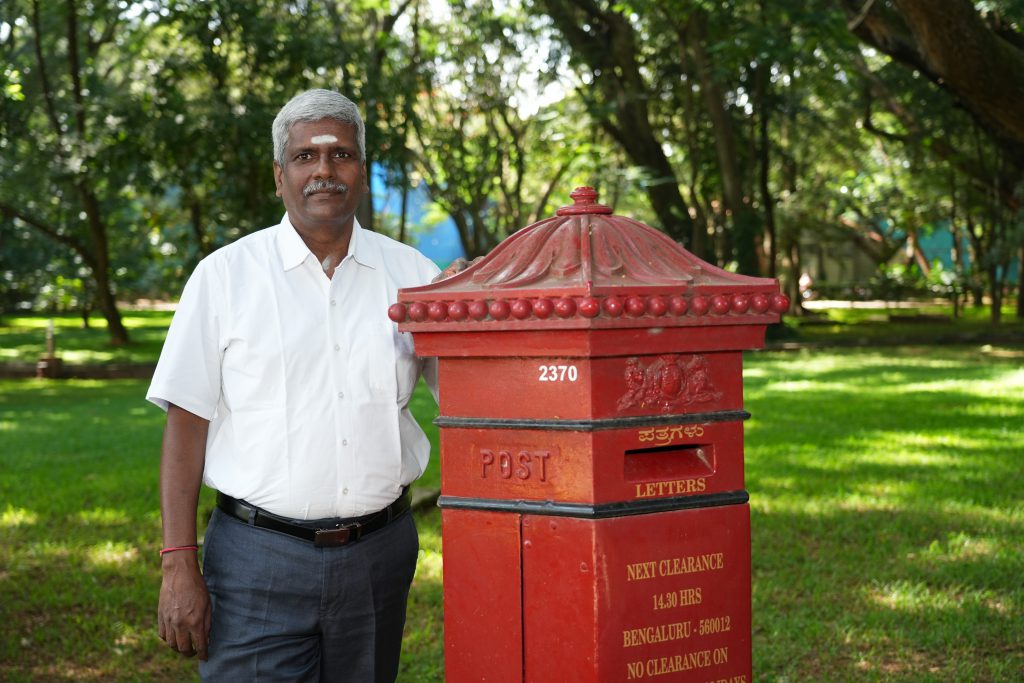
Renugopal Murugesan first visited IISc in 1977, at the age of 14, when his father was employed as a construction worker at the old Physics department building. He joined his father as a daily wage labourer in 1981 and later worked as a mason. With the support of IISc faculty and staff, he learnt typing skills and eventually secured a permanent clerical position. Over four decades, he has worked in two departments across the Institute, retiring in 2024 as a Superintendent in the Director’s office. Speaking to CONNECT, he reflects on his life’s journey from construction work to clerical duties, campus memories, and life after retirement.
Tell us about your childhood. Where did you grow up?
I come from Vadavetti, a small village in Tamil Nadu’s Villupuram district. My father walked to Bengaluru in search of work. I still remember the day he left – it was a drizzling November afternoon, sometime around 1971 or 1972. My earliest connection with Bengaluru dates back to 1973, when I was 10 years old, and my father was engaged in the construction of a house on Palace Cross Road, which, I learnt much later, belonged to Prof Satish Dhawan. Eventually, my dad moved to IISc, where he worked as a labourer and a security guard during the construction of the Centre for Scientific and Industrial Consultancy (CSIC) building in 1975.
How did you move to IISc?
I first came to IISc in May 1977 during my summer vacation, while I was in class nine. The first floor of the old Physics Department (now the UG building) was under construction; my father was employed here, and my elder brother was assisting him. Although the brief visit seemed unremarkable at the time, it turned out to be the beginning of my lifelong association with IISc.
Later, we moved to and stayed in a temporary shed at the National Centre for Science Information (NCSI) construction site, where the present Office of Communications building now stands. My mother would gather dried wood for cooking near the Main Building, and every day she prayed to JN Tata for her two sons to secure jobs at IISc. In 1986, her prayers were answered – both my brother and I were eventually appointed as regular employees at the Institute. My elder brother, too, built his career at IISc, serving in the Centre for Cryogenic Technology until his retirement.
What did your initial work involve? How did you shift to becoming a clerical staff member at the Institute?
After completing my class 12 education in a Tamil-medium school in my native place, I joined the Institute in December 1981 for a construction job with my father. My salary then was Rs 6 per day and eventually rose to Rs 30. Within 18 months, I learnt masonry and got higher pay. I vividly remember my first day as a mason on the terrace of the ‘A’ mess building, now housing Nesara. During this time, I also attended English typing classes and cleared the Senior Grade.
In February 1984, I joined the Molecular Biophysics Unit (MBU) as a temporary mali-cum-helper in Prof MRN Murthy’s lab, earning Rs 500 per month, which was, interestingly, less than my mason’s wage. Prof Murthy ensured that I received a khaki uniform like regular employees. In a photograph from a 1985 International Conference on Crystallography, I am wearing those same khaki pants with a complementary departmental T-shirt.
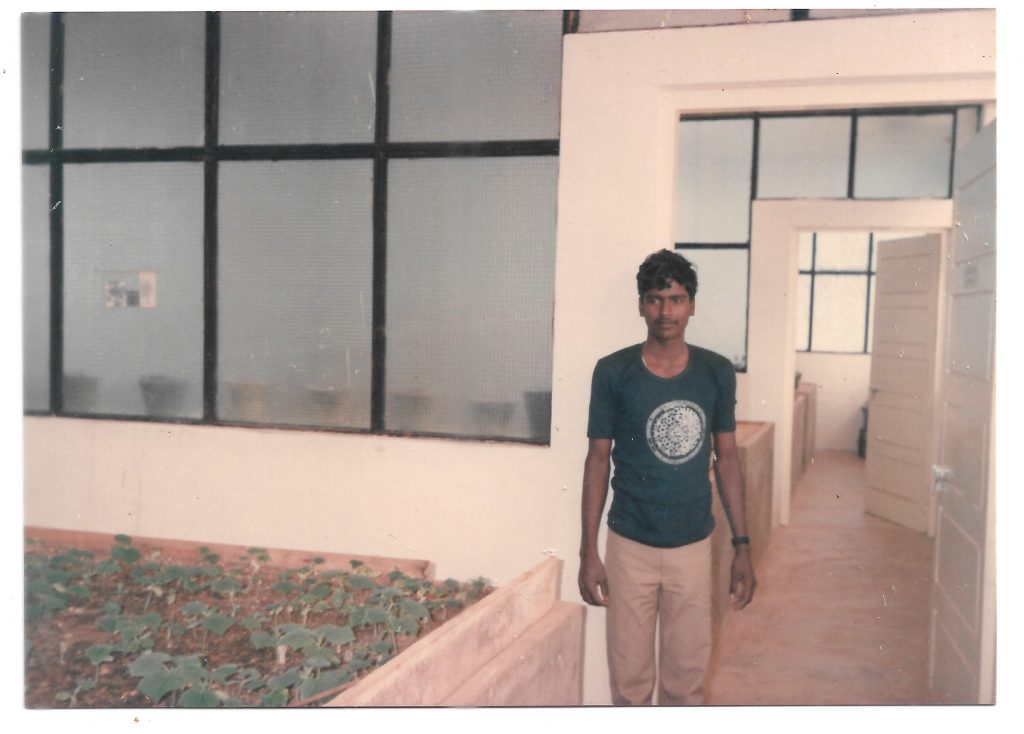
from the International Conference on Crystallography and khaki pants
provided by the department (Photo courtesy: Renugopal Murugesan)
What was your work like at MBU?
My initial duties involved preparing a mixture of manure, sand and soil, sowing seeds and transplanting saplings, infecting mature leaves with a virus, and harvesting plants grown in the Glass House – the same building where I had once worked as a casual labourer for Rs. 7/- per day. On my first day, while washing glassware soaked in sulphuric acid, Prof Murthy advised me to take a lunch break (it was already 2 pm) and later assured me that I would one day rise to a better position, a promise that came true within two years.
I will always remain grateful to Prof V Sasisekharan, the Chairman of MBU, and Mrs Sasisekharan for treating me like their own son and standing by me through every step of my journey. Even today, I feel the strength of their blessings and the warmth of their unwavering support.
Did you take up further education?
Soon after joining MBU, I enrolled in evening BCom classes at MES College, gaining admission instantly when the principal saw the MBU Chair’s recommendation letter on an IISc letterhead. Although I maintained over 90% attendance, I could not complete the degree due to my limited English proficiency.
How was your work life at MBU? We understand that you received immense support from the faculty and students.
I was warmly welcomed by faculty members and students in MBU, who supported me with gifts such as an accountancy textbook (from Patanjali SR), a calculator (from N Ramesh), and an English–Tamil–English dictionary (from B Gopalakrishnan). They even set up a table, chair, and bookshelf for me in their workspace, where a candid photo of me was once taken and gifted by Kumud Majumdar. Malini Rajagopalan taught me spoken English in the evenings and still chats with me from the USA. Sundaramurthy M, Pradeep Parrack, Indira Chandrasekar, Latha Kadalayil and many other colleagues showered their concern and treated me as their own brother.
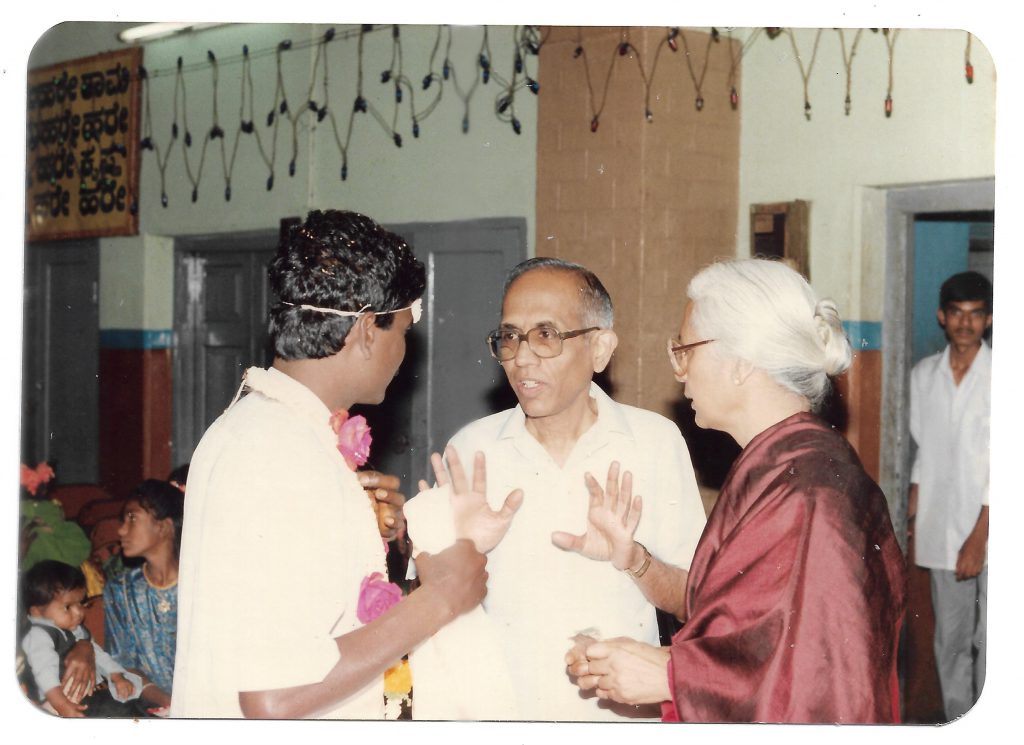
wedding day (Photo courtesy: Renugopal Murugesan)
How many departments have you worked in? We understand that you have been a part of this Institute for more than 40 years.
I began my career in 1986 as a Lower Division Clerk at the ISRO-IISc Space Technology Cell (STC), working there until 1 November 2006. I was then transferred to the Director’s Office, where I served until my retirement as Superintendent on 31 July 2024.
Can you share any memorable experiences at STC?
When I joined the STC as an LDC (Lower Division Clerk) on 4 April 1986, I vividly remember the 1987 conference on Fault Tolerant Computing at Hotel Ashoka, co-sponsored by STC. On the day of the event, Prof Shrivastava, the convenor, ensured that I stayed for lunch, walking with me into the dining hall so I wouldn’t feel out of place among distinguished participants. His kindness left a lasting impression on me. I fondly recall the farewell arranged for him at STC in 1989 when he moved to the Ministry of Human Resource Development on deputation, and his 80th birthday this year.
At STC, I had the good fortune of forming close bonds with S Pradeep, Charlie Oomen, AG Sreenatha, Nagajothi, M Kumar, Subash, Elavarasan and Thangamatheswaran. Elavarasan took my wedding photographs even though his own wedding was only a few days later in Coimbatore. I was especially fortunate that faculty members like Pradeep and Charlie stood as guarantors for me to secure a housing loan from HDFC Bank, which enabled me to purchase a residential plot in Tatanagar, where I currently live. My colleagues, AT Janardhanan, Chinnaraju, and R Suresh Kumar, were more than just co-workers – they became like members of my extended family.
On my superannuation day, 31 July 2024, Prof Gopalan Jagadeesh honoured me with his lab team and faculty from Aerospace Engineering, a gesture made more special by our earlier collaboration on the 2005 International Conference on Shock Waves, where my wife and I helped him in the Conference Secretariat and compiled over 1,000 pages of proceedings in LaTeX. Throughout my years in STC, I always found warmth and support from seniors and colleagues, regardless of my youth or modest designation.
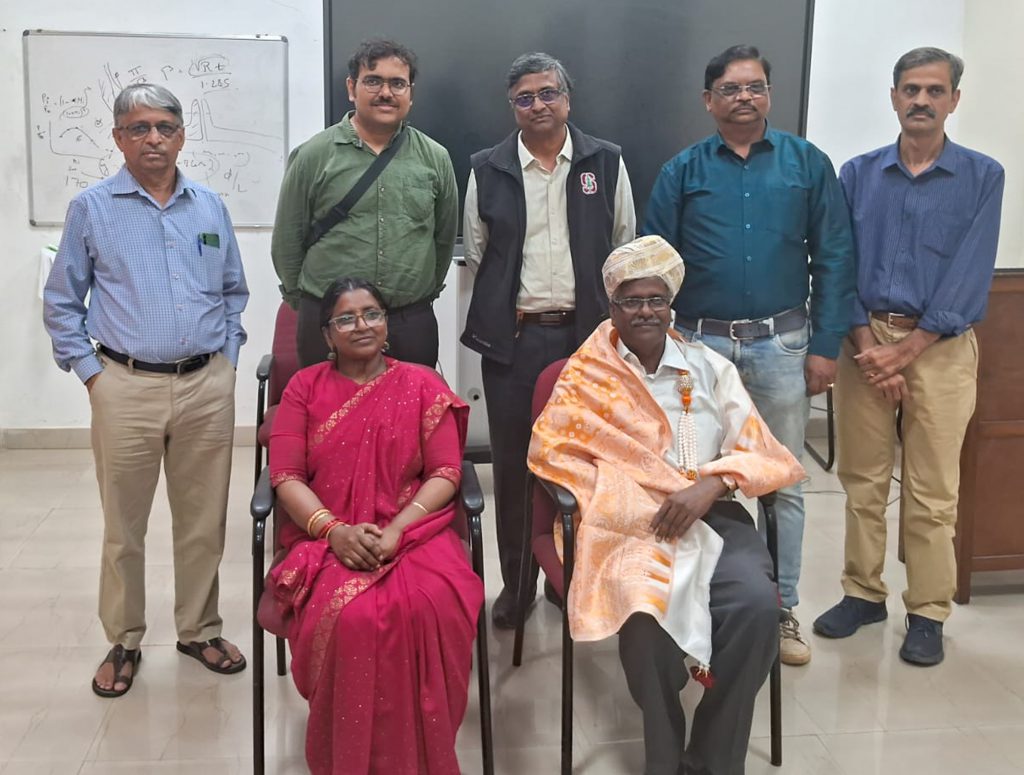
We’d love to hear about your experiences working in the Director’s office. How many Directors have you worked with?
I had the privilege of serving in the Director’s Office and working closely with three Directors – Prof Balaram, Prof Anurag Kumar, and Prof Rangarajan – an experience that allowed me interactions few could dream of. I also engaged with Council Chairs and members, Deans, and many other officers, past and present, as well as seven Registrars of the Institute.
Many people have called me “Renu”, but when Prof Balaram said it, there was always a warmth and familiarity that felt deeply personal and made me long to hear it again each time. The last time he called me that was in early 2024, when he briefly stepped into the Director’s Office on his way to the Faculty Hall, smiled, and said, “Renu, I came just to say hi to you,” before hurrying off.
What are some memorable events that you were part of at the Institute?
I had the privilege of witnessing the Institute’s Platinum Jubilee in 1985, when the Honourable Vice President of India, Shri R Venkataraman, addressed the gathering. A grand lunch was organised for the Institute community, and I was fortunate to be part of it. In 1987, I contributed to the symposium on Three Hundred Years of Newton’s Principia, organised by the STC, assisting Prof Shrivastava in preparing the proceedings.
In the following years, I had the opportunity to contribute to several milestones, including the Golden Jubilee of the Department of Aerospace Engineering in 1992. During this time, I had the privilege of walking alongside Dr APJ Abdul Kalam on the staircase of the Main Building toward the Faculty Hall. With his hand resting on my shoulder, he warmly enquired about my native place, and I mentioned that I had read the Tamil version of his article “Metal Birds” in India Today magazine.
During the Institute’s centenary celebration in 2009, Prof AG Menon, Chair of the Archives and Publication Cell (APC), entrusted me with collecting the reminiscences of distinguished retired faculty members and officers for a publication. He graciously acknowledged my contribution and included my name in the preface of the book.
One of the most memorable aspects of my service was assisting Prof Rangarajan, the current Director, in convening meetings for the establishment of the Medical School, including initiating a file titled “Postgraduate Programme on Medical Science”. Over the years, I also had the privilege of witnessing visits by numerous dignitaries, including Presidents, the Vice President, the Prime Minister, Shri Ratan Tata, and the Maharaja of Mysore.
Did you stay on campus? What was it like?
Yes, I lived on campus from 1981 to 1993 and again from 2000 to 2008. In the early 1980s, the Institute community was small, and most employees were permanent, so everyone knew each other well, including their families. Until the early 1990s, it was common to drink water from any roadside tap on campus. Those were simpler, quieter times, when the Institute truly felt like a close-knit family.
We heard you also helped publish students’ theses and books.
Beyond my office duties, I dedicated much of my personal time to earning additional income. Over the years, I typed nearly 134 doctoral and master’s theses, often working late at night to ensure accuracy, clarity, and timely delivery. This journey also reflected the evolution of technology – I started with WordStar, ChiWriter, LaTeX, and eventually adopted MS Word. I also prepared hundreds of research papers, project proposals, reports, books, and conference proceedings. This work gave me a quiet and lasting sense of fulfilment.
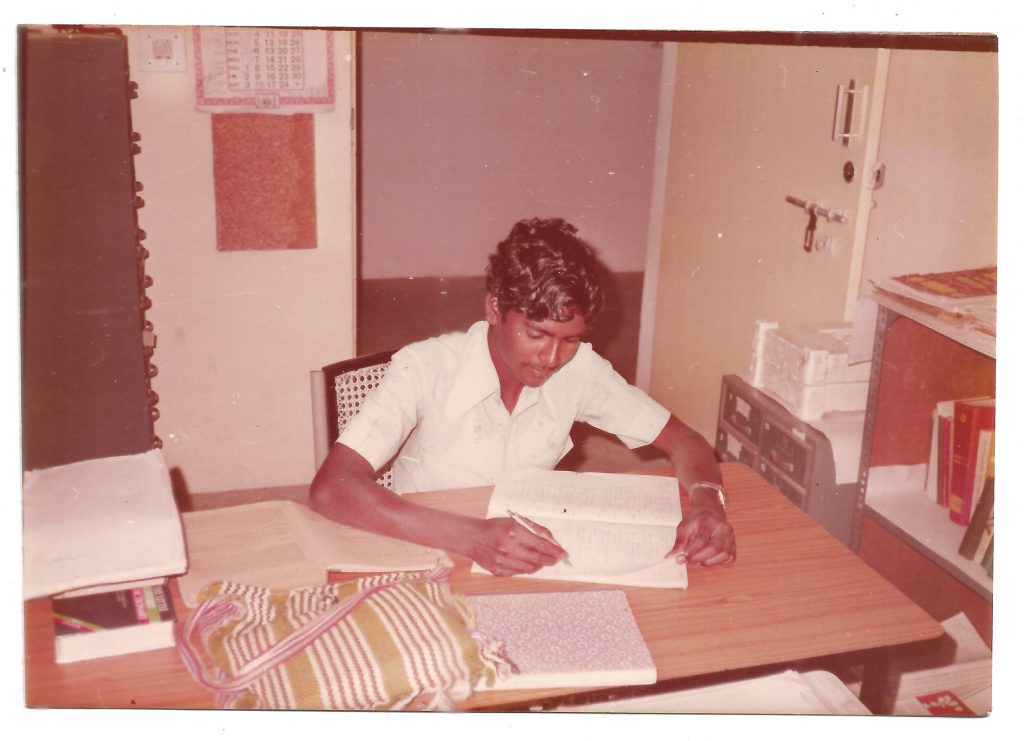
sitting room, where he used to sleep at the time (Photo courtesy: Kumud Majumdar)
What changes have you seen in how the Institute has evolved over time?
Over the last four decades, the Institute has grown from around 400 students and over 100 faculty members in the 1980s to more than 5,000 students and 500 faculty members today. Significant infrastructure developments – including the construction of the new hostel blocks to provide ample student accommodation – have supported this growth. In the past, students would gather each July outside the Main Building, requesting hostel extensions, a scene that is unlikely to recur in the foreseeable future.
How are you spending your retired life?
After retirement, I visited my village and nearby temples. I now live in Tatanagar, Bengaluru, with my wife and daughter, and am engaged with a private organisation.
What would you have done if you had not got a job at the Institute?
Maybe my life would have taken a different direction if I had become a civil contractor. I might have built houses and buildings. My hands would have continued to hold the hammer and chisel, shaping walls. But joining the Institute changed that course. From the day I entered the Institute, the hammer was replaced by the keyboard, and the chisel by the mouse.
I wish to mention some of my unforgettable incidents, including visits to Gymkhana to listen to music, paying 5 paise per song chosen from the catalogue on the tape recorder. Those old cardboard boxes, discarded by the Department of Chemical Engineering, became my makeshift bed from 1981 to 1984. And the post box near the Main Building was the lifeline of communication between my father and the family. The kind staff of the Department of Physics often helped my father so that our reply by postcard reached him.
Initially, our stay was in the outhouse of the current preschool (Bungalow No 10), where Prof PS Narayanan was staying. I will never forget pulling the trolley along these roads, from one building to another, loaded with sand, gravel, mud, and cement for construction. Back then, I never imagined that one day I would be driving my own car on the very same roads.
My first home was a temporary shed, shared with the contractor’s storage area for construction materials. It stood opposite what is now the library parking area, where the UG building (formerly the old Physics building) stands today. Whenever our little house became too cramped, I would find a place to sleep in the corridors of different campus buildings, alongside many construction workers. At the age of 14, from that humble home, I found joy in watching the bright glow of the JRD Tata Library’s tube lights.
If I fail to remember the support received from the entire community of our Health Centre for my family during this period, it would mean forgetting one of the greatest acts of kindness we have ever experienced.
My journey from construction worker to superintendent was made possible by the support and recognition from the students, staff, and faculty of this Institute. There is a Tamil saying: “Poovodu serndha naarum manakum” (Even the thread accompanying a flower will become fragrant). I believe that joining IISc gave a lot of fragrance to my life.
(Edited by Kavi Bharathi R, Ranjini Raghunath)