Spooky stories of campus past
IISc is equal parts a university and an epic, covering several epochs in its century of existence. Stacks of dusty files overflow with correspondence and documents, digital folders burst with names and passwords, and fossilised records lie silently in the farthest corners of the library. Yet, there is more.
Beyond this recorded history, under the fabric of everyday life on campus, is an anthology of twisted tales whispered amongst the IISc community. Most of the time, these otherworldly experiences are shunned as far-fetched, mistranslated truths, unworthy of time and spare thoughts. After all, what could possibly be scarier than looming finals, deadlines, soaring Bengaluru cab prices, and the truly mortifying confessions on anonymous Instagram pages?
But the curious thing about stories is that they always find a way to be told. They wait patiently on the tip of the tongue or in the recesses of the mind. At times, they are a whisper on empty roads and departmental buildings, ready to infect the curious. A blur of movement in the corner of the eye or the impossible sound in an empty room, IISc tells its stories to those who will listen.
Let us, then, listen.
Just keep swimming?
The campus swimming pool is a fantastic facility, kept clean by amazing staff – visibly, at least. Devansh*, a security guard on campus, was unfortunately one of the few who experienced the grime under the surface.
Over a decade ago, Devansh was on the night shift at the entrance of the swimming pool. He had grown so accustomed to silence as his lone companion that he was puzzled when he heard footsteps. It rose above the rustling of shrubbery and the creaking of his old plastic chair. He turned around … and suddenly the echo of footsteps stopped. The paved road greeted him innocently, still and empty. He shrugged it off as a figment of imagination from his sleep-addled mind, maybe a nosey nocturnal animal scampering across the undergrowth.
When the footsteps came around again, his rationale started to erode. The third time was one too many, and Devansh did not stick around to investigate. He ran, lungs aching, until he was standing in front of the nearby guest house, where a very confused co-worker sat him down and listened to his experience. After the incident, Devansh refused to work around the swimming pool area.
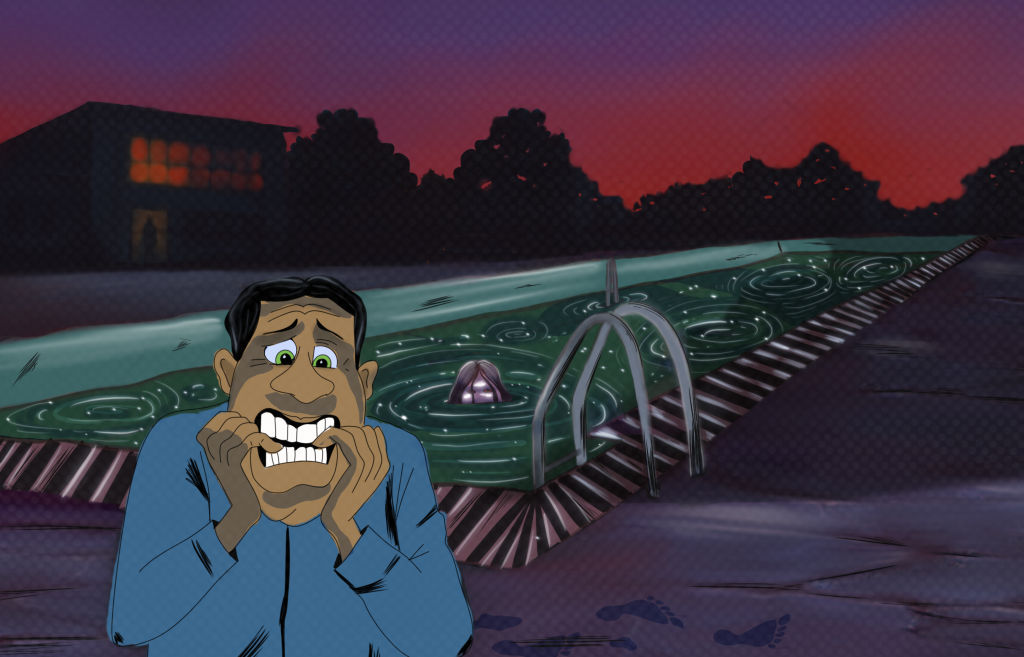
Viraj*, another member of the IISc staff, was not so lucky. He was tasked with serving tea to the 150 permanent staff on duty during the graveyard shift. Late into his work one night, Viraj was tasked with bringing tea to the security guard on swimming pool duty. When he reached the facility, all that Viraj saw was an empty plastic chair gleaming under the street light. As he stepped into the pool complex, the pungent chlorine enveloped him alongside the darkness. The water in the pool bobbed silently.
Suddenly, something dived off the building and into the pool. He didn’t have to turn back to see the giant splash as the water rose ‘20 metres’ into the air upon impact. And yet, not a drop touched him. Heart thundering, he took off running, making his way to the guest house. To his surprise, he found a watchman there, shaking like a leaf as he explained that an otherworldly presence at the swimming pool had scared him away.
An out-of-the-way, sparsely visited location may feel like low-hanging fruit for an urban legend begging to catch on. What about departments, with their packed laboratories and overworked students who might as well bring in a mattress as part of course material?
The years bygone
A ways away from the swimming pool stands a building filled with people who stare at brains – the Centre for Neuroscience (CNS). Legend has it that on your way there, if you walk along Gulmohar Marg at night and stand quietly in the dark stretch between two streetlamps, you may hear someone calling out your name. Does it not sound like your friend who bid you goodnight hours ago? Maybe she finally deduced that you were the culprit who burned the packet of Maggi in her kettle and is coming to give you a piece of her mind? Or maybe it’s a trickster spirit?
The CNS building, before it was occupied by scientists, used to be the home of the Archives and Publications Cell (APC), currently the Office of Communications (OoC). Tejashwi*, who has been working on campus for several years, recounts some stories of her time at the old APC building.
Something seemed off about the place, Tejaswhi claims. Multiple people reported eerie sightings and strange feelings of being watched. It had become routine small-talk for both believers and sceptics.’ “Hello, how did your meeting go? Do you think it will rain tonight? Did you catch sight of the thing that knocks on the second-floor window?”
Once, Tejashwi had stayed back beyond working hours to get through some paperwork. As 5 pm hit, her colleagues popped into her office to take their leave. “Goodbye, see you tomorrow!”
Click.
The door to the room locked automatically upon closing, meaning it could be opened either by twisting the handle from the inside or with a key from the outside. Tejashwi got to work.
Around 6.30 pm, as the sunlight fought valiantly to keep the impending darkness at bay, Tejashwi felt a sudden chill over her skin. She looked up from her desk and tried to shake off the feeling. Just as she was about to get back to work, the door cracked open.
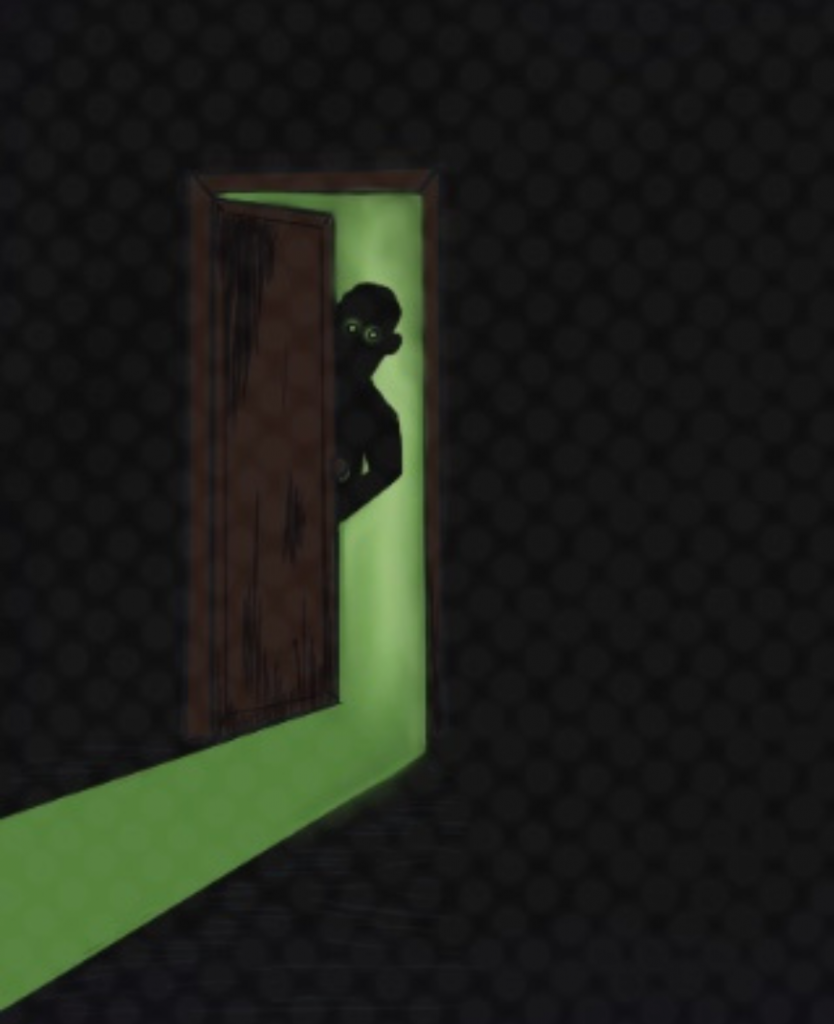
Tejashwi sat frozen as the hinge gaped, a millimetre a second, silent and slow, like an intruder tiptoeing through a house. It swung open fully to reveal… nothing. The dark corridor looked back at her, as if she had not distinctly heard the lock click into place hours ago. As if the door could have physically been opened with anything but a key. As if anybody but her and the watchman even had copies of that key.
Needless to say, she became more open to letting paperwork spill over to the next working day.
But there is more. Soon after Tejashwi had started working in the office, the building also had space for visiting scholars to stay overnight. Two students, John* and Drew*, were at IISc for summer internships. They were incidentally assigned single rooms right down the hall from each other. During the day, Tejashwi, the watchman, and a few cleaning staff would be around, while the students only returned to the building at night after working in labs elsewhere.
One night, John woke up to a loud thumping on his door. Half asleep, he expected Drew to be on the other side. But when he opened the door, an empty corridor greeted him, with a goosebump-inducing cold draft and white fluorescent lighting that could put hospitals to shame. John didn’t even need to blink past the glare in his eyes to see the dark outline of Drew’s securely shut door.
Conversation at breakfast the next day was … interesting. John tiptoed around the fact that he had spent the night trying to convince himself that the thumping had been a stress-induced hallucination. Until, of course, Drew confessed to an incorporeal thumping on his door too. He even confronted the watchman to see if he’d been the victim of a prank, and the former assured him otherwise. The place was simply haunted, the uniformed man supplied helpfully.
The students could now either risk telling the administration that they were hearing things go bump in the night, or suck it up and hope for the best. They dragged their beds into one room and had a sleepover for the rest of their internship.
Eventually, APC moved to a different building, and was rebranded as the Office of Communications. It is now nestled behind a whimsical garden, next to the Faculty Club that hosts lunch for faculty members. It also sits right across the road from a graveyard.
Beyond the veil
While Tejashwi currently no longer works with the Office of Communications, she did continue working for a while after the department moved. There was an eatery behind the currently located Faculty Club, which she frequented with her friends and co-workers.
The period also coincided with her family members constantly suffering from ailments. Her mother fell sick suddenly and the illness stayed stubbornly for over a year. Several colleagues were also facing similar problems – mysterious illnesses and mood swings ran rampant in the office, and spirits (the human emotion kind) were at an all-time low.
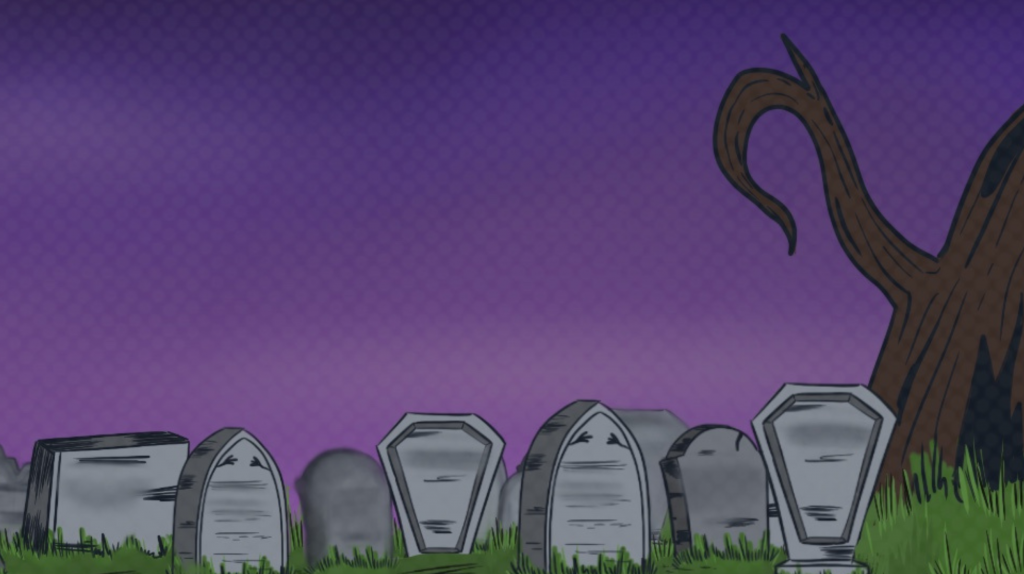
One day, Tejashwi and her friend, Aditi*, discussed these issues at the canteen. Aditi’s husband had fallen ill recently, and she was concerned about its abrupt onset. “I suppose all this is to be expected,” Aditi said, with a sigh. “We are literally very close to a graveyard,” and she showed her the compound that was visible from there.
Tejashwi was flummoxed. She looked out at the land which had been her view for countless meals, realising that it was, at the time, still a functional graveyard. Eventually, the people recovered. But they were hesitant to share their experiences outside their close circles, fearing ridicule and exclusion. After all, how could you work at a research institution and spread such ignorant tripe?
The sister temples
So far, these legends have been rooted in malignance. For a different flavour, one has to travel closer to the periphery of the campus. If you happen to pass by a particular tree around the Department of Mathematics, stop and observe. Legend has it that a woman was once found hanging on a branch. Be on the lookout for sudden breezes or bird calls (and remember to check up on your loved ones if they’re struggling). Past that, where the A and B hostel blocks stand today, is a story that stems from what’s considered a traditionally benevolent force.
The expanse of land donated to build IISc included two ancient temples that were worshipped by locals in the area. One was dedicated to Circle Maramma, who is widely revered as a kind deity. The other, smaller one, was dedicated to her mythical sister, Goddess Sollapuriammaa. Back in the day, people believed that the two sisters often walked around or met in this area because they considered it their own space.
As the campus was built up over the years, departments, water tanks, and hostels arose. The boundary around campus, however, remained fuzzy and porous for a surprisingly long time. When they finally enclosed it within physical walls, Circle Maramma’s temple fell outside while Sollapuriamma’s temple stayed within the premises.
As the student population flourished, the demand for a new hostel complex became unavoidable. The administration decided to build two hostel and mess complexes, and signed off on orders to construct the A and B blocks. While they made the arguably excellent decision to operate the best mess on campus (A mess), they also decided that it would probably be alright if they demolished Sollapuriamma’s temple – at this point, barely a small mound protecting an idol – in the process.
It was not, in fact, alright.
For a few months, construction on the hostel blocks was delayed, and the contractual construction workers kept dropping in and out of the project.
One of the staff members was aware of the presence of Sollapuriamma’s temple at the construction site. A staunch believer in the Goddess, he interpreted the situation as her refusing to move from the site she had lived in for so long. This story spread, eventually reaching the Director’s office along with a plea to construct the blocks around the temple.
Whether it was divine will or simply an administrative decision, the A and B blocks were eventually redesigned to skirt around this temple. Construction then ensued smoothly, and now the buildings stand tall and proud, albeit with horrible ventilation. To this day, Sollapuriamma’s temple sits inside the hostel premises. Worshippers occasionally visit her to pay homage and offer flowers in respect.
An unwilling exercise
Our final story lies outside the campus, over at the Gymkhana. Across the creaky yellow overhead bridge is a sprawling sports area that’s currently under construction to create a full-fledged student centre. What secrets does it hide?
Before the Gymkhana renovation, it was occasionally used as a movie set. Viraj*, the aforementioned longtime IISc employee, was once assigned post-shoot cleanup duty. The cast and crew had taken away the bustle along with their camera and equipment, and quiet had descended.
Eventually, he finished the lonely task, having put away the last of the displaced chairs and double-checking the lights and fans, and prepared to lock up on his way out.
The silence was broken only by his boots crunching in the mud as Viraj trudged back towards the gate. He had barely walked 10 metres when a distinct whirring cut through the air. Confused, he turned around to the gleam of moonlight on the metal lock, the secured doors, and the solemn building. Business as usual.
When Viraj craned his neck and looked through the side window, he could see the blades of a ceiling fan rotating at full speed, as though he hadn’t just triple-checked the switches. Ignoring the unease in his gut, he walked back to the door and slipped the key into the lock.
He was still trying to figure out how he could have overlooked a fan switch when he entered and realised that the room was aglow. The furthest corner of the hall was lit up, and he could feel the heat radiating all the way to where he stood. It wasn’t spreading, just an angry, localised hot glow, gleaming impossibly in the otherwise dark room.
By the time Viraj’s brain caught up with his body, he was already running away from the Gymkhana. Adrenaline pumping, he stumbled across the road to normalcy. The next day, he recounted his experience to his co-workers, and was teased for leaving the door unlocked all night.
Of course, it doesn’t end there. Several people have had odd experiences inside the old complex. It wasn’t uncommon for security guards to go to sleep on the ground floor, and inexplicably wake up on the first. Sometimes they would rise and blankets or pillows would be thrust across the room. As independently reported events bore uncanny similarities to each other, the Gymkhana cemented itself as a key location in this spiderweb of IISc urban legends.
The narrators of these stories expressed themselves with various levels of dread, humour, skepticism, reluctance, and acceptance. They are complex people with nuanced views on the supernatural, mental health, and community, and how these factors affected their own experiences. Each of them lie on different points along a broad spectrum of beliefs. Some shared that they still struggle with rationalising these experiences and staying true to their scientific training, while others showed a profound acceptance of the supernatural as a mundane, if slightly unusual, phenomenon. Either way, they carry these stories with them throughout their lives at IISc and beyond.
(*Names have been changed to protect the privacy of the individuals.)
Creetika Dahal is a second year BSc (Research) student at IISc, and a science writing intern at the Office of Communications
(Edited by Sandeep Menon)