Indumati Srinivasan has spent over three decades navigating some of India’s most complex public institutions – from the vast system of the Indian Railways to the research-driven environment of the Indian Institute of Science. Trained as an economist and shaped by years in the Indian Railway Accounts Service (IRAS), she brought rigour and quiet resolve to her role as Financial Controller at IISc.
After retiring in August 2025, she is deeply engaged in the social sector, working closely with organisations focused on education, disability, and inclusion. In this conversation with CONNECT, she reflects on growing up across cities, learning music from her mother, managing public money in research institutions, and what brings her fulfilment.
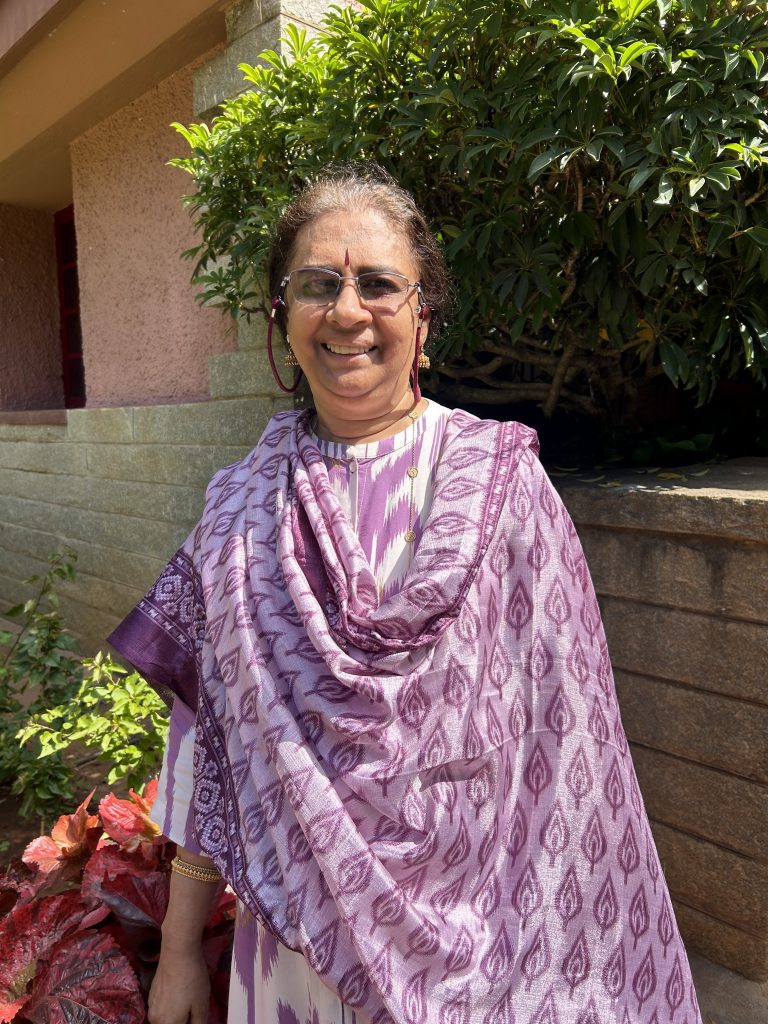
Could you tell us about your early life?
I grew up in Bengaluru, where I did most of my schooling. We moved to Mysuru for a year and after that to Delhi, because my father, who worked in the Central Government, was transferred there. From the 10th standard until I entered service, all my education was in Delhi.
What did you major in college? What led you to pursue a career in the civil services?
I completed my Bachelor’s with a major in Economics from Delhi University, and then I pursued a Master’s at Jawaharlal Nehru University. I think the main persuasion [to pursue a career in civil services] came from my mother. Also, the environment in Delhi at that time played a role; there was a strong culture of preparing for competitive exams, particularly the civil services. So, I was naturally drawn in that direction.
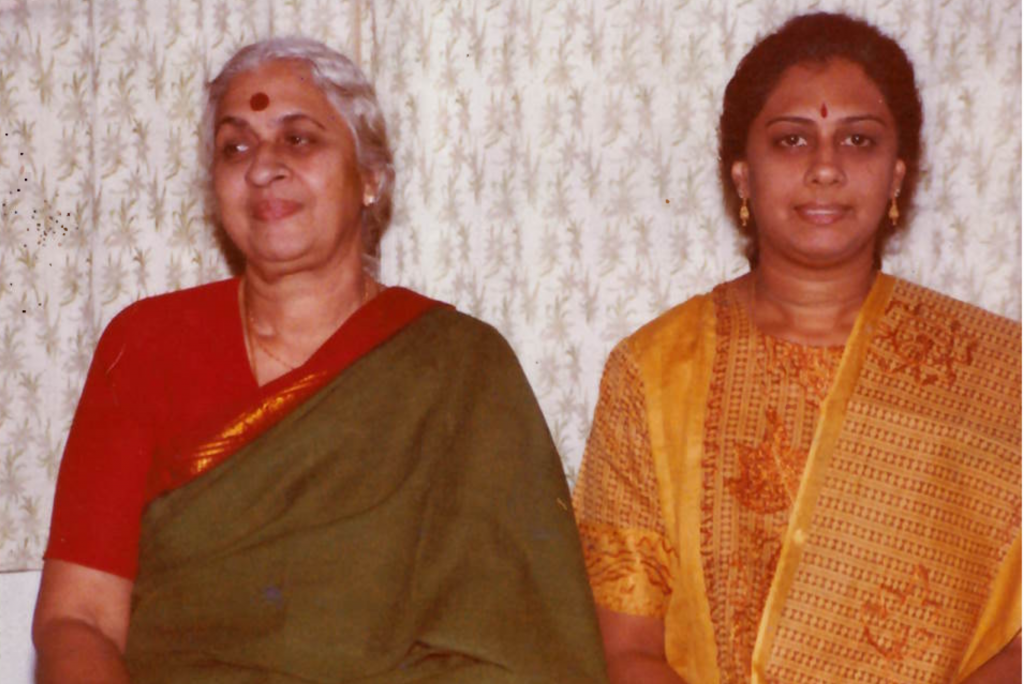
How was your time in the IRAS?
I spent over 23 years in the IRAS. I joined in August 1987 and completed the foundation course at the Lal Bahadur Shastri National Academy of Administration (LBSNAA), Mussoorie. After my two-year probationary training at the Railway Staff College (now called the National Academy of Indian Railways) in Vadodara, I was assigned to the Southern Railway, with my first posting in Bengaluru.
The [IRAS] training felt like a ‘Bharat Darshan’ – we got to see a lot of the country during that period
Do you have any fond memories from Mussoorie or Vadodara?
Mussoorie was a nice experience. We went on a village trip in western Uttar Pradesh and also did a trekking expedition in the Himalayas. Beyond the classroom, it was really an introduction to the world of civil services.
Training in Vadodara was also very different from a conventional classroom experience. We were frequently sent to the field across various zonal railways, including to the Northeast. In many ways, the training felt like a ‘Bharat Darshan’ – we got to see a lot of the country during that period.
Eventually, it was nice to come back to Bengaluru. My parents were here – my father returned from Delhi in 1982 to serve at the Central Power Research Institute (CPRI) – and in many ways, coming back here felt inevitable.
Where were you posted when working with the Railways?
Several places. I was single at the time, and my parents were still independent, so I was open to moving. From Bengaluru, I went to Mysuru, then Madurai and Chennai, and later returned to Bengaluru. I also worked at the Rail Wheel Factory in Yelahanka.
From there, I had the opportunity to go to Mozambique for a year, through RITES (Rail India Technical and Economic Service Limited), a public-sector entity under the Ministry of Railways. That was a very special experience.
What was it like living and working in Mozambique?
Mozambique was particularly interesting. Its official language is Portuguese, not English. I did a crash course in Portuguese, but I think the locals learned more English from me than I learned Portuguese from them. They were extremely warm and respectful, addressing me as “Doctor,” even though I’m not one. When I corrected them, they said, “For us, you are highly educated, so we call you that.” That was probably the only time in my life I was addressed as a doctor.
I was provided with a flat and a new car, allowing me to drive to work. I cooked my own food, as I’m a vegetarian, and brought lunch to the office. It’s definitely a poorer country than India, but what stands out is how kind and respectful the people were.
How did you transition from the Railways to IISc as Financial Controller?
Initially, I came on deputation from the Railways. Someone told me about the opening, and I was looking to settle down, as frequent transfers were becoming difficult with my parents growing older.
For the first five years, I was on deputation – my services were still with the Railways. At the end of those five years, the then Director of IISc, Prof Balram, asked me whether I would consider having my services absorbed by the Institute.
Our responsibility is to maintain an efficient, transparent, and trustworthy accounting and reporting system
Can you describe your core responsibilities?
I was heading Finance and Accounts. There is a separate wing for sponsored schemes and projects (the Centre for Sponsored Schemes and Projects), which I was given additional charge of towards the end of my tenure, but for the larger part of my time, I handled only Finance and Accounts.
When I joined, I inherited a fairly difficult legacy. There had been a recent software change, and the system had not stabilised at all. Payroll processing was unpredictable, and every month brought new surprises. It took considerable effort, and about a year, for things to settle. I brought in a retired expert from the Railways to help stabilise the system, and that made a significant difference.
Culturally, it was a big shift as well. I came from an organisation of mammoth proportions: the Railways, with about 15 lakh employees. IISc is entirely different. It is a research institution, and there has to be freedom to pursue academic and scientific work. After about a year, I felt comfortable, both with the systems and the culture. By the time the absorption offer came, I had no hesitation in accepting it.
What role does the Finance and Accounts function play in core institutional decisions?
Administration serves as a support function at the Institute, which focuses on research and education. Our role is to maintain accounts of grants and projects, ensure compliance, and report utilisation accurately to funding agencies.
Most of our funding comes from government sources, though in recent years, private and CSR funding have increased. Because government grants come with mandates, expenditure must follow prescribed norms. Our responsibility is to maintain an efficient, transparent, and trustworthy accounting and reporting system.
Were there other challenges during your tenure?
Yes. Over time, staffing reduced significantly due to retirements. Recruitment had been frozen for nearly two decades, so while grants and expectations were growing, staff strength was shrinking. We had to rely heavily on contract staff, which brought its own challenges, such as a lack of continuity and uncertainty.
How did you find working on campus?
Initially, we were in the DIGITS office. In early 2017, we moved to the present building on the left near the main gate.
My social engagement on campus was limited. I lived outside the campus, and my parents were ageing. My mother was bed-bound for nearly four years with dementia, which demanded most of my attention.
Then, COVID-19 happened. For two years, everything changed. Managing work while dealing with the sudden disappearance of support systems was very challenging. A small core team in the office functioned extremely well during that period and supported me throughout.
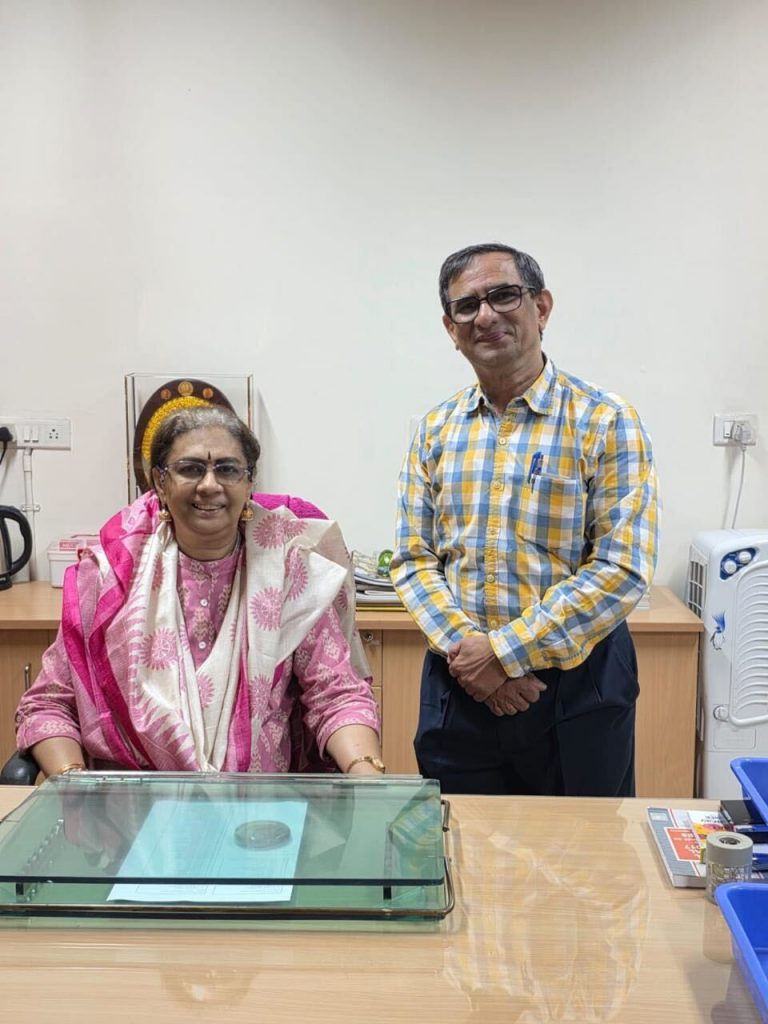
You said the work environment here felt different from the Railways.
I wouldn’t say I had greater freedom, but the environment here was more relaxed. In the Railways, you constantly feel like you’re in a pressure cooker; there is continuous enforcement, accountability, and demand on your time. At IISc, the challenges were different: software issues, staffing shortages, and so on. But there wasn’t a daily, intense pressure.
Have you ever wanted to work at a different institution?
Not really. Coming to IISc was not something that I actively planned. I think I applied almost at the last moment. In those days, applications were not online – I remember coming to the Main Building in person and submitting my application by hand.
I was shortlisted and called for an interview. Dr K Kasturirangan was chairing the panel. Being interviewed by someone of his stature was a very special moment. I didn’t recognise the other panel members then. I later realised that it included the Director, Associate Director, Registrar, and others.
I also remember that I was the only woman who appeared for the interview.
Around the age of 11, I was introduced to the veena … It has always been part of me
You are a veena player. How has music influenced your life?
My mother was a Carnatic vocalist, trained under stalwarts from a very young age. She had a very good voice and taught music to students. When I was four or five, she made me join her classes. Around the age of 11, I was introduced to the veena.
My musical training hasn’t been consistent because of my professional life – I was transferred frequently. Obviously, the veena didn’t travel everywhere with me. But whenever I got the opportunity, I went back to it. Even now, after retirement, I’ve returned to it. It has always been part of me.
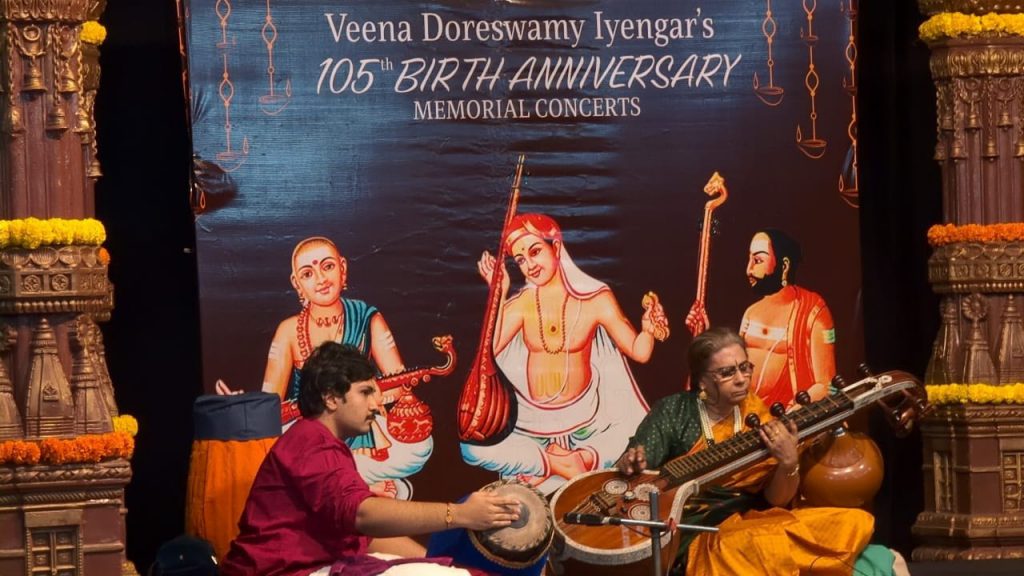
When I was in Delhi, in the early 1980s, I successfully auditioned for the All India Radio (AIR) Yuvavani. I played regularly on AIR Delhi. They paid me Rs 40 for a 15-minute recording; not that the money mattered. What mattered was the exposure and the discipline. Every time, I wanted to do better than my last performance. I was competing only with myself.
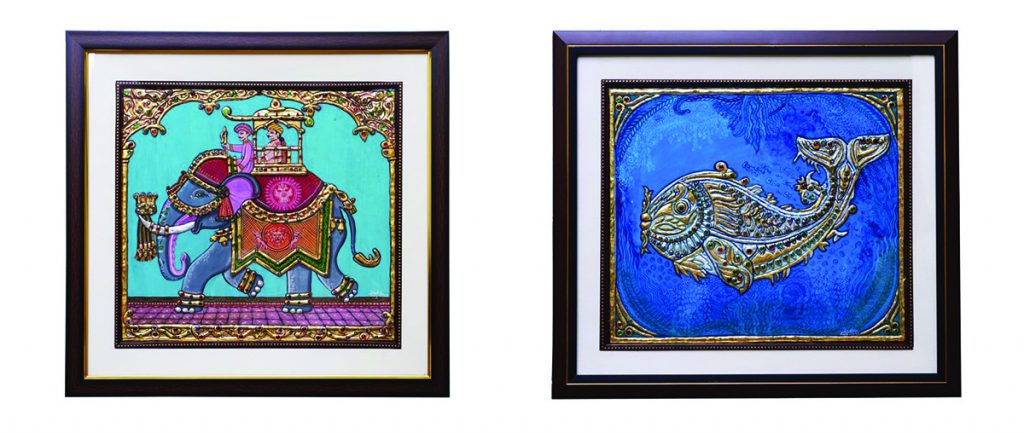
After my mother passed away, I also took up painting. She herself had taken up painting – Tanjore-style art – at the age of 60 and continued until about 80, when her eyesight deteriorated due to macular degeneration, making intricate work impossible. One of the most meaningful moments for me was in August 2018, when I organised an exclusive exhibition of her Tanjore paintings, even when she was bed-bound.
While clearing my mother’s things after her passing, I found all her painting materials. I couldn’t bring myself to throw it away, and a thought struck me: Why not try it myself, if I could find a good teacher?
A cousin helped me find one, and I began learning. On weekends, I would sit and paint. Over time, I had enough work to hold exhibitions – one at Chitrakala Parishath and later at the Venkatappa Art Gallery.
Since retirement, you seem to be deeply engaged in the social sector. How did that begin?
After my mother passed away, I was introduced to the Swadha Foundation through a cousin. They were looking for mentors. I was assigned an underprivileged girl who was pursuing engineering in Anantapur. From October 2021, I mentored her over weekly phone calls. This led me to Social Venture Partners, a global philanthropic network with a Bengaluru chapter. Their model is not just about giving money – you engage with NGOs, help with capacity building, evaluate funding proposals, and understand their work closely.
Through this, I was exposed to many NGOs working in areas like solid waste management, human trafficking, child trafficking, and working with sex workers and transgender communities.
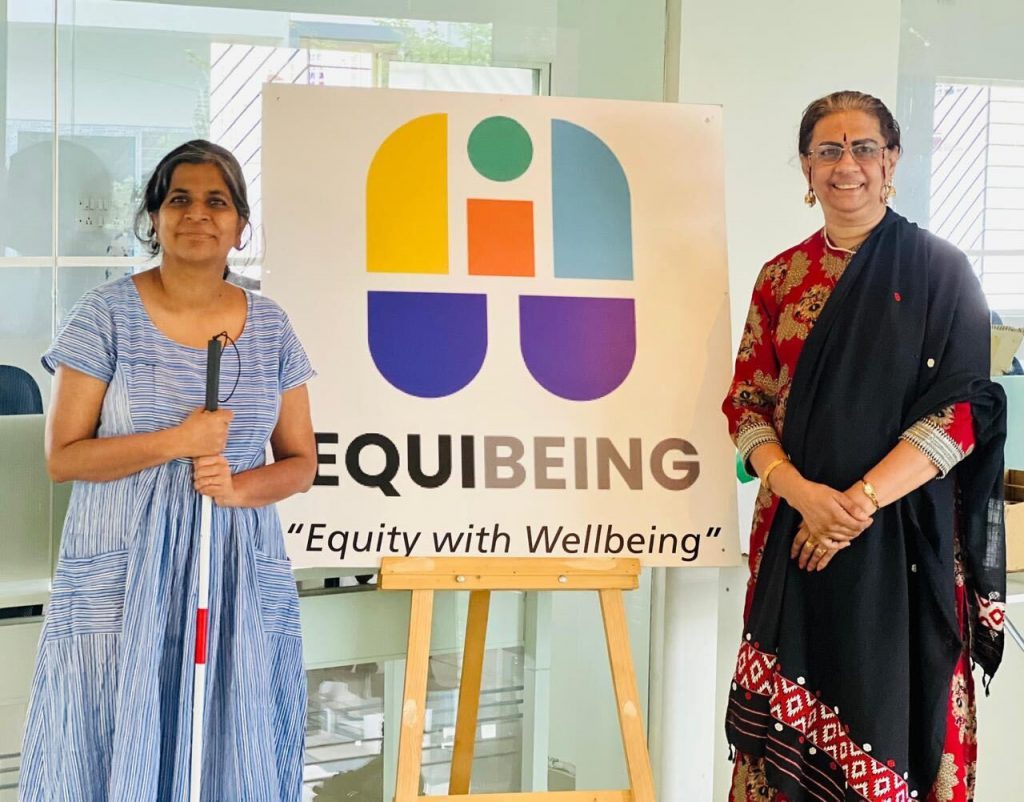
Eventually, I became actively involved with EquiBeing Foundation, a three-year-old organisation which focuses on empowering the visually impaired to live with dignity and independence. I am now deeply engaged with them, working across Karnataka, Kerala, and Maharashtra.
Why did blindness as a cause resonate so strongly with you?
Both my parents lost their vision towards the end of their lives. My father lost his sight to glaucoma due to neglect. He lived until 94, but in the last two years, after losing his vision, he also lost his will to live. He had always been independent and found dependency unbearable.
My mother didn’t become blind, but she lost her focused vision. That frustration affected her deeply.
When I encountered EquiBeing through my philanthropic network, I felt I could meaningfully contribute to it.
When I entered the social sector, I did not want to play a finance or accounting role. I wanted to work in operations
What do you miss most about IISc?
I’m grateful for the opportunity to have served IISc. But today, I am in a space that feels more exciting and fulfilling to me.
Here [at IISc], as an administrator, you don’t see the direct impact of your work on research or education. In the social sector, I see it immediately. I see a blind person being trained, skilled, and eventually placed in a job. I can see my contribution in that journey.
Just recently, I was in Mysuru for a soft skills programme for visually impaired participants. Initially, many of them didn’t even have a white cane; they depended on someone else’s shoulder to move. After mobility training, they walk independently with a cane. Being part of that transition – from dependency to independence – is deeply fulfilling.
Even in the Railways, unless you were on the construction side, you didn’t always see the impact. But I was fortunate to work on projects like the Bengaluru-Mysuru gauge conversion and parts of the Bengaluru-Hubballi line. I saw things being built. I went to the field, interacted with engineers, learned civil engineering concepts, argued with them as a finance officer, and saw outcomes on the ground.
When I entered the social sector, I was very clear: I did not want to play a finance or accounting role. I wanted to work in operations. I wanted to see things happen. I said, “Give me the programmes, I’ll manage them.”
A friend from my JNU days once told me she wasn’t surprised by where I ended up. She said I had spoken about wanting to do this kind of work even during our Master’s programme. I don’t remember saying it, but she does.
In some ways, it’s the difference between doing a job and finding your passion. The latter is far more fulfilling.
Is there anything else you’d like to share about yourself?
I love animals. I have a dog and a cat: Coco and Molly. I had another dog Junie, a labrador I adopted when she was five and a half. Coco came to me as a six-week-old puppy from a friend’s house. Molly, the cat, was rescued from a stormwater drain and made her way into my house through the garage. They are my children.
(Edited by Kavi Bharathi R, Abinaya Kalyanasundaram)