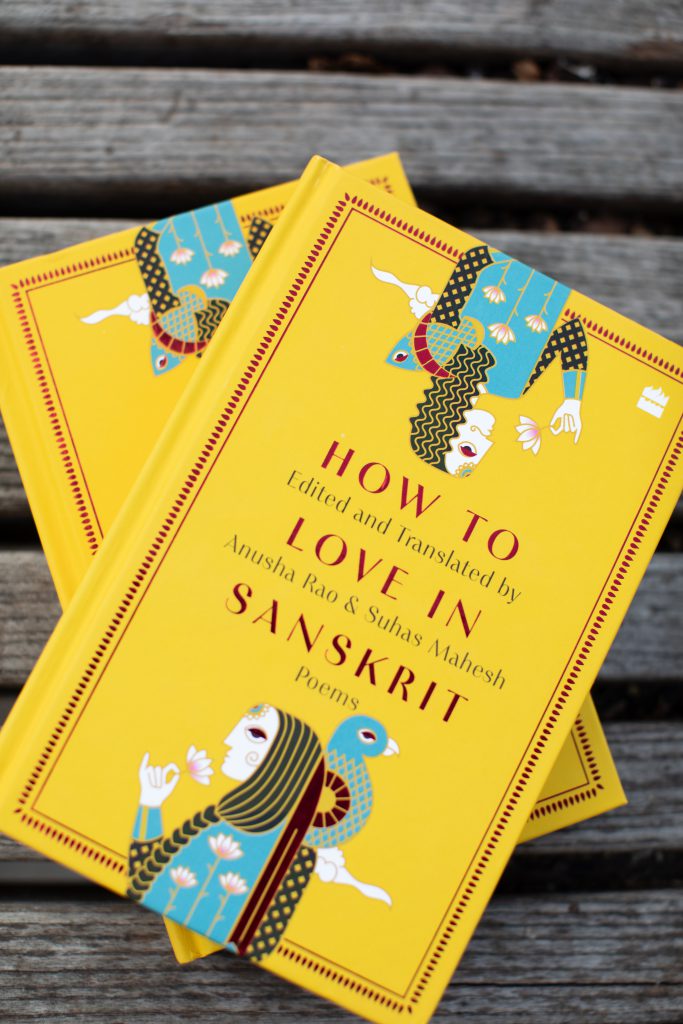
Suhas Mahesh is a man of many talents. He is a material physicist working on building self-driving labs using Artificial Intelligence (AI) to accelerate materials discovery. A Rhodes Scholar currently working with Schmidt Sciences in New York, he also nurses a love for languages, particularly ancient ones like Sanskrit and Prakrit. He has published a translated collection of Sanskrit love poetry, How to Love in Sanskrit, bringing together verses and short prose pieces by some of the tradition’s greatest writers. A former undergraduate student at IISc (batch of 2012-2016), Suhas speaks to CONNECT about his journey in academia, his memories of IISc, and his efforts to make Sanskrit more accessible.
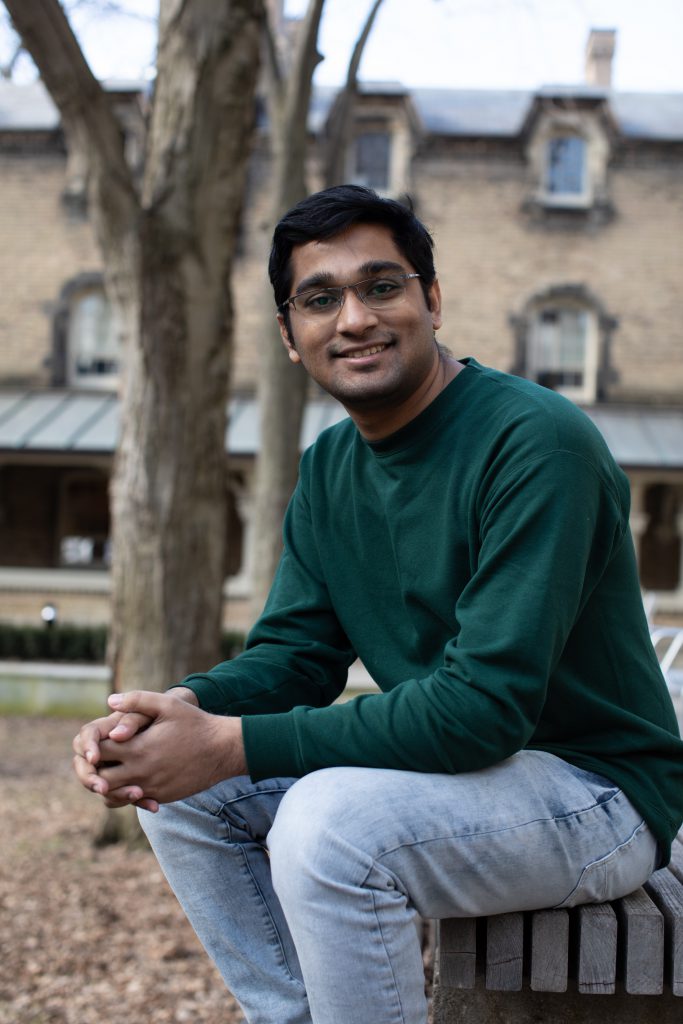
You were an undergrad at IISc. What was the impact that the institution had on you?
An enormous impact! I grew up in Bengaluru, and from the time I was about 10, I would come for Open Day every year. I particularly remember seeing superconductors levitating on neodymium magnets; that was absolutely thrilling. I had it in my mind very early that this was a place I wanted to be. Fortunately, when it was time to start university, IISc had just started the undergraduate programme. So, it was a no-brainer.
I was so excited that I started a research project just three months in, with Prof GK Ananthasuresh at the Robert Bosch Centre for Cyber Physical Systems. That led to a string of research projects with different faculty members at IISc, which is not something you usually get at other places.
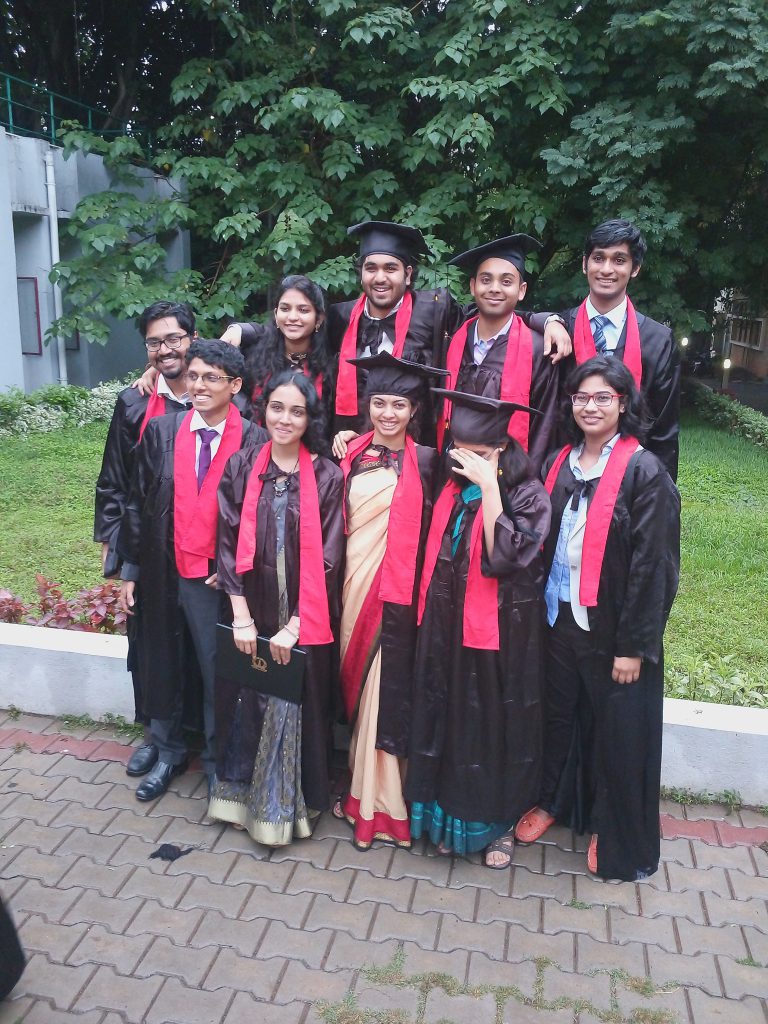
I’ve been at multiple institutions now and I have never seen more concentrated talent than in my IISc undergraduate class. Ten years later, that class has gone on to do truly amazing things. IISc has been a formative experience in my life. And I’m very proud to be an alumnus.
‘The great advances in science have often come not from discovering new phenomena but from building new instruments that let you see the world differently’
Can you talk about your journey since leaving IISc?
It was a journey that involved hopping from field to field. I got the Rhodes Scholarship and went to Oxford. I did my PhD in physics, studying semiconductors. At some point, I realised that the computational methods that we have today have plateaued over the last 20-30 years. And then, there was a new kid on the block.
The new kid on the block was Artificial Intelligence (AI)?
Yes. The great advances in science have often come not from discovering new phenomena but from building new instruments that let you see the world differently. AI struck me as exactly that kind of instrument – one that could be applied across virtually every scientific field. I was very keen to start using AI to see what difference it could make in research. This was before it became cool.
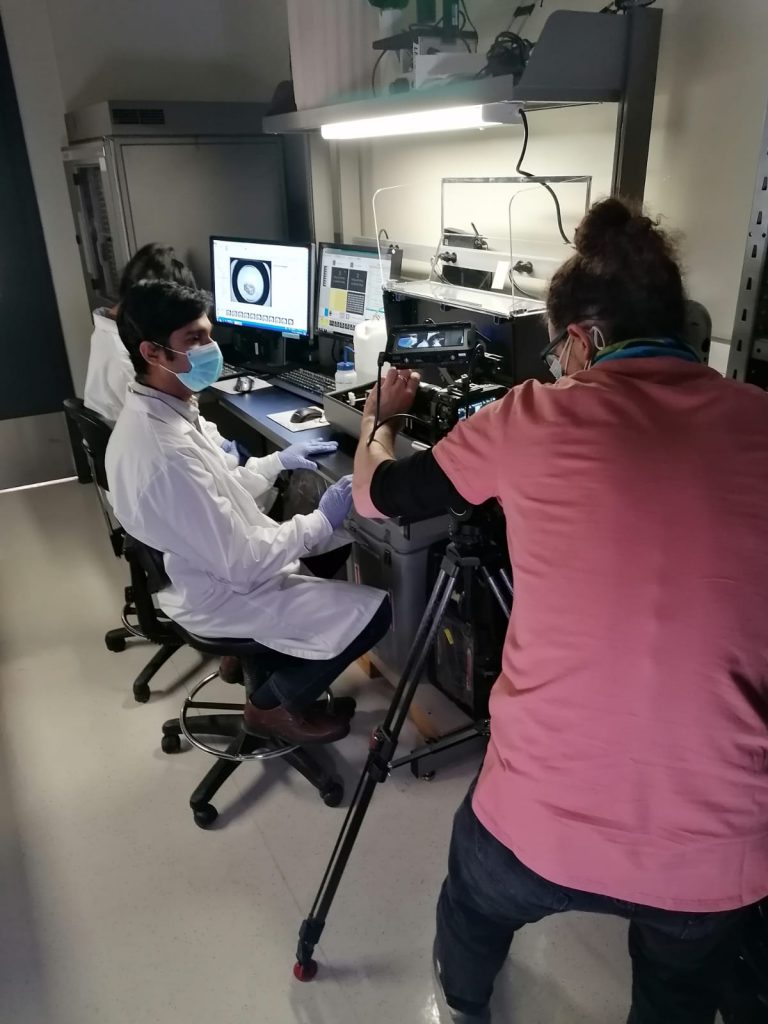
At that point, Eric Schmidt (former CEO of Google) sponsored me to go to the University of Toronto and re-train as a computer scientist, so that I could work natively in both computer science and physics. I spent three years there and built automated labs for doing catalyst synthesis and for semiconductor discovery, all driven by AI.
At the end of that, Schmidt had a new organisation called Schmidt Sciences in New York, which supports cutting-edge science. And Schmidt Sciences asked me if I wanted to lead the AI for Science programme there. I’m setting that up in New York now.
You enjoy working at the cutting edge of science, then?
Yes, absolutely. There is no greater pleasure than being able to stand at that edge, punch forward, and make that dent at the edge of human knowledge. It also excites me that this field is profoundly interdisciplinary right now. You have multimodal AI ingesting images, audio, and text to make predictions. Meanwhile, more mathematical researchers are developing tricks such as neural operators to handle different resolutions of data. My job allows me to work at the interface of many fields and bring ideas across them. It’s not often that you get to be in the middle of a revolution like this.
It seems like you have jumped across a lot of fields. Is that something you always wanted to do or something that just happened?
Mostly accidental. You chase good ideas no matter where they come from. And it seems like the nature of good ideas is that they are not localised. You have to become interdisciplinary.
You are working in material physics now, or have you shifted away from that?
Materials remain my core, but it’s a little broader than that right now.
Your website says that you are working on self-driving labs using AI to accelerate material discovery. What does that work entail?
The idea is to use AI to find new materials. So far, if we wanted to do materials discovery on the computer, we were sort of at the mercy of the theorists. There hasn’t really been any fundamental progress in theory for a long time now. So, how do you make progress? We finally have a way because with AI, you can learn from data. You don’t really have to know what the data is doing or what it’s saying, but you can learn from it. And that is what we are trying to exploit – generate large amounts of data and make these predictions better, even without having any theory behind it.
How do you use AI to come up with new things?
Picture an autonomous laboratory – a robot, guided by an AI algorithm, carries out synthesis and characterisation, then fabricates the material. Then, it sees what it has made and makes decisions about whether it did the right thing and got what it wanted. If not, it does the loop again and loops back and says that these are probably the things that went wrong. It keeps iterating, tightening the error bar until, ideally, it converges on the material that you’re after.
What is the scientist’s input with this AI?
I should be honest: I’m making it sound more automated than it currently is. The field is still nascent. You need a lot of human input to keep this running. A material is a three-dimensional arrangement of atoms. How do you represent that for a computer? It’s a harder question than it sounds. Atoms may be disordered in various ways. They vibrate and rotate. All of this must be explained to the AI algorithm.
That’s what we call featurisation. And then, there’s the problem of competing products. You try to make one thing and end up making 10 others. The decision tree is something a scientist has to manage because, as you pursue a particular goal, the possibilities explode exponentially.
Now, can I ask you about your interest in Sanskrit and Prakrit? Where did that come from?
Strangely enough, from the failings of the Karnataka state board education system (laughs). My languages in school were English, Kannada, and Sanskrit. The English and Kannada syllabuses were uninspiring – lessons on rainwater harvesting, pollution, global warming. Language textbooks should present a cross-section of the finest literature. The Sanskrit textbook, by contrast, was just the purest, highest-quality literature thrown at us with absolutely no mediation. Direct extracts from Kalidasa’s Raghuvamsha and Banabhatta’s Kadambari. Very early on, I realised that this was real, incredible literature. Every day I’d do my science work, and around 7 pm. I’d start reading Sanskrit. That would go on until 10 pm. Sustained effort over many years led to this.
‘The question was: Can you write a book that people will actually read? Coming up with the right idea was the hard part’
How did you get the material to keep reading? Because most Sanskrit students never read anything more than their textbooks.
The materials are generally out there. You can go to Vedanta Book House in Basavanagudi or any public library in Bengaluru. I was lucky to get in touch with many Sanskrit scholars in the city. Oxford has one of the largest Sanskrit departments outside India, which gave me training in Western philological methods.
I also took classes in Greek and Latin there. That connection to a related language family gave me more insight into the nature of ancient languages. It kept building that way.
When did you think that you had the proficiency to write a whole book, How to Love in Sanskrit?
Proficiency was not the issue. The question was: Can you write a book that people will actually read? Coming up with the right idea was the hard part. The book has about 200 verses in it. My co-author is my wife, Anusha. We read roughly 10,000 poems and felt that only 200 could be appreciated by a modern reader without a thicket of footnotes. The age gap with these poems is just too large otherwise.
Your wife is also interested in Sanskrit, then?
Yes, my wife is doing a PhD in Sanskrit at the University of Toronto. She’s just about to finish. We met while I was at IISc. She used to live in Malleswaram, and a common friend introduced us. And then, I went to the UK and she went to Canada. After I finished my PhD, I moved to Canada and now we live in New York.
I saw a post of yours. Somebody had written that Sanskrit was for elites and Prakrit was for normal people, and you said that was false. As I understand, Prakrit is the language that links us to ancient Sanskrit and the present languages. Is that right?
That’s a great question. Prakrit is essentially the language that Sanskrit evolved into. Sanskrit was spoken by people in Punjab about 3,000 years ago, and that evolved into many Prakrits across India. When people point to a Prakrit literary work and claim that it was written by commoners, that’s simply not true; by the time those works were composed, Prakrit had long ceased to be a spoken language and had become a language of elites. The way literature has always worked in India is that there’s a language which is spoken, then it stops being spoken and becomes an elite literary vehicle. People use it for hundreds of years to write things, but nobody speaks it in the kitchen or the bedroom.
Like Latin.
Yes, exactly. Like Latin 300 years ago in Europe, a language of scholars and kings, not of daily life. That was the case with Prakrit and Sanskrit as well.
What would you attribute Sanskrit’s longevity to? Because Sanskrit is still something that people hear about or know and is taught in schools…
Several things. It was adopted by very prominent religious traditions – Hindu, Buddhist and Jain – and remains integral to them. Because it attached itself to flourishing religious systems, all the ancillary sciences that come along with that – logic, Indian linguistics, mathematical texts and so on – got preserved and studied. Quantity is a quality of its own. The entire output of a civilisation has been preserved in the language.
Prakrit, by the way, is still used too. The Jains still memorise prayers in Prakrit. Because they’re a small minority in India, you don’t hear about it as much, but it retains some force in the Jain context.
You started Ambuda.org, a library for Sanskrit. How important was it for you to do that?
It takes about 10 years of dedicated effort before you can pick up a Sanskrit book like it’s a storybook and just start reading. My friend Arun Prasad and I wanted to help accelerate that process. The site lets you take a text, click on the verses, and it will auto-segment them – split the words apart, do a grammatical analysis, and link to dictionaries. I’m hoping that tools like this can shorten the journey from 10 years to three.
You have also written for CONNECT before. Have you continued doing science communication?
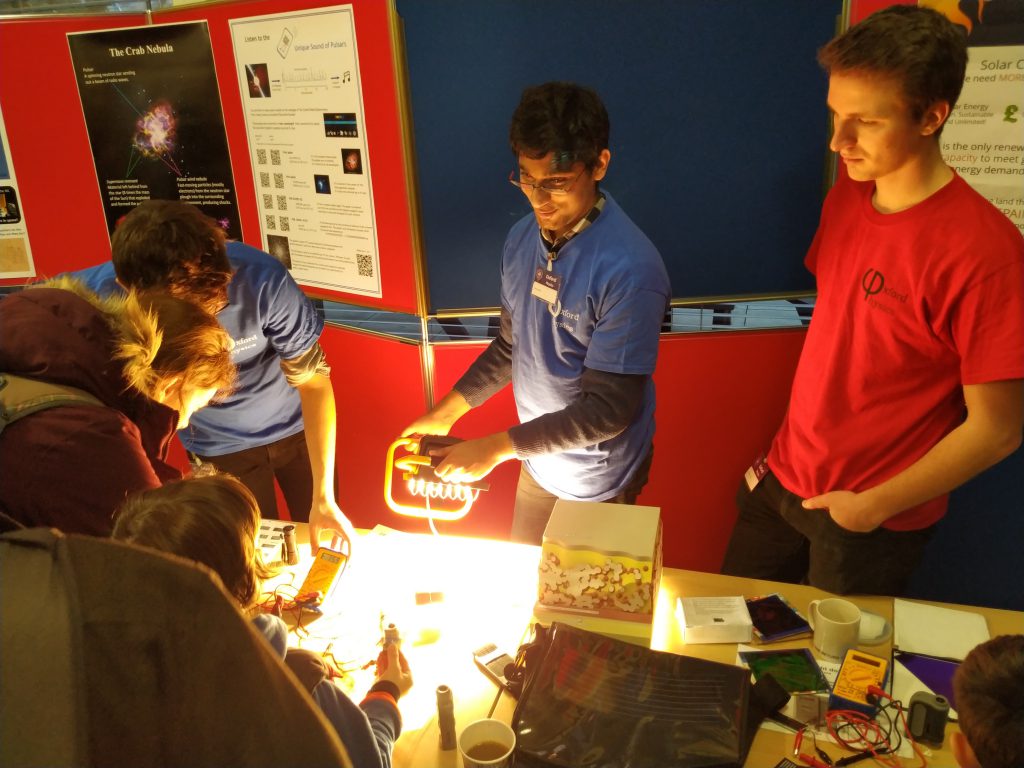
When I was a PhD student at Oxford, I’d organise multiple outreach events every year. One that I particularly remember: there was a big astronomy festival, and they sent out a call for exhibits. I had nothing to do with astronomy, but I was determined to bulldoze my way in because it seemed too interesting to miss. My PhD was in solar cell physics, so I named my exhibit “Powering the World with Starlight,” the sun being the star in question.
I didn’t get much of a chance to do that in Toronto; there wasn’t the same atmosphere for it. But I’m in New York now, and the city is big on science communication. I’m looking forward to getting that engine running again.
(Edited by Ashmita Gupta)