Designing an electric future
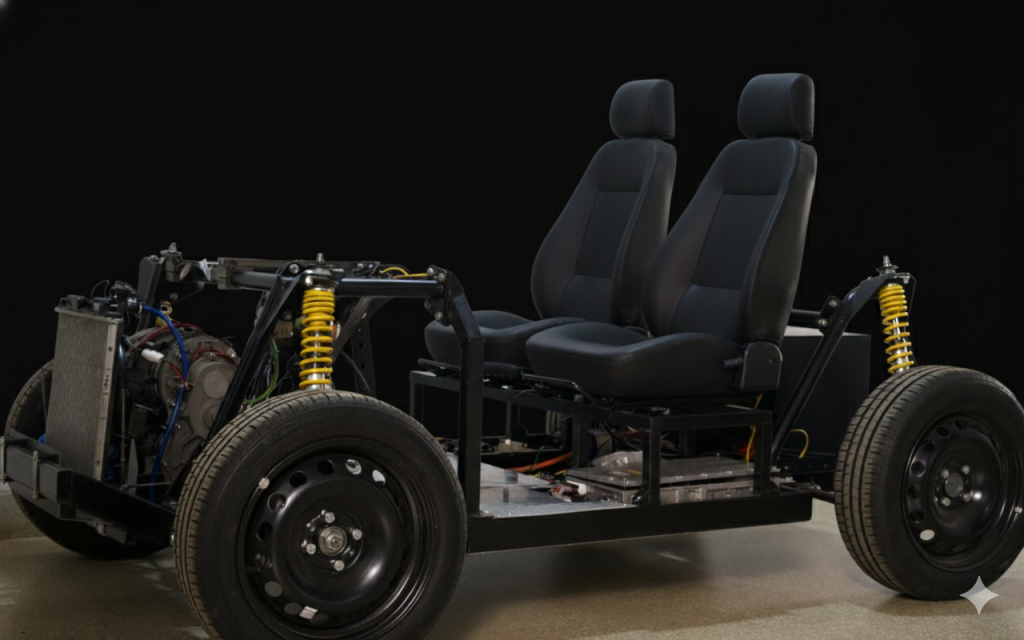
A quiet hum is redefining mobility. More than a century ago, the rhythm of modern travel was measured by hoofbeats – the rhythmic sound of iron shoes on cobbled streets. Then came the gas-chugging Internal Combustion (IC) engines, whose roars marked a revolution of speed and power. Now, mankind stands at the crest of the latest mobility transition – electric vehicles (EVs).
Though often perceived as a 21st-century innovation, the earliest efforts to design electric vehicles date back well over a hundred years
Though often perceived as a 21st-century innovation, the earliest efforts to design electric vehicles date back well over a hundred years, the same time when horses were relieved of their carriage duties. The first EV was built in the 1830s using non-rechargeable batteries. It took nearly half a century to commercialise EVs with rechargeable batteries, and only by the end of the 19th century did EVs gain widespread use. However, at that time, the electricity supply was limited, while gasoline was cheaper and more readily available. This led to IC engines winning the automotive race and rapidly gaining popularity.
The dominance of fossil fuel-powered vehicles lasted for decades, until the world finally looked around and realised the damage they were causing. This awareness forced us to search for alternatives to reduce emissions and increase efficiency. Now, a century after its initial conception, EVs are making a comeback. Over the years, the engines have become quieter; with EVs, it is barely a hum.
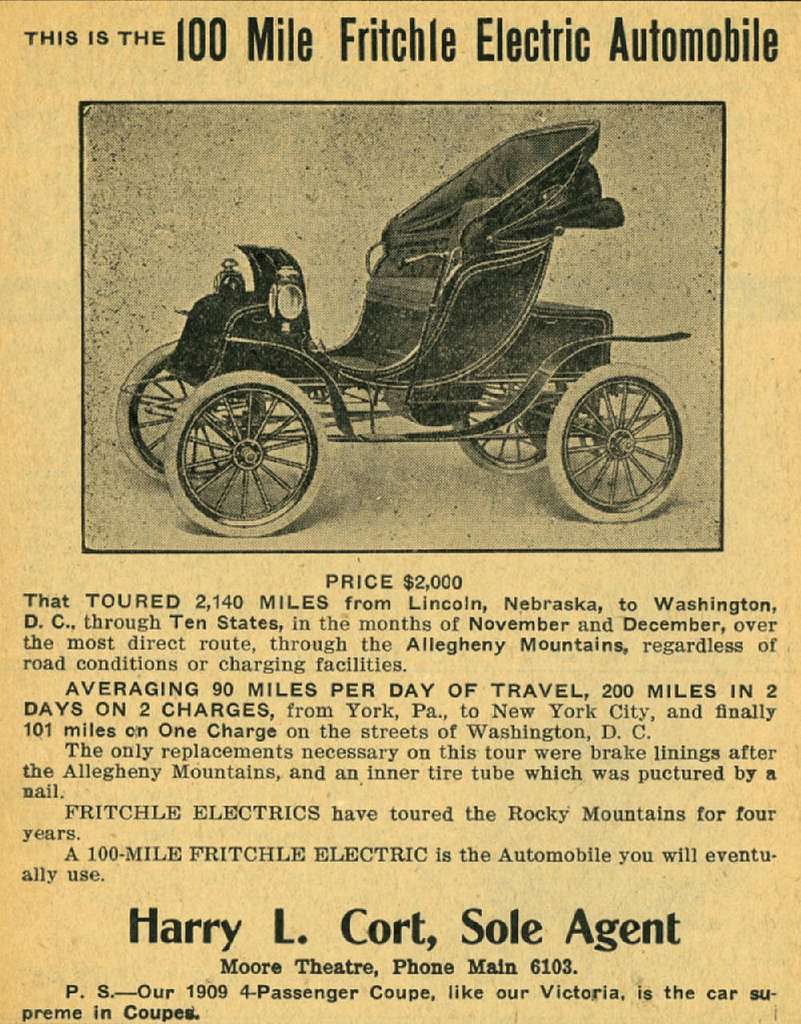
An advertisement for a Fritchle electric automobile, the Model A Victoria Phaeton. After patenting a lead-acid battery in 1903, Oliver Fritchle established the Fritchle Electric Storage Battery Company in Denver, Colorado, which produced its first electric car in 1905 (Photo courtesy: Washington Libraries digital collection/Public domain)
Despite all the excitement surrounding the billion-dollar EV economy, there is still a long way to go before EVs rule the roads. “The transition to EV penetration presents serious challenges ranging from fundamental issues with battery design to large-scale charging infrastructure,” notes Kaushik Basu, Associate Professor at the Department of Electrical Engineering (EE), IISc.
India’s biggest challenges in scaling electric mobility include expanding charging infrastructure, strengthening grid capacity, and improving energy management. But the problems lie beyond wires and watts. Researchers at IISc are now exploring multiple avenues to solve these issues, all with the goal of achieving an electric future.
The instant kick
Driving an EV feels starkly different from driving a conventional IC engine vehicle. Press the accelerator, and the response is immediate and silent; it takes drivers a while to adjust to this unfamiliar feeling, which reflects a fundamental difference in how the vehicle operates.
Conventional vehicles burn fuel, converting chemical energy into heat and then into mechanical motion through combustion. EVs bypass these steps entirely. Electrical energy in batteries is delivered directly to the electric motors, which then drive the wheels, eliminating the need for an engine, tailpipe, and combustion. The power delivery is immediate; there is no delay caused by the motion of fuel and levers. An inverter determines how much energy to draw from the battery and controls the speed at which the motor rotates. Speed, torque, and braking are all managed electronically by circuits, resulting in smooth acceleration without gears, noise, or emissions.
“Energy is stored in batteries, motion comes from an electric motor controlled by a power electronic motor drive – the three main components which differentiate an EV,” explains Harisyam PV, PhD student in EE.
Designing motor drives and battery chargers, however, is not trivial. “This is where power electronics – conversion of one form of electrical energy to another – becomes critical. It controls energy flow with precision and efficiency. It happens at a smaller scale in a mobile charger and a larger scale in a home inverter,” explains Harisyam. It is a fundamental change in how energy is stored and motion is generated in electric vehicles.
Electric motors also differ fundamentally from how engines operate. Unlike an engine, which operates efficiently over a narrow speed range, a power electronics-controlled electric motor can smoothly operate over a wide speed range. It can even reverse its role, acting as a generator during braking and converting mechanical energy (associated with motion) back into electrical energy. This process is called regenerative braking – “recovering energy that would otherwise be lost as heat,” explains G Narayanan, Professor in EE.
Elemental design
Building an efficient EV motor requires a material that enables a lightweight, compact design without compromising strength. Most EVs today use permanent-magnet motors, like Neodymium-iron-boron (NdFeB) magnets. These, unfortunately, are scarce elements found only in some parts of the world. This raises concerns about technological dependence.
Induction motors operate by passing current through coils rather than rare-earth metals, reducing dependency on imported materials
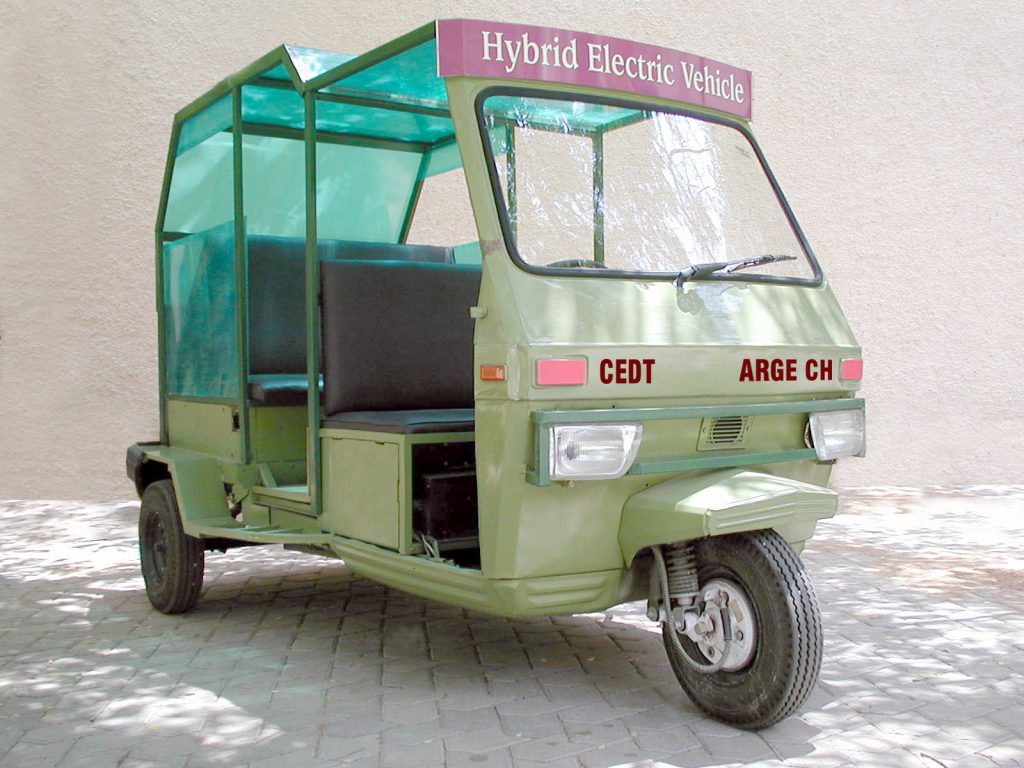
“This creates a reliance on imports. Instead, using induction motors will be an indigenous choice that is self-sufficient,” says Umanand L, Professor at the Department of Electronic Systems Engineering. Umanand’s research focuses on identifying suitable alternatives that could support homegrown electric mobility solutions. His team is developing induction motors for hybrid electric vehicles. Unlike permanent-magnet motors, induction motors operate by passing current through coils rather than rare-earth metals, reducing dependency on these imported materials.
Furthermore, Umanand explains, since hybrid vehicles combine a fuel engine with electric motors, this combination allows the electric motors to handle low-speed, high-dynamic, everyday city driving while retaining the fuel engine to supply the average power. This makes them a practical and efficient solution for transitioning to electric mobility, addressing the current constraints in charging infrastructure.
EV batteries, too, require a scarce element as the key component. Lithium-ion and lithium-polymer batteries dominate the EV market today, offering high energy density and reliable performance. However, lithium resources are geographically limited. So, battery technology needs to evolve. A promising alternative in the global limelight is the sodium-ion battery. Unlike lithium, sodium is an abundantly available resource and can be extracted easily. “Since most countries have access to coastlines or sodium reserves, sodium-ion batteries are being explored as a more globally accessible and potentially affordable energy-storage solution,” notes Umanand. Researchers believe that, in the long term, sodium-ion technology could complement or even partially replace lithium-based batteries. However, the technology and the ecosystem for sodium-ion batteries are still in a nascent state.
Another major concern with batteries is safety – particularly battery fires, which have been a frequently reported issue in recent years. These incidents are typically linked not to the motor or electronics, but to poor battery design and inadequate protection systems. In response, according to Umanand, India introduced stricter battery safety norms, such as the Automotive Industry Standard (AIS 156) certification. Improved battery management systems and stricter regulations are now helping reduce such risks.
Charging the future
Electric vehicles are no longer a rare sight in Indian cities. Electric scooters glide past traffic signals, delivery e-bikes navigate through narrow lanes, and electric autos line up at street corners.
“By 2030, the country aims to ensure that 30% of all vehicles on roads are electric. The goal is ambitious. It raises a practical question – where will all these vehicles charge?” states Vishnu Mahadeva Iyer, Assistant Professor in EE. “Recent reports in national dailies have pointed out that, in some regions, a single public charger is overburdened – serving more than a hundred electric vehicles. For users, this imbalance creates uncertainty.”
The challenge becomes more complex with two-wheelers, which are currently the most prevalent EVs in India. Unlike electric cars, electric two-wheelers do not follow a unified charging standard. Battery voltages vary widely, from 48 volts to 72 volts and beyond. As a result, one charger cannot charge all vehicles. Most manufacturers sell proprietary chargers, designed only for their own scooters. This works at a personal level, but in public spaces, it fragments the charging ecosystem.
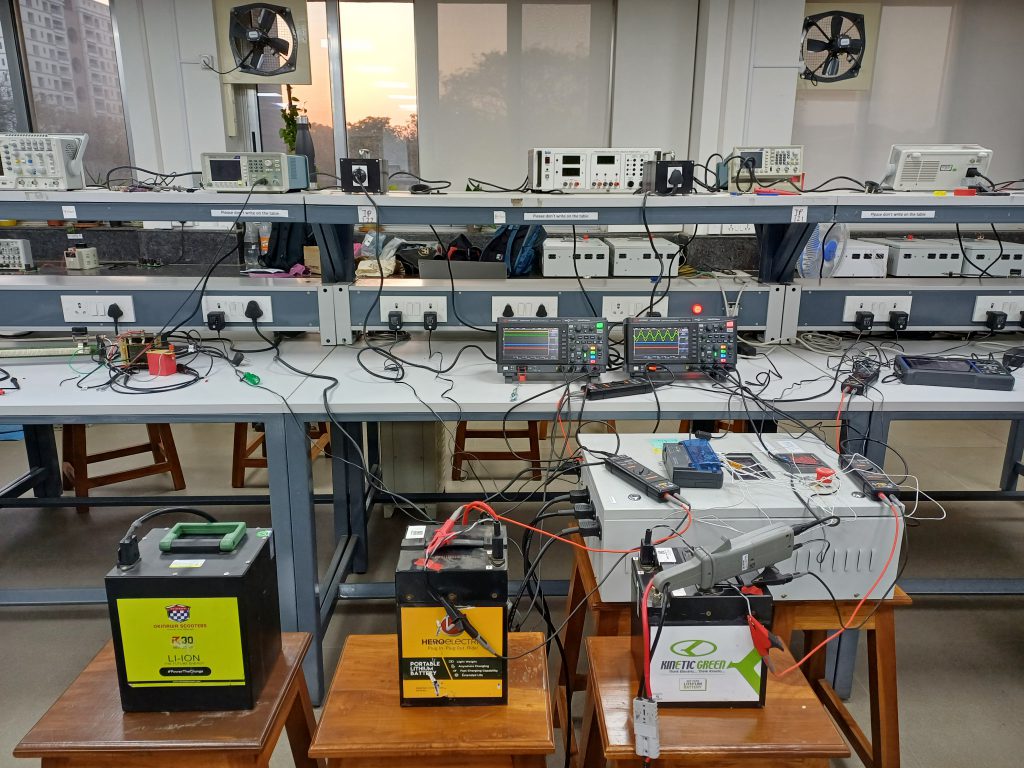
Vishnu’s team has developed interoperable, multiport chargers that can adapt to a wide range of battery voltages and charge multiple vehicles using a single platform
“This brand-locked approach limits EV adoption and raises important safety and interoperability concerns,” states Himanshu Bhusan Sandhibigraha, PhD student in EE. For India’s EV transition to truly scale, charging must become brand-agnostic, much like fuel stations today.
To this end, Vishnu’s team has developed interoperable, multiport chargers that can adapt to a wide range of battery voltages and charge multiple vehicles, both two-wheelers and three-wheelers, using a single platform.
Like any power converter, the charger went through multiple rounds of design and testing before it was finalised. While it is built on a new circuit topology, the bigger challenge was transforming a lab prototype into a reliable field-deployable system. This meant adding automation, incorporating metering and protection features, and ensuring that the charger could operate continuously for long hours. Thermal design and system integration were especially important to guarantee dependable performance.
The team also acknowledged Gurunath Gurrala, Associate Professor in EE, for supporting the development of the user interfaces for the chargers and Zakir Rather, Professor at the Indian Institute of Technology Bombay (IITB), for facilitating field trials at IITB. “Because this is a new circuit topology and intended for real-world deployment, we had to design and integrate everything from scratch, making sure that each part worked seamlessly together and could operate reliably in the field,” adds Himanshu.
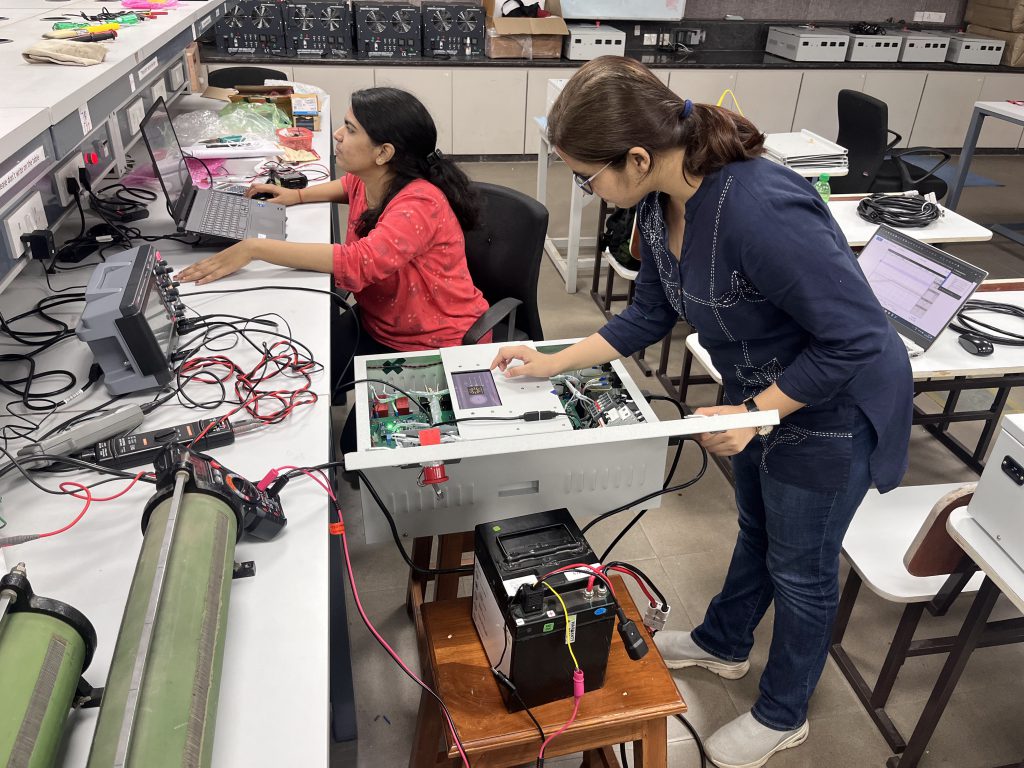
After two years of painstaking research and experimentation, the team successfully designed a single charging unit that charges scooters from different manufacturers with varied specifications. “I would like to acknowledge the efforts of my team members for their support with hardware development and field demonstration: Manas, Neha, Siddhi, Shiv, and Shahrukh,” notes Himanshu.
They further extended the concept and devised another platform that allows the same multiport charger to charge a single electric four-wheeler or multiple electric twoand three-wheelers.
These multiport chargers are also designed to comply with grid standards. “Scaling charging infrastructure is not just about installing more chargers; it is also about ensuring that higher-power systems remain compliant with grid standards. Simply deploying multiple low-power proprietary chargers does not solve this problem,” notes Himanshu.
Turning this vision into reality, however, will need more than technology. Standards, regulations, and industry cooperation must align. “The charging ecosystem in India is rapidly evolving. We must think of building future-proof charging systems that are universally compatible and interoperable across vehicle segments. It’s encouraging to see some of the recent policies moving in this direction,” adds Vishnu.
The success of electric mobility will not be decided by how many EVs we build, but by how easily we can charge them. And this is not just limited to small vehicles. “As electric vehicles scale up in India, charging technology must scale with them – not just for two wheelers, but for four wheelers and heavy-duty vehicles that demand enormous power,” notes Harisyam, whose research focuses on developing novel fast charging solutions for electric vehicles.
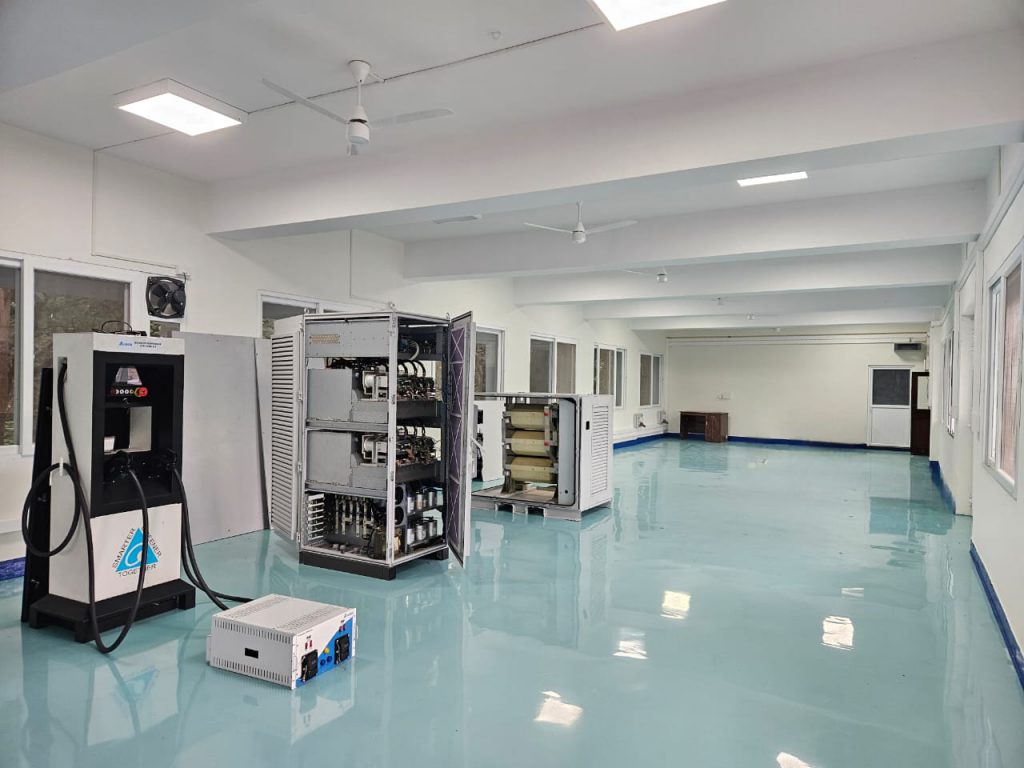
The facility is being designed to test 500-kW power converters – large enough to fast-charge two heavy-duty electric buses simultaneously
This is where his team’s collaboration with Delta Electronics, one of India’s leading EV charger manufacturers, started. Led by Kaushik Basu, the team is focusing on setting up a 2,000-square-foot high-voltage laboratory within the department. This facility is being designed to test 500-kW power converters – large enough to rapidly charge two heavy-duty electric buses simultaneously. This is a crucial step toward establishing a reliable, high-power charging infrastructure.
“This project is part of a national effort to implement fast EV charging technology across India within the next five years,” notes Basu.
The future of electric mobility also involves rethinking how energy flows – between the grid, charger, battery, and motor. Addressing this fundamental problem may be what finally makes EVs truly effortless for Indian users. Looking ahead, researchers see charging stations evolving into something more powerful – two-way energy systems with bidirectional charging. Harisyam says, “Parked EVs could one day support homes during power cuts, send electricity back to the grid, or even store solar energy during the day and release it at night.”
While the long-term trajectory of mobility is clearly moving towards EVs, the path to that future is unlikely to be linear. Widespread EV adoption raises important questions that remain unresolved – from the massive scale of power grids required to whether the electricity used to charge vehicles is truly green. Umanand states, “The greatest gains come when electric mobility is combined with clean energy – and ultimately, with reduced dependence on motorised travel itself.”
(Edited by Sandeep Menon, Abinaya Kalyanasundaram)